
Finland is preparing to move from a state-controlled betting model to a licensed and more competitive market, with operators now positioning themselves ahead of the new regulatory framework.
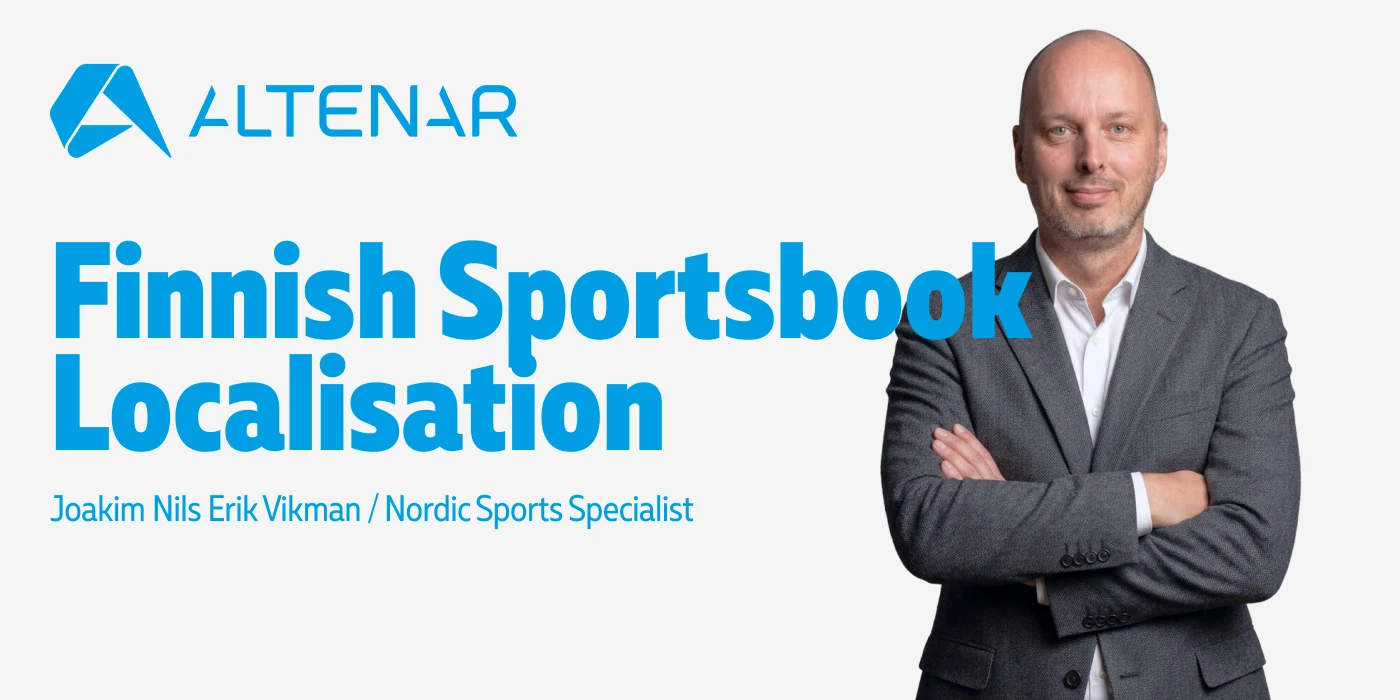
Joakim Nils Erik Vikman, Nordic Sports Specialist at sportsbook provider Altenar, discusses what this shift could mean for sportsbooks and why understanding local sports, betting preferences and market dynamics will be key to competing in Finland.
From what we see in neighbouring Nordic markets, what can we expect from the Finnish sports betting market?
Based on the regulations in neighbouring Sweden and Denmark, the Finnish sports betting market is expected to be highly competitive with over 50 operators submitting licence applications so far.
The pressure will be on the former monopolist (Veikkaus), who will lose share to already big and established competitors. Leisure bettors will also benefit from a more stable and diverse offering, ranging from core markets to minor side options and player props across various sports and events.
Which sports do you expect to be particularly important in Finland, and how can a sportsbook adapt to these local priorities?
To maximise market share in Finland, we see great value in looking beyond mainstream sports like football and ice hockey to deliver a premium offering in high-interest local sports, including floorball, ski jumping, MMA, and pesäpallo etc.
Achieving this requires operational flexibility, specifically a smart mix of automated and manual odds creation. By closely analysing customer data and understanding localised demand, we can help operators get ahead of the competition and drive business growth.
Ice hockey is a major part of the Nordic sports landscape. How can a sportsbook build a stronger experience around competitions such as Liiga?
Ice hockey presents a unique dynamic that requires balancing global sportsbook standards with deep, on-the-ground localisation.
To build a stronger experience around leagues like Liiga, a sportsbook must offer premium global features such as bet builders and early payouts, while hyper-localising its odds, player props, and live streaming to reflect the specific nuances of the local market.
This approach delivers a world-class betting experience that remains deeply authentic and engaging for Nordic fans.
Beyond football and ice hockey, how important is it to support local and regional sports and competitions?
Supporting local and regional sports events is highly strategic for several reasons. To build genuine trust among bettors, a company must deliver a 'best-in-class' odds offering while maintaining a broad view of tournament selection.
Minor sports and lower-turnover leagues serve as incredibly effective acquisition tools, whereas major, established leagues like Liiga and Veikkausliiga are important for long-term customer retention.
What does a sportsbook need to do to adapt quickly when entering a market like Finland?
Let’s mention these four important points:
- Tailor the product mix for acquisition vs. retention. Offering a "best-in-class" selection of hyper-local, regional, and lower-turnover sports while delivering a flawless, premium experience around major established leagues.
- Master the dual engine of odds creation. That means having advanced automated feeds for high-volume, mainstream global markets to ensure real-time speed, while also having traders who understand the deep nuances of unique Finnish sports, allowing the book to manually price niche events where automated algorithms lack data.
- Offer global-standard features tailored to fulfil the preferences of local bettors.
- Build immediate brand trust.
What would you say are the key differences between simply launching a sportsbook in Finland and properly adapting it to the market?
The key difference between properly adapting a sportsbook, whether in Finland or another regulated territory, versus simply launching one comes down to internal mindsets.
It’s about creating an authentic, native user experience rooted in a deep understanding of Finnish sports, coupled with integrated tools, statistics and live streaming of regional events when possible.
Ultimately, it’s also all about bringing modern features into the domestic Finnish sports scene.