
Africa has become one of the fastest-growing regions in the global betting industry, driven by mobile adoption, a young digital audience, and strong engagement with international sports. According to Statista, Africa’s sports betting market is projected to reach $3.08bn in revenue in 2025, with user numbers expected to grow to 27.5 million by 2029.
At the same time, the market remains highly fragmented and structurally different from Europe or the US. Mobile connectivity limitations, retail dominance, and unique betting behaviours are shaping how operators build and deliver sportsbook products across the region.
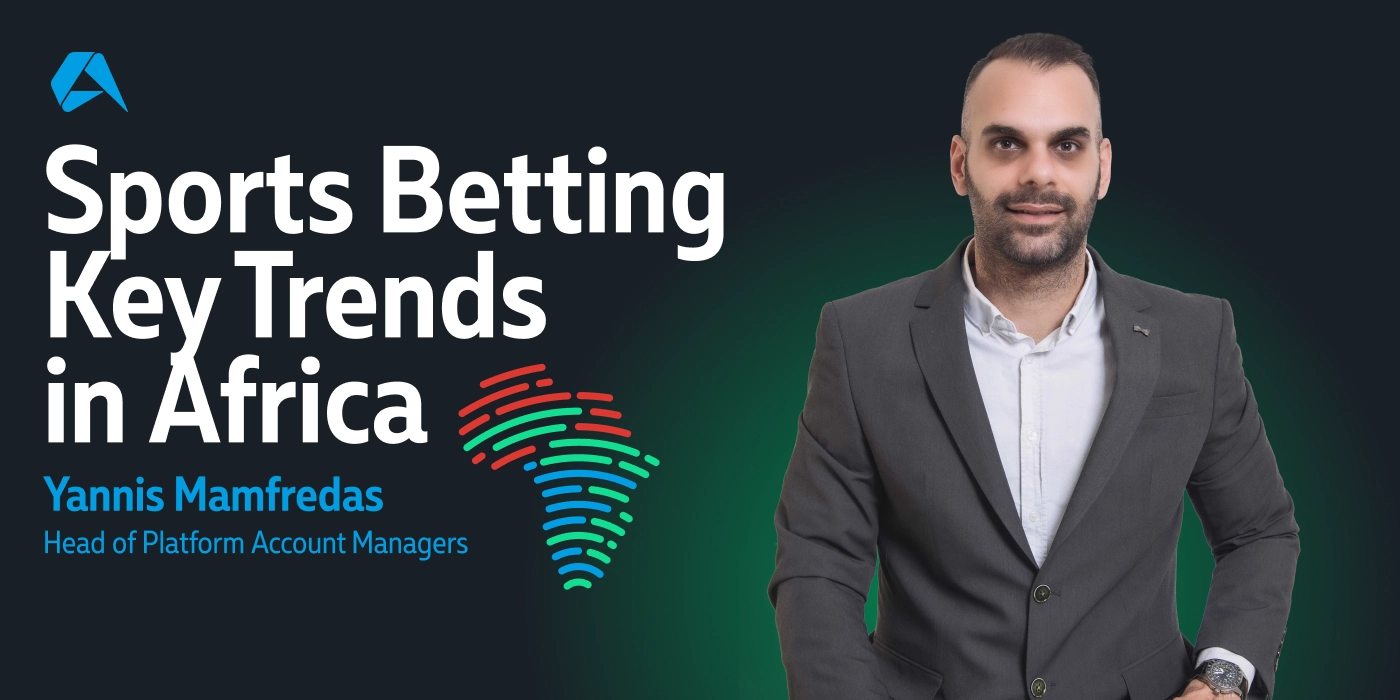
In this interview,Yannis Mamfredas, Head of Platform Account Managers at Altenar, explains the key trends defining the African market and how operators can adapt their products to local expectations.
- How would you describe the African sports betting market today from a product and user behaviour perspective?
The African market is much more mature than many people assume. Users already know exactly what they want from a sportsbook, and operators have adapted around those expectations for years. What makes the region unique is the combination of mobile-first behaviour, strong retail activity, and a betting culture heavily focused on accumulators.
Unlike Europe or the US, where single bets dominate, African bettors often place large parlays with 10, 20, or even 30 selections. In many ways, this creates a betting experience that feels closer to lottery-style gaming: small stakes combined with the possibility of very large payouts. Football remains the main driver, especially competitions such as the UEFA Champions League, Premier League, and African Champions League, while basketball, cricket, virtual sports, and esports are also highly popular.
For sportsbook providers, this means the entire product strategy has to adapt around these behaviours. At Altenar, we focus heavily on parlay-oriented UX, fast event discovery, and flexible promotional tools that support this betting style naturally.
- Why are accumulators and parlay betting so important in Africa?
Accumulator betting is deeply embedded in the market. Users are typically not looking for a quick single bet - they want to build larger combinations with high potential returns. This is why promotions such as parlay boosts perform extremely well in the region, especially when the payout increases with every additional selection.
From a product perspective, the challenge is making this experience simple and engaging. Users need quick access to relevant events, recommendations, and suggested combinations that help them build parlays faster. Large event portfolios are also important because bettors expect broad coverage across football, basketball, virtual sports, esports, and local competitions.
- Mobile performance seems to be one of the biggest challenges in the region. How does this impact sportsbook development?
Mobile is absolutely central to the African market, but operators cannot approach mobile in the same way they would in Europe or North America. In many countries, 3G connectivity is still common and mobile data remains relatively expensive, which means loading speed and low data consumption become critical parts of the user experience.
Heavy front ends, large assets, and data-intensive interfaces create friction very quickly. Users are extremely sensitive to performance because every extra second of loading time and every additional megabyte matters. Android devices also dominate much more strongly than iOS, so optimisation for Android is essential.
This is why Progressive Web Applications are becoming increasingly relevant for the region. PWAs allow operators to cache assets locally, reduce bandwidth usage, and improve loading performance on repeat visits. At Altenar, performance optimization is not treated as just a technical improvement,it is part of the overall product strategy for markets like Africa.
- What are the biggest operational challenges operators need to solve in Africa today?
One of the biggest challenges is balancing performance with betting volume. Large accumulators generate significantly more backend calculations and validations compared to single bets. When thousands of users are placing 20- or 30-leg parlays simultaneously, the load on the platform increases substantially.
This becomes especially important because even small delays can impact the user experience. If a bet takes one or two seconds too long to process, one of the selections may change and the entire accumulator can fail. In a market where parlays dominate, performance becomes business-critical.
There are also local operational realities that differ from Western markets. In several regions, betting through SMS, WhatsApp, or mobile-provider integrations is still common, particularly for cash-based and anonymous transactions. Operators entering Africa need to understand these local behaviours from the very beginning if they want to compete effectively.
- Looking ahead, where do you see the biggest opportunity in the African sportsbook market?
The biggest opportunity is building products that genuinely adapt to the realities of the region instead of simply importing European sportsbook models. Africa already has a very established betting culture, but there is still no single dominant operator across the continent.
Operators that succeed will be the ones that combine lightweight mobile performance, strong accumulator engagement, retail integration, and localised user journeys into one ecosystem. There is also significant room for innovation around social betting, bet-sharing mechanics, and omni-channel wallet experiences.
At Altenar, we see Africa as one of the most strategically interesting regions because success depends less on simply adding more features and more on delivering the right experience for how users actually interact with sportsbook products in everyday conditions.