He once dreamed of making games but became a webmaster. He didn’t like JavaScript — until he built a graphics engine with it. He grew into a team manager, decided to switch back to development, and eventually took the lead again.
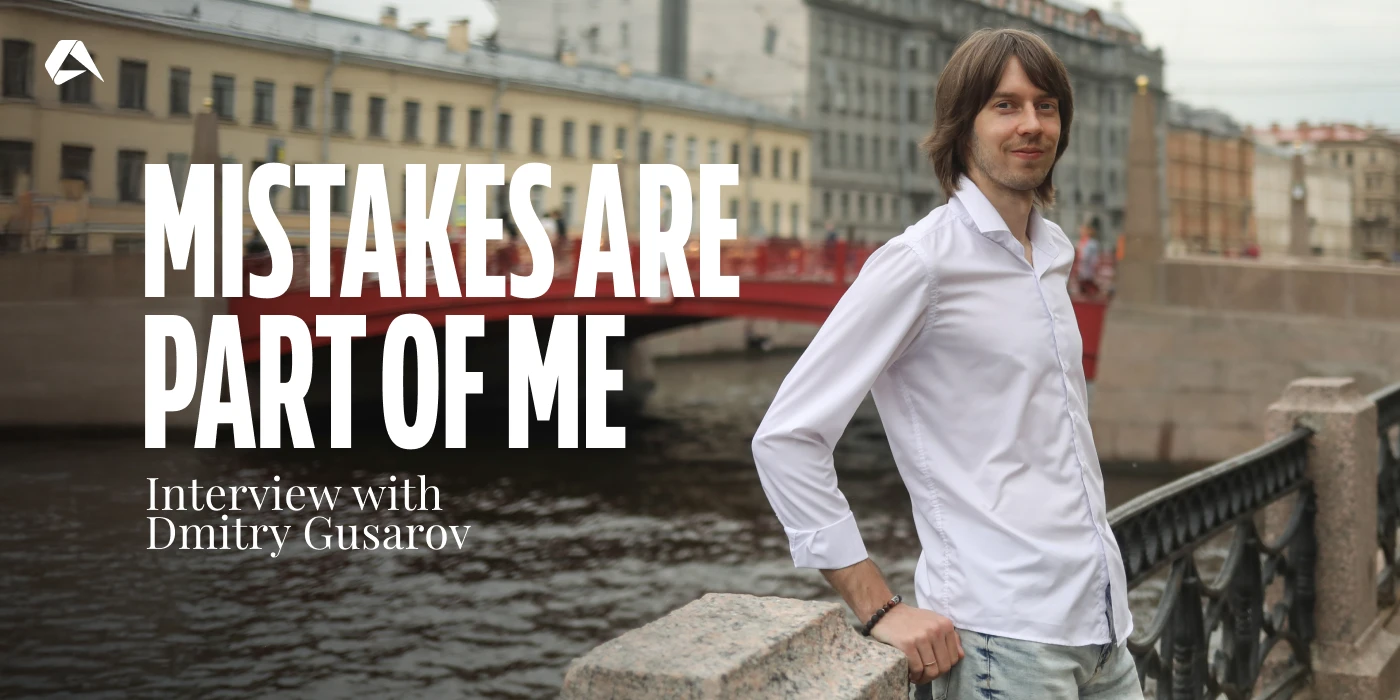
Meet Dmitry Gusarov, Head of Front-End Development at Altenar.
We talked to Dmitry about what “Dimocracy” means, who didn’t pass his team’s interview, and why he sometimes dreams of spaceships.
Dmitry Gusarov, Head of Front-End Development at Altenar
— How did you get into IT?
I don’t know the statistics, but I’m sure many boys got into programming because they wanted to make games — I was one of them. Back in school, I realised I didn’t just want to play, I wanted to create. But fate took me to the web instead. I started as a webmaster and gradually moved toward programming.
My childhood passion for game development turned into a hobby. I spent my free time experimenting with client-side apps, mostly related to gaming. That’s how I got deeper into JavaScript and step by step, it led me to where I am today.
The biggest turning point came when I switched from backend to frontend. I was a tech lead at a small company serving a large holding, responsible for a CRM system with hundreds of thousands of users. One day I just realised: this isn’t what I want to do. So I moved into frontend.
— Why frontend?
I wanted to see the results of my work, not just manage servers or backend teams.
For about two and a half years I worked as a frontend developer. One of the main challenges there was unifying interfaces, bringing all app pages to a consistent design and behaviour.
Together with our design team, we started building an in-house design system. At first, I was an informal lead, later an official one, while still developing for another product team. It wasn’t easy, but it taught me multitasking and helped me understand who we were actually building for.
— How did Altenar appear in your story?
At some point, I felt ready for a bigger challenge. I started looking for new opportunities, and Altenar stood out right away. It was the most engaging interview I’d ever had. Instead of drilling through technical questions, we had a real conversation — about what interests me, what challenges the company faced, and how I could help solve them. This April marked my fourth year here.
— What role did you start with?
I began with a small team of two, working on an admin panel project. Within six months, we restructured and expanded to four people.
Then our CTO came to me and said:
“There’s another project with a team that needs guidance. Can you help?”
That’s how I got my second project — and my second team. From there, everything grew naturally: new challenges, new discussions with the CTO and CEO, and more teams to manage.
— That’s quite a journey. What do you consider your biggest achievement?
Definitely the team. Without them, there wouldn’t be me. On a personal level — shifting my mindset from engineering to leadership. I still see myself as an engineer, only now my “code” is people. Before, I thought about how to make the program run better. Now I think about how to make the team run better. Who are these people? What motivates them? And what can I do to make them enjoy their work as much as I do mine?
— In IT, do you think a lead should always have a technical background, or is being a good manager enough?
Leadership starts with people, not code. You need a person who’s naturally inclined to lead, someone who can listen, communicate, and guide. A purely technical expert who struggles to connect with others will never be an effective lead.
At the same time, someone without any technical understanding won’t be able to speak the same language as developers or help them grow. To lead a technical team, you first need to understand it: how people think, how they work, what challenges they face.
That was actually one of the tougher lessons for me. At some point, I realised I was no longer the most technically skilled person in the team, there were people much stronger than me. But once you accept that, everything clicks into place. Communication becomes easier. You stop pretending to be someone you’re not, and the team trusts you more for it.
— What’s your management approach?
In IT, everything depends on people. My job as a manager is to find the best possible place for each person where they feel comfortable, motivated, and productive. Sometimes someone doesn’t shine in one team or position, but once you change their environment, they start to grow.
We even have an inside joke: we call it “Dimocracy” (from my name and “democracy”). It means everyone can speak up, every opinion matters.
— So, in “Dimocracy”, the final decision is still yours?
I’m not sure who came up with the term or why, but I guess it’s because I give people a lot of freedom while still taking full responsibility for the key decisions. My team’s success is my success. Their mistakes are my mistakes.
I’m not a fan of micromanagement. I don’t interfere with day-to-day work because each team already has its own lead — people I selected and trust. Our relationships are built on trust. That doesn’t mean we don’t monitor performance, but we don’t measure success by hours spent on a task.
Our main rule is simple: focus on results. If you get things done — great. If not, that’s okay too. We’ll sit down, discuss what went wrong, and figure out how to fix it together.
— What do you look for when hiring new people?
I have a few key principles. First, a genuine desire to learn and grow. Curiosity matters more than perfection. Second — openness and teamwork. If someone lacks certain technical skills, that’s fine. Hard skills can be taught. But soft skills: communication, adaptability, empathy — those are much harder to develop.
I really appreciate people who show initiative, who can bring new ideas or challenge existing ones. I’m fine with disagreements, I enjoy discussions and believe constructive criticism helps us evolve. Many underestimate that, but without feedback, there’s no real progress.
And one more thing: a healthy work-life balance. Honestly, I’m not great at it myself, but I see how important it is. Burnout kills long-term performance. This isn’t a sprint, it’s a marathon. Even if we achieve something amazing in a few quarters, it means nothing if the team runs out of energy afterward.
— Are there any red flags that tell you right away someone’s not the right fit?
Good question. I’d say basic adequacy is the first filter. I’ve had a few funny interview moments.
Once, I asked a candidate what kind of work he enjoyed. He paused, said, “Oh, I see what kind of company this is,” and just hung up. Another one had a prompter off-camera whispering answers to him during the interview. And yes — someone once ate borscht during the call. He said, “Sorry, I’m having lunch.”
— So the red soup turned out to be a red flag?
Exactly. Having a drink during the interview is fine, people get nervous. But lunch can wait. Lying is another red flag. Sometimes a CV looks great, but once you start talking, it becomes clear that everything was done by the team, and they just watched from the sidelines. In such cases, there’s no point continuing the conversation.
— What does a typical day in your life look like?
I wake up, get the kids ready, and take them to school. On the way, I check my messages and email — just to see if anything urgent came up that needs my attention right away. Then I head back home, make myself some coffee and a quick sandwich, and start working.
No two days are ever the same. Every day brings new challenges. Some things you revisit, others appear out of nowhere and need to be solved on the spot. Calls, chats, emails, follow-ups — and more communication. Sometimes lunch is just another cup of coffee, a yogurt, or a sandwich.
Workdays can run long — or end right on time. When I shut my laptop, I try to disconnect until the next morning… though it doesn’t always work. Sometimes the best ideas come outside working hours and you start thinking about what you can do tomorrow to fix today’s problems.
— Ever fallen asleep with your laptop?
No. I love sci-fi, so I try to read before bed, it helps clear my mind. That way I don’t dream about work, but about spaceships instead.
— What’s the favorite project you’ve ever built?
It’s not exactly work-related, but still tied to development. Back in university, I wrote my own graphics engine in JavaScript — using prototypes. It looks pretty clunky now, but at the time I was incredibly proud of it. For me, it was something completely new and exciting. The funny thing is, I didn’t even like JavaScript at first but despite that, I built a pretty big and complex project with it.
— Is there anything you would have done differently? Any mistakes you’d undo if you could?
I honestly can’t remember when exactly I realized this, but my mistakes are just part of me. Take them away, and I wouldn’t be me anymore.
Of course, sometimes it stings. You catch yourself wondering, what if I’d chosen differently? Years ago, I had a choice: join another company for a lower salary but stronger technical growth, or stay where I was for a raise. Basically — money or experience.
I chose the first option, because I needed money for my wedding. Looking back, maybe I could’ve advanced faster, become a lead earlier, gained more technical depth… But then again, maybe I wouldn’t be where I am today. And honestly I’m pretty happy with where I am now.