
Key takeaways
-
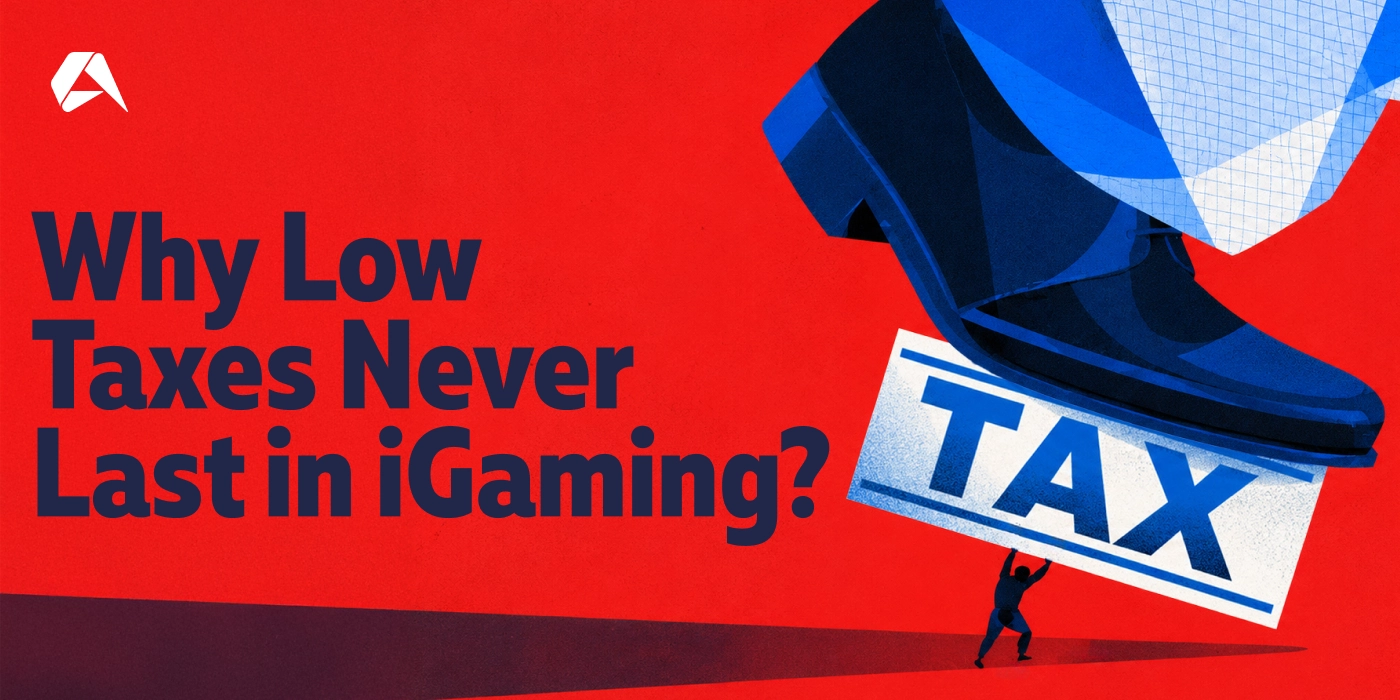
The Tax Trend: Markets launch with low taxes to attract top brands and defeat black markets. However, as the market matures, governments always raise tax rates.
-
Why Taxes Go Up: Rising political pressure, public deficits, and growing regulatory costs drive tax hikes. Governments switch from helping growth to maximizing long-term returns.
-
The Margin Squeeze: Higher taxes directly crush operator net revenue. They force tighter pricing and lower promotional bonus spending, while compliance costs keep climbing.
-
Early Warning Signs: Operators can spot tax hikes early by watching for new levies, stricter responsible gaming rules, expanded data reporting, and public consultations.
-
How to Prepare: Current tax rules are never fixed. Operators must stress-test their models early, cut overhead costs, and use flexible technology to protect their margins.
-
Timing Strategic Entry: Entering early brings lower taxes but high policy uncertainty. Entering later provides clear rules but much lower margins and heavy competition.
The Pattern Behind iGaming Taxation: Why Low Rates Don’t Stay Low
If you have been in the iGaming business long enough, you will understand this trend. When an iGaming market legalizes, the conditions are almost always attractive initially by design. Tax rates are kept low, and licensing frameworks are easily accessible. The message is hard to ignore. Operators are being invited in. The objective is to build a regulated gambling market quickly and pull activity away from the black market.
Early entrants often benefit from that. With fewer constraints and manageable costs, the focus stays on acquisition, product, and growth. For a period of time, the model works as expected.
What happens next tends to receive less attention. As the market matures and revenue becomes more predictable, priorities begin to change. The same framework that was designed to attract operators starts to evolve, and tax moves from being part of the incentive to part of the equation operators have to manage. This is not about whether taxes will increase. It is about when, why, and how operators respond to the new conditions when they do.
The Opening Offer: Why Governments Start Low
When a legal market opens, lower tax rates are usually part of a planned approach with one immediate priority, and that is to move gambling activity away from the black market and into a regulated environment. Without this, the new framework struggles to gain momentum, no matter how well it is designed.
There is, therefore, a need to attract operators quickly. Established brands bring liquidity, credibility, and operational experience. Without them, early-stage markets can feel lacking in both product depth and player engagement. Competitive tax rates make that entry decision easier when operators are forced to choose where to deploy capital.
There is also a broader competitive dynamic at play. Newly regulated markets are not evolving in isolation. They are, in effect, competing with each other for attention, investment, and long-term commitment. Lower taxes are part of that positioning, helping accelerate adoption in the early stages.
For a period of time, the model works. Growth happens, regulated channels strengthen, and the market begins to establish itself. But those conditions are not meant to last. Low-tax environments are not acts of generosity. They are entry incentives, built to serve a purpose, and come with a time limit.
What Actually Drives Tax Increases
By the time tax increases begin to appear, it’s usually the result of several pressures building in parallel, each adding influence over time until changes become unavoidable.
Political pressure tends to appear first. As regulated markets establish themselves, attention moves to public narratives around ‘social responsibility’, ‘harm reduction’, and ‘fair contribution’.
Public spending plays its role too. Governments do not view iGaming in isolation. It sits alongside wider fiscal priorities, and when budget deficits emerge, or new spending commitments are introduced, established revenue streams come under closer scrutiny. A market that has proven it can generate consistent income becomes an obvious target.
This has been particularly visible in mature markets such as the U.K., where recent proposals to reform gambling duties reflect a broader transition in how the sector is positioned within public finances, as explored in Altenar’s analysis of the U.K.’s 2026 gambling tax changes.
At the same time, the regulatory framework grows, licensing bodies expand, monitoring becomes more sophisticated, and enforcement activity increases. All of that comes with a cost, and over time, those costs are reflected in how the market is taxed or structured financially.
Market maturity brings its own evolution in thinking. Once the initial uncertainty has passed and participation levels stabilize, the focus moves from encouraging entry to maximizing long-term returns. At that stage, the focus transforms from supporting growth to extracting long-term value from the market. Research into the effects of higher gambling duties shows that, even when operators adjust pricing or payouts to offset tax increases, the impact on margins is rarely fully offset.
Taken together, these factors don’t usually lead to sudden change. Tax increases are more often the result of gradual accumulation, where multiple pressures align and make adjustment feel like the next step.
The Squeeze: What This Means for Operators
By the time tax rates increase, the environment has often changed too, with higher compliance demands, evolving expectations, and stronger competition already in place. The result is a gradual squeeze on margins, where each adjustment, whether in pricing, promotions, or operational structure, carries more significance than it did in the early stages of the market. For most operators, the challenge is not a single change, but the accumulation of various pressures over time.
Where that pressure is felt most:
-
Margin compression
Higher tax directly reduces net revenue, with limited ability to fully offset the impact through pricing or payouts.
-
Reduced promotional flexibility
Bonus structures, incentives, and acquisition strategies become more difficult to sustain at previous levels.
-
Tighter pricing decisions
Odds, RTP, and player value require closer management, with less room for aggressive positioning.
-
Rising compliance costs
Expanded reporting, monitoring, and enforcement requirements add ongoing operational expense.
-
Increased operational discipline
Cost control, efficiency, and performance tracking become more critical to maintaining profitability.
-
Greater competitive pressure
Weaker operators begin to fall away, while stronger ones compete more aggressively for sustainable market share.
The Warning Signs of Tax Increases
By the time tax changes are formally announced, the process has usually been in motion for some time. The signs typically appear in ways that are easy to overlook when markets are still performing well. For operators paying attention, these early indicators can provide valuable lead time, offering a better perspective of where the market is heading before changes are confirmed.
Shifts in political language
One of the earliest signs often comes from how the industry is discussed publicly. As markets mature, the tone often changes. Phrases like ‘fair contribution’, ‘player protection funding’, or ‘industry responsibility’ begin to appear more frequently. The language often reflects a growing expectation that the sector should contribute more, which translates into fiscal changes over time.
New levies and regulatory fees
In some cases, changes begin with smaller financial adjustments rather than headline tax increases. New administrative fees, targeted levies, or funding contributions may be introduced with limited attention. On their own, they can seem manageable but often signal a broader move to increase the overall cost of operating in the market.
Expansion of responsible gambling frameworks
Responsible gambling requirements tend to evolve as markets develop. What begins as a baseline framework often becomes more detailed, with additional protections, monitoring expectations, and funding obligations. This expansion can increase operational costs and, in some cases, provide the foundation for further financial contributions from operators.
Increased reporting and compliance requirements
Regulatory visibility also tends to increase over time. Reporting becomes more frequent, data requirements expand, and oversight grows more detailed. While not a direct tax increase, these changes add to the overall cost base and are invariably linked to further regulatory oversight.
Public consultations and regulatory reviews
Consultation papers and formal reviews are a clear sign that change is being considered. While not every consultation leads to immediate action, they provide insight into regulatory priorities and potential future direction. The language used within these documents can offer early clues about where adjustments may be heading.
Wider fiscal pressure
Beyond the sector itself, broader economic conditions can influence decision-making. Periods of increased public spending, budget deficits, or economic strain bring established revenue sources into focus. Once iGaming has proven its ability to generate consistent income, it becomes part of that wider fiscal conversation.
While these signals may not individually lead to immediate change, together they paint a picture. Operators who track these developments closely are better equipped to anticipate tax increases well in advance of formal announcements.
Building for a Higher-Tax Reality
If tax increases are a normal part of how regulated markets evolve, then planning around them is all about preparation. For industry operators, that starts with the right mindset. Current tax conditions should never be treated as fixed. They are part of a phase, and that phase is likely to change in due course.
Building with that in mind means stress-testing the model against less favorable conditions. What happens if margins are squeezed further? How resilient is the operation when costs increase across multiple areas at once?
That brings the focus back to how the business is structured. Cost efficiency becomes more than a background concern. It influences how resources are allocated and how quickly adjustments can be made when conditions change. Margin control follows closely behind, particularly as pricing and promotional flexibility decrease.
Product flexibility also plays a role. The ability to adjust offerings, refine pricing, or adapt to different player behaviors across markets becomes more valuable as constraints increase. The same applies to market-specific configuration, where local conditions, tax structures, and regulatory requirements must be accounted for.
Player value management becomes more targeted as well. Acquisition strategies, retention efforts, and overall player economics need alignment with margins that are more constrained.
At that point, the technology and tools supporting the operation become more important. Platforms that allow faster adjustments, sharper oversight, and more granular control provide a level of flexibility that is harder to achieve through manual processes alone. As conditions become more challenging, that flexibility becomes part of how operators maintain their market position.
Market Selection Is a Strategic Decision, Not Just an Opportunity
Ultimately, early incentives, gradual tightening, and a move toward higher contributions are all part of the cycle. The timing may differ, and the details may change, but the overall direction is usually predictable.
That makes the timing of market entry an important consideration. Entering early can offer clear advantages, from favorable tax conditions to less competitive pressure. At the same time, it comes with a degree of uncertainty. Regulatory frameworks are still evolving, and long-term policy direction is not always fully defined. Entering later provides more certainty, but often at reduced margins and in a more competitive environment.
The decision, then, is not just about access. It is about how well the market aligns with long-term strategy, including regulatory direction, political stability, and the likelihood of future tax adjustments. Because once those conditions begin to change, the initial advantage can fade quickly. Low tax rates can create an early opportunity, but long-term performance depends on how well an operator adapts to changing conditions.
Schedule a systems demonstration now to see how Altenar’s sportsbook platform helps operators stay competitive as conditions change, with granular control, flexible configuration, and the ability to protect margins as tax conditions evolve.