
Key takeaways
-
The Market Situation: Europe is a mature but non-uniform sports betting region, where market intensity is shaped by digital maturity, regulations, and local sporting cultures rather than population size alone.
-
Financial and Market Activity: Heavily fueled by a deep-rooted football culture, countries like the UK, Italy, and Germany generate immense wagering volumes, while smaller, highly digital markets like Sweden lead the continent in per-capita spending at ~€45 annually.
-
Diversification Opportunities: While football dominates across the board, several mature jurisdictions offer strong revenue stability via highly active secondary sports, such as horse racing in the UK, rugby in France, and ice hockey in Sweden.
-
The Legal and Channelling Situation: Regulation is a major driver of change; the introduction of frameworks like the Remote Gambling Act (KOA) in the Netherlands and nationwide licensing in Germany successfully channel existing offshore demand into legal domestic sites.
-
Core Technological Growth Drivers: Market expansion is heavily driven by mobile-first smartphone adoption and real-time live "in-play" betting, which shifts user habits from single pre-match bets to frequent, interactive wagers during events.
-
Operational Priorities for Success: To capture growth in 2025, operators must adopt advanced sportsbook technology that supports flexible localization, handles rapid micro-interactions, and optimizes event-driven player acquisition and retention.
Sports Betting in Europe: The Biggest Markets and Growth Trends in 2025
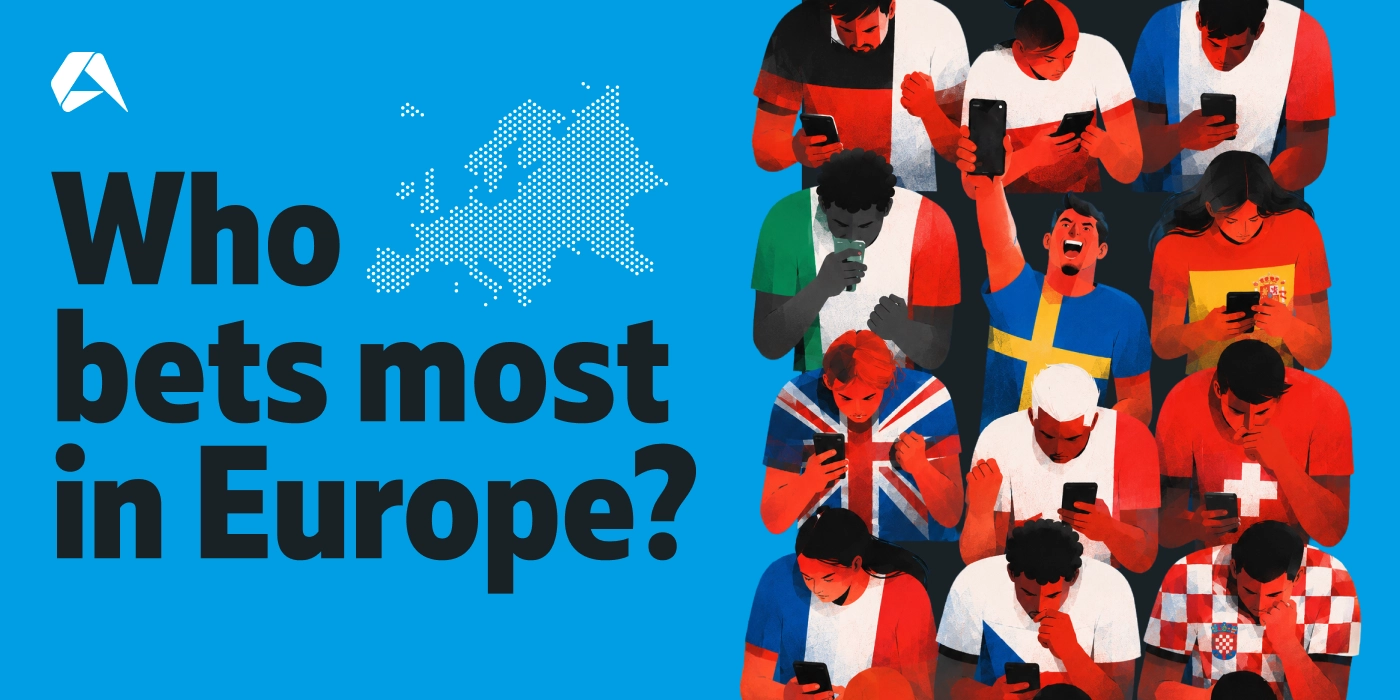
So who bets the most in Europe? The answer is not as straightforward as many might expect. While countries such as the United Kingdom and Italy dominate discussions about market size, betting intensity is influenced by factors beyond population alone. Digital maturity, regulation, consumer habits, and sporting culture all play an important role in influencing wagering behaviour. By comparing seven major regulated markets, this analysis explores how betting activity varies across Europe and some key trends driving sportsbook growth in 2025.
Europe's sports betting market at a glance
Although football remains the dominant betting sport across most European markets, player behaviour, market maturity, and growth dynamics vary considerably from country to country. The following overview highlights seven of Europe's most significant regulated sports betting jurisdictions, outlining their current market status and defining characteristics.
| Country | Market Status | Key Characteristic | Primary Data Source |
|---|---|---|---|
| UK | Mature | High betting frequency | UK Gambling Commission |
| Italy | Mature | Strong turnover volumes | ADM |
| France | Mature | Highly regulated environment | ANJ |
| Germany | Expanding | Rapid online growth | GGL |
| Spain | Mature | Mobile-first audience | DGOJ |
| Sweden | Mature | Highly digital market | Spelinspektionen |
| Holland | Emerging | Recently regulated online market | Kansspelautoriteit |
While Europe is widely regarded as one of the world's most mature sports betting regions, it is far from a uniform market. Regulatory frameworks, consumer preferences, digital adoption rates, and betting habits differ significantly between jurisdictions. Examining these markets individually provides a clearer picture of where betting activity is strongest, how players engage with sportsbooks, and which factors are impacting future growth.
Sports betting behaviour by market
While football dominates wagering volumes almost everywhere, market differences create distinct betting environments. The following country profiles examine key indicators of betting intensity, popular sports, and the factors that determine player behaviour in each jurisdiction.
United Kingdom
|
Indicator |
Data |
|
Population |
~68.3 million |
|
Sports betting revenue |
£2.4 billion |
|
Betting Revenue per Capita |
~£35 annually |
|
Dominant sport |
Football |
|
Secondary sport |
Horse Racing |
Calculation £2.4 billion ÷ 68.3 million = ~£35 per capita annually
Data source: UK Gambling Commission annual industry statistics.
The United Kingdom remains Europe's largest and most mature sports betting market with a long-established gambling culture and one of the continent's most developed regulatory frameworks. Football accounts for the majority of sports betting activity, driven by the popularity of the Premier League and extensive coverage of domestic and international competitions.
What distinguishes the UK from many other European markets is the continued importance of horse racing. While racing occupies a niche position in most jurisdictions, it remains a major betting product in Britain and contributes significantly to overall wagering activity. This broader sporting mix helps sustain betting engagement throughout the year.
The market is also characterised by high betting frequency and strong adoption of digital channels. Mobile wagering has become the dominant way to place bets, while in-play betting has transformed how many consumers engage with sporting events. Rather than placing a single pre-match wager, bettors increasingly place bets during a match (in-play betting), creating more frequent betting opportunities.
Although direct comparisons of average stake sizes across Europe are difficult due to inconsistent reporting standards, UK market data suggest a highly engaged customer base. Strong participation rates, diversified betting interests, and a mature online betting environment continue to position the country as a benchmark for sports betting activity across Europe.
Italy
|
Indicator |
Data |
|
Population |
~58.9 million |
|
Sports betting revenue |
€1.843 billion |
|
Betting Revenue per Capita |
~€31 annually |
|
Dominant sport |
Football |
|
Secondary sport |
Tennis |
Calculation: €1.843 billion ÷ 58.9 million = ~€31 per capita annually
Data sources: TGM Research, Grand View Research
Italy is one of Europe's most significant sports betting markets, combining a deep-rooted football culture with a mature and well-regulated gambling sector. Sports wagering has become firmly established in the country's entertainment sector, with football accounting for the overwhelming majority of betting activity. Domestic competitions such as Serie A, alongside major international tournaments, consistently generate substantial wagering volumes throughout the year.
Unlike some European markets where betting activity is concentrated around a small number of events, Italy benefits from strong engagement across both domestic and international football competitions. This helps maintain betting activity throughout the sporting calendar and contributes to the country's position as one of Europe's leading regulated betting jurisdictions.
Tennis also plays a notable role in the Italian betting market. The popularity of major ATP and Grand Slam events provides operators with an important secondary betting product, particularly during periods when football activity is lower. This diversification helps sustain player engagement and broadens sportsbook betting activity beyond football alone.
The Italian market has also undergone a significant digital transformation in recent years. Mobile betting now accounts for a substantial share of online wagering activity, while live betting products have become increasingly popular among experienced bettors. Combined with strong consumer demand and a well-established regulatory framework, these factors continue to support Italy's position as one of Europe's highest-activity sports betting markets.
Although direct comparisons of average stake sizes remain challenging, Italy's combination of high wagering volumes, strong football engagement, and widespread digital adoption suggests a highly active betting population relative to many other European jurisdictions.
France
|
Indicator |
Data |
|
Population |
~68.4 million |
|
Sports betting revenue |
~€1.8 billion |
|
Betting Revenue per Capita |
~€26 annually |
|
Dominant sport |
Football |
|
Secondary sport |
Rugby |
|
Calculation: €1.8 billion ÷ 68.4 million = ~€26 per capita annually Data sources: ANJ, TGM Research, French population estimates |
|
As in Europe's other leading betting markets, football dominates betting activity, with Ligue 1, the UEFA Champions League, and major international tournaments generating the highest wagering volumes. However, unlike several neighbouring markets, France benefits from meaningful engagement across multiple sports, creating a broader betting environment.
Rugby occupies a particularly important position. The popularity of the Top 14 and international competitions such as the Six Nations Championship provides operators with a valuable secondary betting vertical that is less prominent in many other European jurisdictions. This diversification helps sustain wagering activity year-round and reduces reliance on football alone.
The French market has experienced steady growth in online sports betting participation, supported by high internet penetration and increasing consumer familiarity with regulated betting products. Mobile betting has become the preferred channel for many players, while live betting continues to attract users seeking more interactive wagering experiences. Regulatory oversight remains relatively strict compared to some European markets, but this has helped encourage a stable and transparent environment for licensed operators.
Although France records lower betting intensity than some of Europe's highest-performing markets, its large population, diversified sporting culture, and well-established regulatory framework continue to support substantial wagering activity. The combination of football's dominance and rugby's enduring popularity makes France one of the continent's most distinctive and resilient sports betting jurisdictions.
Germany
|
Indicator |
Data |
|
Population |
~84.7 million |
|
Sports betting revenue |
~€1.9 billion |
|
Betting Revenue per Capita |
~€22 annually |
|
Dominant sport |
Football |
|
Secondary sport |
Tennis |
Calculation: €1.9 billion ÷ 84.7 million = ~€22 per capita annually
Data Sources: GGL market reporting, TGM Research Germany Sports Betting Survey, Destatis population estimates.
Germany is Europe’s most populous country and one of its most important long-term sports betting opportunities, although the regulated market remains less straightforward than its scale might suggest. Football is the main driver of betting interest, with the Bundesliga, European club competitions, and international tournaments making up the core of the sportsbook calendar.
Unlike some of Europe's longer-established betting jurisdictions, however, Germany's online sports betting market is still evolving following major regulatory reforms introduced in recent years. The implementation of a nationwide licensing framework has helped bring greater structure and transparency to the sector, while also encouraging operators to invest in compliant products and services for German consumers.
Football remains the primary betting activity, but tennis also attracts considerable interest, particularly during Grand Slam tournaments and major ATP events. This provides operators with an important secondary betting vertical and helps sustain wagering activity beyond the domestic football calendar.
The continued expansion of regulated online betting channels, combined with Germany's large population and strong sporting culture, gives the market significant long-term growth potential. Mobile betting and live wagering have become increasingly important components of player engagement, particularly among younger demographics. While Germany currently generates lower sports betting revenue per capita than some of Europe's most mature betting markets, its scale and regulatory development suggest substantial opportunities for future growth.
Spain
|
Indicator |
Data |
|
Population |
~49.1 million |
|
Sports betting revenue |
~€609 million |
|
Betting Revenue per Capita |
~€12 annually |
|
Dominant sport |
Football |
|
Secondary sport |
Basketball |
Calculation: €608.9 million ÷ 49.1 million = ~€12 per capita annually
Data Source: DGOJ market reporting, TGM Research Spain, INE Population Statistics
Spain has developed into one of Europe's most digitally engaged sports betting markets, driven by strong football interest and a highly mobile-first consumer base. Football dominates wagering activity, with La Liga, the UEFA Champions League, and major international tournaments accounting for a significant proportion of betting volume throughout the year. The sport's cultural prominence continues to make it the primary driver of sportsbook engagement across the country.
Unlike some of Europe's more traditional betting markets, Spain's growth has been closely linked to digital adoption and changing consumer habits. Mobile devices have become the preferred channel for placing wagers, allowing bettors to engage with sports events in real time and from virtually any location. This change has helped accelerate the popularity of live betting, which has become a key element of the modern Spanish sportsbook experience.
Basketball represents an important secondary betting vertical, supported by the popularity of the ACB League, the EuroLeague, and international competitions. Spain's sports betting audience tends to be younger than that of many established European markets. Combined with high smartphone penetration and strong digital engagement, this demographic profile has contributed to the continued expansion of online betting channels. Although Spain records lower sports betting revenue per capita than some of Europe's largest betting markets, its digitally focused consumer base and strong appetite for live betting continue to make it one of the continent's more exciting regulated jurisdictions.
Sweden
|
Indicator |
Data |
|
Population |
~10.5 million |
|
Estimated Sports Betting Revenue |
~SEK 5.2 billion (~€470.5m) |
|
Betting Revenue per Capita |
~€45 annually |
|
Dominant Sport |
Football |
|
Secondary Sport |
Ice Hockey |
Calculation: Commercial online gambling and betting revenue (2024): SEK 17.84 billion
Estimated sports betting share: 29% SEK 17.84bn × 29% = SEK 5.17bn - SEK 5.17bn × 0.091 = €470.5m - €470.5m ÷ 10.5m population = ~€45 per capita annually
Data Sources: Spelinspektionen statistics, EGBA European Market Data, Statistics Sweden (SCB)
Sweden is widely regarded as one of Europe's most digitally mature gambling markets. Since the introduction of the country's modern licensing framework in 2019, a large proportion of betting activity has been channelled through regulated operators, creating a transparent and highly digital betting environment. High internet penetration, widespread mobile adoption, and strong consumer trust in licensed operators have all contributed to the market's development over recent years.
Football remains the primary driver of betting activity, with strong interest in the Allsvenskan, major European leagues, and international tournaments. However, Sweden differs from many European markets through the importance of ice hockey as a betting product. Domestic SHL competitions and international tournaments provide operators with a significant secondary betting vertical that helps sustain wagering activity year-round.
What makes Sweden particularly interesting in this analysis is its performance relative to population size. Using the methodology applied throughout this study, Sweden records an estimated sports betting revenue per capita of approximately €45 annually, placing it above the United Kingdom (~£35), Italy (~€31), France (~€26), Germany (~€22), and Spain (~€12).
This does not necessarily mean Swedish bettors place larger individual wagers than their European counterparts. Instead, it suggests that Sweden's combination of strong digital engagement, high participation in regulated channels, and a mature online betting industry generates unusually high levels of betting activity relative to the country's population. In other words, Sweden demonstrates that market intensity is not solely determined by population size. Smaller, highly digital markets can generate greater betting activity per resident than much larger jurisdictions.
Netherlands
|
Indicator |
Data |
|
Population |
~18.1 million |
|
Sports Betting Revenue |
~€320 million |
|
Sports Betting Revenue per Capita (calculated) |
~€18 annually |
|
Dominant Sport |
Football |
|
Secondary Sport |
Formula 1 |
Calculation: €320m ÷ 18.1m = ~€18 per capita annually
Data Sources: Kansspelautoriteit Market Monitor, Statistics Netherlands (CBS)
The Netherlands represents one of Europe's newest regulated online betting markets following the introduction of the Remote Gambling Act (KOA) in 2021. Since regulation was introduced, the market has experienced rapid growth as consumers have moved en masse from offshore operators to licensed domestic sites. As a result, the Dutch market has become an important case study in how regulation can channel existing gambling activity rather than just create new demand.
Football remains the dominant betting sport once again, supported by the popularity of the Eredivisie, major European competitions, and international tournaments. However, the rise of Dutch motorsport stars has also increased interest in Formula 1 betting, providing operators with a valuable secondary betting vertical.
Unlike some of Western Europe's more mature jurisdictions, the Netherlands is still establishing its long-term market equilibrium. Sports betting revenue per capita currently trails the United Kingdom, Italy, France, and Sweden, but the market continues to evolve as consumers become increasingly familiar with regulated betting products. The Dutch experience demonstrates that market regulation can drive significant growth without necessarily requiring a substantial increase in overall gambling participation.
How we estimated average sports betting spend
Comparable average wager and betting participation data are not publicly reported across most European sports betting markets. To create a consistent basis for comparison, this analysis uses reported or estimated annual sports betting revenue (gross gaming revenue, or GGR) and national population figures to calculate a standardised sports betting revenue per capita metric.
This approach does not represent the average size of an individual bet, nor does it indicate how much active bettors spend each year. Instead, it provides a useful measure of overall betting intensity relative to population size, allowing markets of different sizes to be compared on a like-for-like basis.
Where sports betting revenue was not reported separately by regulators, estimates were derived from publicly available market data and industry reports. All calculations are intended to provide a consistent comparative framework rather than precise measures of individual betting behaviour.
Who Bets the Most in Europe? Trends and Growth (2025)
| Rank | Country | Estimated Sports Betting Revenue Per Capita | Growth Outlook | Sports Diversity |
|---|---|---|---|---|
| 1 | Sweden | ~€45 | Moderate | High |
| 2 | United Kingdom | ~€35 | Moderate | High |
| 3 | Italy | ~€31 | Moderate | Medium |
| 4 | France | ~€26 | Moderate | High |
| 5 | Germany | ~€22 | Strong | Medium |
| 6 | Netherlands | ~€18 | Strong | Medium |
| 7 | Spain | ~€12 | Strong | Medium |
The findings reveal that Europe's most active betting markets are not necessarily its largest. Digital adoption, regulatory maturity, channelisation, and sporting culture all influence betting intensity.
Markets with the Highest Betting Activity
UK, Italy, Germany
Europe's most active betting markets combine strong football cultures with mature sportsbook betting markets. High engagement levels are driven less by stake size and more by frequent activity, extensive event coverage, and widespread adoption of online betting products.
Markets with the Fastest Growth
Netherlands, Germany, Spain
Growth is increasingly being driven by regulation. Market liberalisation, improved channelisation into licensed operators, and rising digital engagement are creating opportunities for sustained expansion across several European jurisdictions.
Markets with the Most Diversified Betting Habits
UK, France, Sweden
While football dominates across Europe, the most diversified markets generate significant betting activity from secondary sports. Horse racing, rugby, ice hockey, tennis, and motorsport all help sustain engagement throughout the sporting calendar.
What's driving growth across Europe?
Although Europe's sports betting markets vary considerably in size and maturity, several common trends continue to drive growth across the region. Mobile betting has become the dominant channel in many jurisdictions, with consumers increasingly favouring smartphone-based wagering over traditional retail and desktop experiences. This evolution is particularly apparent in digitally advanced markets such as Sweden, Spain, and the United Kingdom.
Meanwhile, the growth of in-play betting has fundamentally changed how players engage with sports. Rather than placing a single wager before kick-off, bettors increasingly participate throughout an event, creating more frequent betting opportunities and deeper levels of engagement. Major sporting events also remain powerful drivers of acquisition and retention, helping operators attract new audiences while reactivating existing customers across multiple events.
To capitalise on these trends, modern-day online operators require sportsbook technology that supports mobile-first experiences, dynamic live betting products, and scalable, event-driven engagement strategies.
Europe's most successful operators combine market insight with the right sportsbook technology. Book a personalised software demonstration now to discover how Altenar helps operators maximise mobile betting, live wagering, and event-driven engagement opportunities more effectively.