
Disclaimer
This information is not intended to be legal advice and is solely extracted from open sources. It should not be relied upon as a substitute for professional legal advice, and Altenar does not accept any liability concerning its use.
Key takeaways
-
Two Clear Industry Leaders: FanDuel and DraftKings dominate the highly competitive US sports betting market, leading all other operators in total revenue and market share.
-
Casino-Backed Advantages: Legacy brands like BetMGM and Caesars hold strong market positions by linking their online sportsbooks to their massive physical casino reward programs.
-
Retail and Media Synergy: Rising challengers utilize built-in ecosystems to grow, such as Fanatics tying merchandise rewards to betting and PENN partnering with ESPN.
-
Global Tech Presence: International operators like bet365 use advanced in-play betting software and global experience to expand across a growing number of states.
-
Strategic Parent Companies: Behind every major US brand is a powerful parent company that provides the heavy financial backing and tech infrastructure required to compete.
-
Fragmented State Rules: Operators face fierce competition and must navigate a strict, complex patchwork of individual state laws and compliance demands to expand.
Leading US Sportsbooks in 2026: Operators and Ownership Breakdown
Since the repeal of PASPA in 2018, the US sports betting market has undergone an extraordinary transformation. States have raced to open their doors, unlocking unprecedented opportunities for operators and investors.
With billions of dollars at stake and competition intensifying across newly regulated and established markets alike, new players and established giants compete fiercely for market share. To succeed in this high-stakes market, grasping what sets the top players apart is non-negotiable.
US Sportsbook Brands Rankings and Owners
Before diving into brand owner details, here’s a quick snapshot of the top 10 sportsbook operators shaping the US market in 2026.
Our ranking is based on a combination of key factors. Market share and revenue weigh heavily, with operators like FanDuel and DraftKings leading in total betting handle and gross gaming revenue. Geographic reach also plays a significant role, with companies licensed in more states benefiting from a larger customer base.
The following table highlights each brand, its parent company, and what sets it apart in an increasingly competitive and consolidated industry.
| Rank | Sportsbook Brand | Description | Parent Company |
|---|---|---|---|
| 1 | FanDuel | FanDuel combines user-friendly betting tools, strong live betting functionality, and extensive media integration to maintain the leading position in the US sportsbook market. | Flutter Entertainment plc |
| 2 | DraftKings | Known for its origins in daily fantasy sports, DraftKings offers innovative features, diverse betting options, and strong market penetration. | DraftKings Inc. |
| 3 | BetMGM | A trusted brand that integrates its physical casino expertise with an online sportsbook featuring comprehensive betting markets. | MGM Resorts International |
| 4 | Caesars Sportsbook | Caesars is known for its iconic brand recognition. It combines competitive odds with lucrative rewards programs tied to its extensive casino network. | Caesars Entertainment Corp. |
| 5 | Fanatics Sportsbook | Leveraging its massive sports commerce ecosystem, Fanatics Sportsbook has rapidly expanded its US presence through aggressive market growth, cross-platform rewards integration, and the acquisition of PointsBet’s US operations. | Fanatics Inc. |
| 6 | bet365 | A global pioneer in online sports betting, bet365 is respected for its advanced technology, in-play features, and extensive betting markets. | bet365 Group Ltd. |
| 7 | theScore Bet | Following the transition away from ESPN BET branding, theScore Bet continues PENN Entertainment’s sportsbook strategy through integrated sports media and betting experiences. | PENN Entertainment |
| 8 | BetRivers | Popular in mid-sized markets, BetRivers focuses on user retention through reliable platforms, attractive bonuses, and loyalty-building features. | Rush Street Interactive |
| 9 | Hard Rock Bet | Hard Rock Bet continues expanding its sportsbook footprint by leveraging strong brand recognition, regional market growth, and integration with Hard Rock’s gaming and hospitality operations. | Seminole Hard Rock Digital |
| 10 | Bally Bet | Bally Bet maintains a smaller but active presence in the US sportsbook market through selective state operations and integration with Bally’s casino and media assets. | Bally’s Corporation |
Parent Companies Behind the Top US Sportsbook Brands
From innovative betting features to strategic media partnerships, these operators continue to shape the future of sports betting in America’s increasingly competitive market.
1. Flutter Entertainment plc
Flutter Entertainment plc, based in Dublin, Ireland, is a global giant in sports betting and gaming. Formed in 2016 through the merger of Paddy Power and Betfair, the company expanded its reach further by acquiring The Stars Group (PokerStars) in 2020. In the US, Flutter has made its mark through its flagship brand, FanDuel, which has strengthened its position as the leading online sportsbook operator.
What sets Flutter apart is its financial strength and impressive portfolio, which includes household names like Paddy Power, Betfair, and PokerStars. By combining the strength of its established brands with cutting-edge technology, Flutter has created a user experience that resonates with bettors. Its ability to adapt and innovate has positioned the company as a leader in this competitive space.
Notable Highlights:
-
2024 Revenue: approximately $14 billion.
-
Owned Brands: Betfair, Paddy Power, PokerStars, Sky Betting & Gaming, Sportsbet.
-
Key Partnerships: Collaborations with major sports leagues like the NFL and NBA.
-
Competitive Edge: Flutter’s blend of strategic investments and bold moves ensures its continued success in the US sports betting market.
2. DraftKings Inc.
DraftKings Inc. has come a long way since its founding in Boston, Massachusetts, in 2012. What began as a daily fantasy sports platform quickly became a major player in the U.S. sports betting market. The company’s transformation gained momentum after the 2018 Supreme Court decision (PASPA), which opened the door for states to legalise sports betting. DraftKings didn’t waste time launching its first legal online sportsbook in New Jersey shortly after, setting the tone for its rapid national expansion.
DraftKings’ focus on technology and innovation is a key driver of its success. The company delivers a user-friendly experience across its platforms. Combined with strategic moves to build brand trust, it has become a household name among sports bettors and one of the most influential sportsbook operators in the US market.
Notable highlights:
-
2024 Revenue: approximately $4.8 billion.
-
Owned Brands: Golden Nugget Online Gaming (acquired May 2022).
-
Key Collaborations: Major sports leagues, including the NFL and MLB.
-
Competitive Edge: DraftKings’s journey from a fantasy sports upstart to a sportsbook giant is a case study in adapting to opportunity with precision and speed.
3. MGM Resorts International / Entain plc
Established in 1986 and headquartered in Las Vegas, Nevada, MGM Resorts International has long been a prominent name in the casino and hospitality industry. With decades of experience operating land-based casinos, MGM has successfully transitioned into the digital realm through BetMGM, a joint venture with Entain plc.
This move has allowed MGM to integrate its physical and online offerings, providing a comprehensive gaming experience for its customers. The synergy between its established brick-and-mortar presence and its digital platform has been a key differentiator in the competitive US market, helping BetMGM maintain a leading position among the top-tier US sportsbook operators.
Notable Highlights:
-
2024 Revenue: approximately $17.2 billion.
-
Owned Brands: MGM Grand, Bellagio, Mandalay Bay, and MGM National Harbor, among others.
-
Key Partnerships: Official gaming partnerships with major sports leagues, including the NBA, NHL, and MLB.
-
Competitive Edge: MGM's strategic expansion into online sports betting and its strong physical presence highlight its adaptability and commitment to meet evolving consumer preferences.
Entain plc remains a key strategic partner through the BetMGM joint venture, contributing international sportsbook expertise, gaming technology, and operational infrastructure that continue to support BetMGM’s position in the US market.
4. Caesars Entertainment Corp.
Established in 1937 in Reno, Nevada, Caesars Entertainment, Inc. has grown into one of the largest casino entertainment companies in the United States. With a vast network of casinos, including renowned names like Caesars Palace, Harrah’s, and Horseshoe, the company has successfully expanded its presence into the digital space through Caesars Sportsbook.
A key driver of its success is the Caesars Rewards program, which integrates rewards across both casino and sportsbook platforms, helping the company maintain a loyal customer base across online and land-based operations. This synergy between physical casinos and online betting continues to play a central role in Caesars’ sportsbook strategy.
Despite increasing competition in the US market, Caesars Sportsbook remains one of the most recognisable betting brands in the country, supported by strong brand recognition, national market access, and longstanding relationships across the gaming and sports industries.
Notable Highlights:
-
2024 Revenue: approximately $11.5 billion.
-
Owned Brands: Caesars Palace, Harrah’s, Horseshoe, Tropicana, and others.
-
Key Partnerships: Official sports betting partnerships with major leagues, including the NFL.
-
Competitive Edge: Caesars’ combination of national casino infrastructure, loyalty integration, and sportsbook expansion continues to strengthen its position in the evolving US betting market.
5. Fanatics Inc.
Fanatics Inc. began in 1995 as a small retail store in Jacksonville, Florida, focused on licensed sports merchandise. Since then, the company has grown into a global sports commerce powerhouse spanning apparel, collectables, trading cards, memorabilia, and digital sports platforms. In recent years, Fanatics has accelerated its expansion into the US sports betting market through Fanatics Sportsbook, positioning itself as one of the fastest-growing operators in the country.
A major turning point came with the acquisition of PointsBet’s US operations, which gave Fanatics access to key state licences and helped rapidly expand its sportsbook footprint across regulated markets. Combined with its vast existing customer ecosystem and direct relationships with major sports leagues, the company has been able to scale far more aggressively than many newer entrants.
What sets Fanatics apart is its ability to integrate betting with its wider sports commerce platform. The FanCash Rewards program allows users to earn rewards across merchandise and sportsbook activity, creating a connected customer experience that bridges sports retail and online betting.
Notable Highlights:
-
2024 Revenue: estimated at more than $8 billion across the wider Fanatics business.
-
Owned Brands: Fanatics Collectables, Topps, Fanatics Sportsbook.
-
Key Partnerships: Official merchandise and licensing partnerships with the NFL, NBA, MLB, NHL, and major collegiate organisations.
-
Competitive Edge: Fanatics’ combination of sports commerce, customer data, loyalty integration, and rapidly expanding sportsbook operations has positioned the company as one of the most closely watched challengers in the US betting market.
6. bet365 Group Ltd.
Established in the United Kingdom in 2000, Bet365 Group Ltd. has earned a reputation as one of the world’s most influential online sports betting operators. Known for its advanced sportsbook technology, extensive in-play betting features, and global reach, the company has long been regarded as a benchmark for digital betting experiences across regulated markets.
As bet365 continues expanding its presence in the United States, the operator has focused on delivering the same technology-driven experience that helped establish its dominance internationally. Its emphasis on mobile functionality, live betting, and deep market coverage has helped the company strengthen its position across a growing number of US states.
What continues to set bet365 apart is its ability to combine a vast selection of betting markets with a highly intuitive platform that appeals to both casual bettors and experienced players. This long-standing focus on product quality and operational consistency has helped the brand remain highly competitive as the US sportsbook market matures.
Notable Highlights:
-
2024 Revenue: approximately £3.7 billion.
-
Owned Brands: Primarily operates under the bet365 brand across sportsbook, casino, poker, and gaming products.
-
Key Partnerships: Official global partner of the UEFA Champions League and multiple international sporting organisations.
-
Competitive Edge: bet365’s reputation for sportsbook technology, live betting innovation, and scalable international operations continues to support its expansion across the regulated US market.
7. PENN Entertainment
Founded in 1982, PENN Entertainment has grown into one of the most prominent gaming and racing operators in the United States. The company maintains a significant land-based footprint through a network of casinos and entertainment properties across multiple states, including well-known brands such as Hollywood Casino and L’Auberge.
In recent years, PENN has focused heavily on expanding its digital sportsbook presence through media-driven betting partnerships and proprietary sports media assets. Following the transition away from Barstool Sportsbook, the company launched ESPN BET through a major licensing agreement with ESPN, aiming to strengthen its position in the highly competitive US online betting market.
As the US sportsbook sector has become increasingly concentrated around FanDuel and DraftKings, PENN has continued refining its digital betting strategy through ESPN BET and theScore Bet, with a growing emphasis on media integration, mobile engagement, and customer acquisition efficiency.
Notable Highlights:
-
2024 Revenue: approximately $6.5 billion.
-
Owned Brands: Hollywood Casino, L’Auberge, ESPN BET, theScore Bet.
-
Key Partnerships: Long-term sportsbook partnership agreement with ESPN.
-
Competitive Edge: PENN’s combination of physical casino operations, media partnerships, and sports content integration continues to position the company as a significant player in the evolving US betting market.
8. Rush Street Interactive
Founded in 2012, Rush Street Interactive (RSI) has established itself as a recognised operator in the US online gaming and sportsbook sector. Operating primarily through the BetRivers brand, the company has focused on building a strong presence across regulated regional markets while emphasising customer retention, platform reliability, and long-term user engagement.
Unlike some larger competitors pursuing aggressive national expansion strategies, RSI has concentrated on operational efficiency and sustainable growth within selected jurisdictions. This approach has helped BetRivers maintain a consistent presence in the increasingly competitive US sportsbook market.
The company has continued investing in sportsbook technology, online casino integration, and personalised player experiences, helping strengthen customer loyalty across both sports betting and iGaming products.
Notable Highlights:
-
2024 Revenue: approximately $830 million.
-
Owned Brands: BetRivers, PlaySugarHouse.
-
Key Partnerships: Strategic data and streaming collaborations supporting sportsbook and online gaming operations.
-
Competitive Edge: Rush Street Interactive’s focus on regional market strength, customer retention, and integrated online gaming experiences continues to support its position within the regulated US betting arena.
9. Seminole Hard Rock Digital
Seminole Hard Rock Digital has become an increasingly important player in the US online betting market through the expansion of Hard Rock Bet. Backed by the Seminole Tribe of Florida and the globally recognised Hard Rock brand, the company has steadily strengthened its sportsbook presence by combining gaming, hospitality, entertainment, and digital betting operations under a unified umbrella.
While some competitors have relied heavily on aggressive national expansion, Hard Rock Bet has focused on strategic market growth, brand recognition, and customer loyalty. The company’s strong ties to land-based gaming and entertainment have helped it build credibility in both the sportsbook and online gaming markets.
A major advantage for Seminole Hard Rock Digital is its ability to integrate sportsbook operations with one of the most recognisable gaming and entertainment brands in the world. Combined with continued investment in mobile betting technology and customer engagement, this has helped position Hard Rock Bet as a growing force within the regulated US sportsbook sector.
Notable Highlights:
-
Revenue figures undisclosed: however, Industry analysts estimate that Hard Rock’s wider gaming and digital betting operations now represent a multi-billion-dollar enterprise, supporting continued investment in Hard Rock Bet’s sportsbook expansion. Its position is supported by significant financial backing and market access. Playtech invested $85m in Hard Rock Digital, later valuing its minority stake at approximately €141m, while Hard Rock Bet also benefits from exclusive online sports betting access in Florida.
-
Owned Brands: Hard Rock Bet, Hard Rock Casino, Hard Rock Hotels & Resorts.
-
Key Partnerships: Strategic integrations across gaming, hospitality, entertainment, and sports sponsorship initiatives.
-
Competitive Edge: Seminole Hard Rock Digital’s combination of strong brand recognition, land-based gaming infrastructure, and expanding digital sportsbook operations continues to strengthen its position in the evolving US betting market.
10. Bally’s Corporation
Bally’s Corporation has continued building its presence in the regulated US betting market through Bally Bet, combining sportsbook operations with the company’s broader casino, media, and entertainment portfolio. While smaller in scale than market leaders such as FanDuel and DraftKings, Bally’s has focused on selective market participation and long-term digital gaming expansion.
Originally known for its regional casino operations, Bally’s has steadily expanded into online gaming and sportsbook technology through acquisitions, strategic partnerships, and media integration initiatives. The company’s approach has centred on creating a connected gaming environment spanning land-based casinos, online betting, and interactive entertainment.
Although Bally Bet operates in a highly competitive environment dominated by larger national operators, Bally’s Corporation continues investing in digital gaming infrastructure and sportsbook growth opportunities across regulated jurisdictions.
Notable Highlights:
-
2024 Revenue: approximately $2.4 billion across Bally’s wider gaming and entertainment operations.
-
Owned Brands: Bally Bet, Bally Casino, Bally’s Interactive, Bally’s Casinos & Resorts.
-
Key Partnerships: Strategic gaming, media, and regional casino partnerships supporting Bally’s digital expansion efforts.
-
Competitive Edge: Bally’s Corporation’s combination of regional casino operations, interactive gaming investments, and sportsbook expansion continues to support its long-term position within the evolving US betting market.
Why Knowledge of Parent Companies Matters
Knowing the companies behind the big US sportsbook brands can provide valuable insights for new entrants looking to carve out their own success in the market. Parent companies set the tone for everything, from branding and technology to marketing strategies and regulatory compliance. Studying how these industry leaders operate can reveal the blueprint for building a competitive sportsbook and sustained success in the US and beyond.
For instance, parent companies like Flutter Entertainment and MGM Resorts bring global expertise and resources to their US brands. Moreover, their ability to scale, form partnerships, and integrate technology offers valuable insights into managing the complexities of the US market. As the industry becomes increasingly competitive and consolidated, access to technology, media partnerships, customer ecosystems, and operational scale continues to play a major role in long-term success. These lessons can guide new brands in areas such as market entry, customer acquisition, and operational efficiency.
Market Shares and Competitive Overview
The US sportsbook market is dominated by a handful of key players, each backed by a powerful parent company. FanDuel, under Flutter Entertainment, continues to lead the US market, driven by its broad reach, strong customer acquisition capabilities, and continued investment in technology and live betting experiences. Behind Flutter, DraftKings remains its closest competitor, supported by aggressive growth strategies and a strong national brand presence.
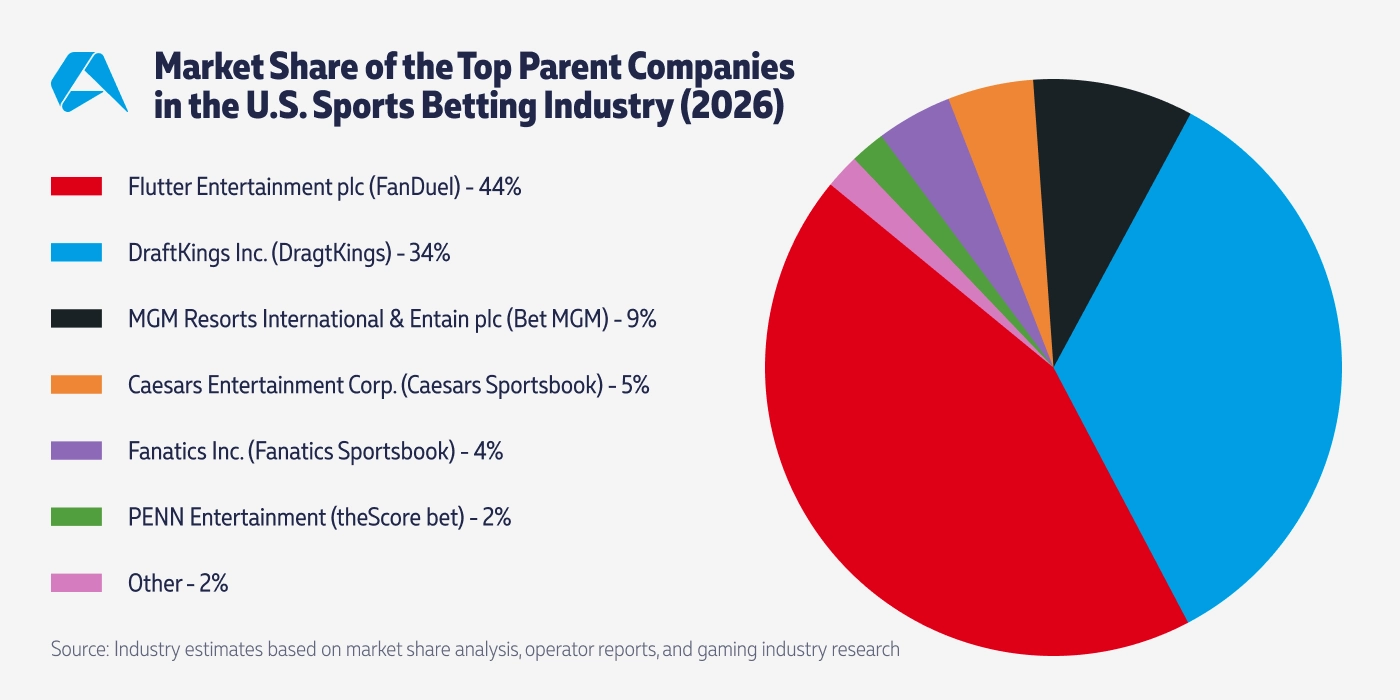
BetMGM, a joint venture between MGM Resorts and Entain, and Caesars Sportsbook also play important roles, using their extensive land-based casino networks and established reputations to maintain steady market positions. At the same time, operators such as Fanatics Sportsbook and bet365 continue expanding their presence as competition intensifies across regulated states.
With each major company focusing on technological innovation, media integration, and customer acquisition, the US sportsbook sector is evolving into an increasingly competitive and consolidated market, creating opportunities for both established operators and emerging challengers.
Other Key Insights for Investors
Understanding what drives success is essential for investors exploring the US sportsbook market. The operators with the greatest impact combine cutting-edge innovation with a deep focus on the user experience. Technology is at the heart of this, with features like live betting and intuitive bet builders influencing how people engage with sportsbooks. Further to this, integrated mobile apps and AI-powered odds-setting create personalised experiences that attract new bettors and keep them returning to the platform.
Media partnerships and strategic branding are also significant considerations in the US market. Deals like FanDuel’s high-profile collaborations with TV networks and the growing integration between sports media and sportsbook platforms showcase the power of visibility. These partnerships amplify brand recognition and tap into dedicated fan bases, helping sportsbooks enhance their presence in an increasingly competitive space.
Equally important is a focus on creating trust and loyalty. Operators who balance engaging features with initiatives that genuinely prioritise the player experience set themselves apart. From targeted advertising that speaks to specific audiences to efforts in responsible gaming, these efforts contribute to long-term growth and credibility.
These insights highlight what it takes for investors to succeed. It’s about blending innovation with strategy and recognising that a sportsbook’s success isn’t just about placing bets; it’s about delivering an experience that resonates with its audience while maintaining customer engagement in an increasingly competitive and consolidated market.
Pitfalls and Opportunities in the US Market
With its vast audience and gradual shifts towards deregulation in the legislative environment, the US sports betting market offers exciting opportunities for visionary operators and investors. But competition is fierce, with established giants like FanDuel, DraftKings, and BetMGM dominating the arena. Breaking through requires significant investment in customer acquisition, product differentiation, and a keen understanding of what drives loyalty. Add to that the patchwork of state regulations, each with its own compliance demands, and it’s clear that entering this market demands strategic planning and technological expertise.
Yet, opportunities remain significant for those with the right tools and vision. While the market has become increasingly consolidated around a handful of leading operators, under-penetrated states and evolving betting behaviours continue creating opportunities for innovation and long-term growth. Emerging technologies can give iGaming professionals a real edge. In addition, partnerships with media companies and sports leagues can amplify reach and boost brand credibility, helping new entrants stand out in a crowded space.
With the right technology, market positioning, and strategic approach, the US sports betting sector continues to offer substantial opportunities for operators prepared to compete in an increasingly mature and competitive environment.
Achieve success in the US sports betting market with technology trusted by the best. Connect with our team and schedule your live demonstration today.