

Overview: Top Benefits of Using Cryptocurrency in the iGaming World
Cryptocurrency has firmly established itself in the online casino sector, driving fast deposits and attracting tech-savvy demographics, yet sportsbooks have been historically slower to fully adopt these digital assets,. Although regulatory scrutiny regarding anti-money laundering and price volatility creates operational hurdles, the potential benefits for sports betting are undeniable,. These advantages include instant payouts, enablement of micro-betting, lower transaction costs, and resilience against restrictive local banking systems,,.
To succeed, operators must navigate complex challenges like liquidity management and security, balancing hot and cold storage while prioritising reliable currencies such as Bitcoin and stablecoins over volatile meme token,. As digital-first player habits evolve, sportsbooks must decide whether to remain on the sidelines or embrace crypto’s ability to reach unbanked markets and ensure 24/7 settlement.
Innovations like Altenar’s sportsbook payment module now assist operators in integrating crypto alongside fiat seamlessly, helping to bridge this gap for regulated markets.
Explore the blog below to see how sportsbooks can leverage crypto for faster, smarter payments!
Why should sportsbook operators care about cryptocurrency? It’s a question raised more often now than it was a few years ago. Crypto has already carved out a place in iGaming. Players fund casino wallets with Bitcoin daily, and entire brands have staked their reputations on being ‘crypto first’.
For casinos, the fit was obvious. Fast deposits, instant withdrawals, and a player base already fluent in digital wallets made adoption feel almost inevitable. Sportsbooks, however, have been slower to follow. Even casino-led operators that later expanded into betting, such as Stake.com, found themselves under heavier regulatory scrutiny once they crossed into sports.
That leaves us with the question: if crypto is reshaping casinos, is it only a matter of time before sportsbooks feel the pressure, or see the opportunity, to embrace it too?
Casinos Took the Lead, But Why Are Sportsbooks Lagging?
In hindsight, marriage between crypto and online casinos made sense from the start. Casino play involves a constant flow of deposits and withdrawals, with players often moving funds in and out multiple times in a single session. Cryptocurrency addresses a key pain point, with faster settlement, fewer delays, and lower processing costs compared to cards or bank transfers.
But just as important, it opens doors for players who lack reliable access to traditional banking services. In parts of South America and Asia, for instance, card penetration and e-wallet adoption is irregular. Crypto offers a straightforward way to deposit and withdraw, providing operators with reach into player segments that might otherwise be excluded. There was also a demographic overlap. Early crypto adopters tended to be younger, digitally fluent, and curious about new technologies. These traits are also reflected in many online casino players. Marketing teams seized on this, positioning themselves as ‘crypto first’ and creating brands that felt fresh, disruptive, and modern.
Sportsbooks, by contrast, operate under a different set of pressures. Regulatory scrutiny around betting markets is already intense, particularly when it comes to AML and match-fixing safeguards. Introducing crypto into this environment raises red flags for regulators who view anonymous or semi-anonymous transactions as higher risk. Beyond compliance, sportsbooks face practical challenges, as wagers are tied to real-time odds and settlement cycles. Price swings, even minor ones, can complicate accounting and settlement, creating operational complications that casinos don’t face in the same way.
But the bigger question now is whether those barriers are enough to keep sportsbooks on the sidelines? Player habits are evolving, crypto transactions are faster and cheaper than traditional payment methods, and digital-first demographics increasingly expect it as an option. Casinos have already shown that the demand exists.
What matters now is whether sportsbooks will continue to sit on the sidelines or start exploring crypto on their own terms, accepting the volatility and regulatory challenges, but also weighing the very real benefits that could make the move worthwhile.
The Pros and Cons of Crypto in iGaming
The upsides are hard to ignore. For iGaming operators, crypto touches almost every part of the value chain, covering payments, reach, margins, and player experience. Here are a few of the primary benefits for iGaming operators in all vertices:
✔ Faster deposits and withdrawals.
✔ Lower transaction costs.
✔ Access to unbanked players.
✔ Global reach across restricted payment corridors.
✔ Reduced chargeback risk.
✔ Marketing edge as a crypto-friendly brand.
✔ Appeal to younger digital-native players.
✔ 24/7 settlement outside banking hours.
✔ Competitive differentiation in crowded markets.
✔ Flexible cross-border transactions.
Additional Benefits for Sportsbooks

Crypto can deliver meaningful advantages to a sportsbook that differ from its role in online casinos. Betting on live events is faster, more intense, and relies heavily on rapid transactions. In this environment, crypto offers more than just an alternative payment method. It has the potential to address pain points unique to sportsbooks and add value where traditional systems often fall short.
Micro-betting enablement: Small wagers become more viable with instant, low-fee transactions.
In-play betting speed: Crypto enables instant wallet top-ups mid-game, keeping players in action without downtime.
Player retention through stickiness: Money tends to move between wallets and wagers rather than leaving the system with crypto.
Cross-market loyalty: Players can freely move between casino and sportsbook verticals using the same wallet.
Instant payouts for wins: Valuable in sports betting, where delays often frustrate players more than in an online casino.
Resilience against local banking restrictions: Crypto continues working when card issuers or banks block gambling transactions.
Fewer payment intermediaries: Reduces reliance on third-party banks or PSPs that sometimes delay or reject sports betting transactions.
Settlement certainty across time zones: No waiting for banking hours, which matters in global sports where events run 24/7.
The Drawbacks Sportsbooks Can’t Ignore
While cryptocurrency has carved out a place in online casinos, its role in sports betting remains more tentative. Limited mainstream adoption among sportsbooks reflects real operational and regulatory challenges that continue to hold back wider acceptance across key betting markets worldwide. Here are a few of those challenges:
Price volatility affecting bet settlement
Cryptocurrency’s price swings can create complications in real-time betting environments, where wagers are tied to constantly shifting odds. To this extent, a sudden movement between stake placement and payout can undermine operator margins, forcing sportsbooks to manage added settlement risks on every transaction.
Heightened AML and fraud monitoring burden
Sportsbooks already operate under strict requirements for financial integrity. Crypto intensifies this, with anonymous wallets and complex transaction trails demanding advanced monitoring systems. These cost and compliance issues have the potential to escalate, raising the stakes for operators if regulators spot gaps or deficiencies.
Regulatory uncertainty across key betting markets
The regulatory environment for crypto in gambling remains fragmented worldwide. Some authorities permit it cautiously under strict rules, while others remain undecided, and many prohibit it outright. For sportsbooks, this uncertainty complicates strategy, exposes them to greater legal risks, and hinders long-term investment decisions.
Reputational risk with regulators and media
Sportsbooks are already high-visibility businesses subject to regulatory oversight. Adding crypto into the mix can amplify scrutiny, fuelling negative perceptions of risk or non-compliance. This can lead to reputational damage, attracting unwelcome media coverage and eroding trust with regulators and stakeholders alike.
Liquidity and Financial Strategies Holding Crypto
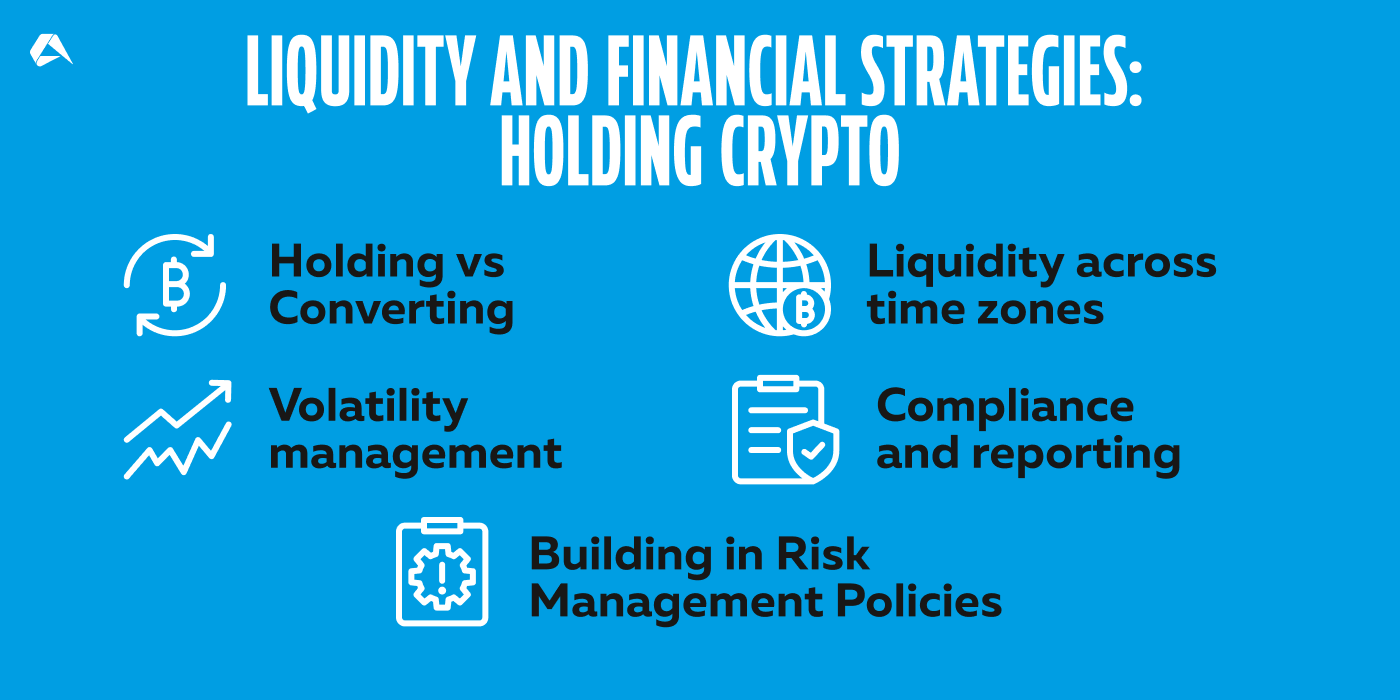
Accepting cryptocurrency is one thing, but managing it responsibly once it’s in the system is another altogether. Unlike fiat, crypto demands liquidity and treasury strategies that account for volatility, settlement timing, and regulatory obligations. Without a plan, even the operational benefits can break down.
Holding vs Converting
One of the earliest decisions financial teams must make is whether to hold crypto on the balance sheet or convert it immediately into fiat. Holding can offer upside if values rise, but it also exposes sportsbooks to swings that may erode margins overnight. Many operators, therefore, favour automated conversion into fiat at the point of deposit or withdrawal, sacrificing speculative gains in exchange for predictable accounting.
Volatility management
Even with conversion strategies, volatility is never completely removed. Operators often use stablecoins like USDT or USDC as an interim buffer. However, these come with their own risks. Treasury teams must therefore determine the acceptable level of exposure and establish corresponding hedging mechanisms.
Liquidity across time zones
Sportsbooks in particular need constant liquidity. Matches, races, and in-play betting happen around the clock, and crypto offers an advantage in 24/7 settlement. But liquidity must be carefully distributed across exchanges, hot wallets, and cold storage so that operational needs are met without compromising security.
Compliance and reporting
Treasury planning isn’t solely about managing balances. Regulators in most jurisdictions require detailed reporting on the source of funds, transaction trails, and conversions. Poor record-keeping can create major risks, not only in audits but also in maintaining essential banking relationships. Crypto revenues must therefore be reconciled with fiat ledgers in a way that satisfies both regulators and financial partners.
Building in Risk Management Policies
Ultimately, diversification into cryptocurrency must incorporate an element of risk management. Operators need protocols for price shocks, exchange outages, and wallet security breaches, all without disrupting the player experience. If treated as a strategic function, rather than an afterthought, iGaming operators are far more likely to capture the benefits of crypto while mitigating its risks.
Security Beyond the Wallet
Once operators begin handling crypto, they should think beyond wallet setup and consider asset protection, bringing us into a full spectrum of security, custody, and operational challenges.
Hot vs Cold Storage
Most find themselves balancing between hot wallets, which provide immediate liquidity for deposits and payouts but are exposed to attack, and cold wallets, which offer stronger protection but slower access. In a sportsbook environment, where in-play betting generates constant demand for fast-moving funds, the balance between speed and security becomes particularly important. Too much in hot storage invites risk, and too much in cold storage risks disrupting the customer experience.
This dilemma shapes the next set of decisions. Some operators choose to build and manage their own wallets in-house, taking on the responsibility of maintaining hardware security modules, implementing layered encryption, and employing dedicated staff. Others, on the other hand, choose to outsource to custody providers who offer secure infrastructure, insurance, and compliance support, trading off cost and autonomy for peace of mind.
In both models, how access is governed matters as much as the technology itself. Multi-signature approvals, tiered authorisations, and role-based restrictions reduce the risk of insider threats or a single point of failure, and they create the operational discipline regulators increasingly expect.
Yet even the best defences mean little without preparation for the worst. A breach or attempted compromise is not just a financial event, but also a reputational one, particularly in a sector where public scrutiny is high. That makes incident response planning, detection protocols, communication frameworks, and recovery procedures as necessary as storage or custody decisions.
Viewed this way, crypto security is less about managing a wallet than it is about preserving trust. Players want assurance that their funds are safe, regulators demand evidence of reliability, and banking partners look for operational maturity. Operators who exceed the bare minimum not only offer the best protection for their digital assets but also demonstrate the credibility necessary to compete in a market where trust is paramount.
The Currencies That Matter (and the Ones That Don’t)
The choice of cryptocurrency is not just about what works best for treasury and settlement, but also depends on which tokens players already know and trust. To this extent, adoption more often than not succeeds when familiarity meets practicality.
Bitcoin remains the most widely recognised and liquid option in iGaming. Despite its volatility, its global brand power makes it an essential part of any crypto offering. Ethereum also carries similar weight, supported by strong infrastructure and near-universal wallet compatibility, albeit with higher fees. Similarly, Litecoin has endured as a lighter, faster alternative, valued for quicker confirmation times and broad exchange support.
Increasingly, stablecoins such as USDT and USDC are emerging as an operational backbone for sportsbooks. Tied to the dollar, they reduce settlement risk and enable more predictable accounting, even if they lack Bitcoin’s name recognition. For operators, they should represent a practical addition rather than a replacement.
By contrast, obscure altcoins and meme tokens bring more risk than reward. Their limited liquidity, reputational baggage, and lack of mainstream player familiarity make them poor candidates for regulated markets, where compliance and credibility matter.
Crypto Currencies That Work in Practice for Online Betting
Best to Use
-
Bitcoin (BTC): Global recognition, liquidity, essential for adoption.
-
Ethereum (ETH): Strong infrastructure, broad support, well-known.
-
Litecoin (LTC): Faster confirmations, low fees, widely available.
-
USDT / USDC: Linked to USD, predictable settlement, sportsbook-friendly.
Best Avoided
-
Obscure Altcoins: Less liquidity and player familiarity.
-
Meme Tokens: Reputational risk, volatility, high fraud potential.
-
Illiquid Tokens: Limited exchange support and complexity.
In 2025, perhaps the real operational challenge for sportsbook owners and iGaming platforms in general is how to incorporate the benefits of offering crypto without disrupting existing systems or confusing players. The emphasis, therefore, is on integration and maintaining tight compliance, ensuring payments remain intuitive while avoiding unnecessary operational complications.
Altenar has addressed this need directly by introducing cryptocurrency support within its sportsbook payment module. Rather than a disruptive overhaul, it functions as an add-on feature, running alongside established fiat options. This makes it easier for operators to broaden their reach while maintaining stability and control.
A recent upgrade strengthens usability further. With the new Display in FIAT Currency option, betslips and histories appear in familiar EUR or USD values, even as wagers are placed in crypto. By bridging digital assets with traditional currency, Altenar makes crypto betting accessible to forward-thinking sportsbook operators without compromise.
Schedule a personalised one-to-one demonstration today and discover how your sportsbook can integrate crypto alongside fiat, to maintain stability and compliance while accessing new opportunities for growth in regulated markets.