

Operators quite rightly obsess over player acquisition. It is, after all, their lifeblood. The generous promos, boosted odds, and so on, are the weapons used to lure bettors through the door. And they work. At least in the short term, and better if personalised on a granular level. But here’s the truth. The reasons bettors remain loyal to a sportsbook are very different.
Bettors expect to lose wagers. That’s a fact. They don’t expect to lose faith in the platform to place a bet instantly. What keeps them depositing is the confidence that every click will behave as it should. That’s to say, when a bet is placed, confirmation shortly follows. When a win is earned, the payout is instant. And when the pressure is on in a major sporting moment, the platform stays strong and ready for the next bet.
Altogether, these moments are the real foundation of player retention. It’s not glamorous and you won’t catch it in the marketing headlines, but still, the real difference between a one-time customer and a lifelong player is often as simple as that. Get it wrong, and all that careful acquisition planning and spend goes south. Players won’t think, “nice design though”. They think, “Can I trust this place with my money?” And that question, once asked, can’t be unasked.
Real-World Moments That Break Trust
The reasons players leave aren’t a mystery. They’re predictable failures repeated across the iGaming industry. They leave because something has broken, either in the system, in the service, or in their trust.
Here are the top reasons why bettors switch sportsbooks:
1. Cash-out or withdrawal failures
Bettors view delayed or failed withdrawals as a red flag, questioning whether their funds are secure.
2. Outages during peak demand
If the site crashes when bettors need it most, frustration multiplies. Players migrate to competitors who stay online.
3. Vanishing bet history or wins
Disappearing or deleted bets feel like theft, and players often assume the system is rigged or dishonest.
4. Delayed payments or processing
Bettors expect fast payouts. Even slight delays signal unreliability, leaving players wondering if the operator is holding their funds.
5. Cash-out suspensions mid-game
When cash-out options suddenly vanish during live play, bettors feel cheated. Suspended features during volatile matches destroy confidence immediately.
6. Poor customer support
Technical failures happen. But if support is slow, unhelpful, or dismissive, players feel abandoned.
7. Limited or failed deposit methods
When deposits don’t process or preferred methods aren’t supported, players can’t trust they’ll ever place bets. Banking issues fast become deal-breakers.
8. Voided or corrected bets
Retroactive cancellations of winning bets feel like fraud. Bettors expect mistakes to be rare, not used as a reason to avoid payouts.
9. Lack of transparency on glitches
Suspicion grows when issues aren’t explained clearly. Silence or vague excuses lead players to believe that operators are hiding bigger problems.
10. Mobile app instability
For most bettors, mobile is the main channel. Freezes, crashes, or sluggish apps interrupt play and send them to more reliable competitors.
11. Latency in live betting
Seconds matter in live play, and in fast-moving markets, even slight lags can cost players the chance to place a bet at the odds they want.
12. Frozen bet slips
Nothing kills trust faster than a locked bet slip during a live match. A missed wager at a crucial moment feels unforgivable.
13. Login errors
Locked accounts, failed credentials, or repeated verifications frustrate bettors. Few will fight through technical issues when alternatives are one click away.
14. Crashes during peak events
If the site collapses under pressure, players not only leave but also tend to voice their frustration.
15. Repeated micro-failures
A single glitch may be forgivable. But a pattern of minor errors creates cumulative doubt that drives players away.
The Core Failures Behind Player Churn
The reasons bettors abandon a platform, as shown above, may look like a long, messy list. But at their core, these failures fall into a handful of clear categories. Each reflects a fundamental weakness that undermines trust, and each has solutions that can be implemented before problems get out of control.
Money & Payments
Bettors might tolerate the odd glitch, but the moment deposits stall or withdrawals drag on, trust evaporates fast. Payments are the beating heart of the sportsbook experience, and if players can’t rely on deposits to appear instantly, or winnings to move without delay, they start to question whether their bankroll is safe. Once that doubt creeps in, it’s nearly impossible to reverse.
The most common failures:
-
Withdrawals stuck in limbo
-
Deposits that vanish
-
Voided wins after the fact
-
Balance mismatches
What operators can do now?
Enable instant payouts: Invest in multi-method payment infrastructure that integrates both card networks and instant transfer APIs. Build redundancy across PSPs so withdrawals reroute automatically during outages, keeping high-value players confident that their funds can move as quickly as the bet they placed.
Add redundancy in deposits: Implement failover logic for deposits that retries across multiple processors within seconds if the first attempt stalls. Real-time reconciliation dashboards ensure balances update in real time, eliminating ‘vanished funds’ issues and providing support staff with immediate visibility when intervention is needed.
Handle errors with transparency: Create structured workflows for market errors where bets are voided. Push instant notifications, publish clear audit trails, and set response SLAs. Communicating openly and consistently keeps bettors on side, while silence or vague excuses only feed suspicions of manipulation.
Prove the ledger: Adopt immutable transaction logs, ideally blockchain-anchored or regulator-auditable, that players can access on demand. The visibility of every deposit, bet, and payout inspires a culture of trust based on evidence, reassuring users that their money and winnings are secure and cannot be lost.
Technical & Performance
Players notice when platforms buckle under pressure. A sportsbook might boast the best odds and features in the world, but if it crashes during a major sporting event or lags in live betting, none of that matters. Technical instability annoys bettors and does much to convince them the operator isn’t built to handle their wagers.
The most common failures:
-
Outages during peak demand
-
Mobile app crashes or instability
-
Latency in live betting markets
-
Repeated minor glitches that erode confidence
What operators can do now?
Build elastic scalability: Architect systems with auto-scaling cloud infrastructure and load balancers designed for event-day surges. Simulate extreme peak conditions in pre-event stress tests, rather than in labs. This ensures the sportsbook can absorb millions of concurrent sessions without service degradation or downtime.
Prioritise mobile performance: Design lightweight, mobile-first apps with strict code audits to minimise crashes. Implement continuous mobile QA across devices and operating systems, ensuring updates never ship out untested. Remember - reliability on mobile isn’t optional. In 2025, it’s the primary channel for modern betting.
Monitor latency relentlessly: Deploy real-time latency tracking tied to live odds feeds. If bet placement or odds display move beyond safe thresholds, automated throttling or circuit breakers prevent compromised markets, which preserve fairness and maintain player confidence during live action.
Treat micro-failures as warnings: Build internal feedback loops that trigger incident reviews even for minor bugs. A frozen balance refresh or missed bet notification is never small to the player. Addressing these consistently prevents a drip-feed of frustration from becoming systemic churn.
Trust & Transparency
When bet histories vanish or balances update late, players start to lose belief. A platform without visible transparency feels unsafe, even if the core systems are sound.
The most common failures:
-
Vanishing bet history or wins
-
Lack of communication during glitches
-
Regulatory or compliance concerns
What operators can do now?
Guarantee visible bet history: Implement immutable logging systems where every bet is time-stamped, stored, and retrievable by players at will. Publicly accessible audit trails make it impossible for wagers to disappear, thereby reinforcing fairness, satisfying regulators, and silencing suspicions.
Communicate with speed and clarity: Establish protocols where any disruption automatically triggers in-app alerts, email updates, and a centralised status page. Messaging should explain what happened, what’s being fixed, and expected timelines. Transparency during issues is as important as fixing them.
Show compliance credentials: Regularly publish licensing details, certification logos (GLI, ISO), and regulator audit results where players can easily see them. Trust isn’t built by claiming compliance, but proving it visibly and consistently before questions are asked.
Make accountability visible: Appoint a named compliance contact and clearly communicate their role to the public. Bettors feel safer knowing there’s a responsible authority behind the platform, not a faceless machine hiding behind vague disclaimers.
Features & Fairness
In online sports betting, consistency matters more than novelty. A feature that impresses during a product demo but fails under real-world conditions simply won’t cut it, as it actively undermines trust. Bettors don’t need every innovation to be groundbreaking. But they do need the ones provided to work flawlessly, every time. When reliability comes into question, players learn to doubt the platform a little more, until eventually they stop giving it another chance.
The most common failures:
-
Cash-out options disappearing mid-game without explanation
-
Bet builders or live-streaming features failing intermittently
What operators can do now?
Engineer feature resilience: Treat core features, such as cash-out and bet builders, as mission-critical services, with dedicated capacity and failover. If the trading team needs to suspend availability, communicate instantly and clearly.
Test under live conditions: Don’t just QA new features in the lab. Stress-test them in environments that mirror peak betting windows. A feature that works in quiet periods but collapses under load erodes credibility.
Track feature reliability as a KPI: Monitor how often core features are available, and report on uptime the same way you would system availability. What’s measured gets maintained, and players feel the difference.
Close the feedback loop: Capture user complaints on failed features and treat them as incident reports. Consistently resolving them shows players that the platform values their sense of fairness.
Service & Support
Technology will always break from time to time. That’s just the way it is. But what defines the user experience isn’t whether something goes wrong, but how quickly and competently it’s put right. Bettors typically don’t expect perfection, but they do expect to be treated like their issues matter.
The most common failures:
-
Support queues that leave players waiting hours for help
-
Front-line agents without authority or knowledge to resolve issues
-
Escalations that continue without a clear timeline
What operators can do now?
-
Staff with real expertise: Equip frontline staff with real knowledge of betting software systems and payment flows, not just general customer service. Players lose patience quickly with poor-quality service.
-
Design clear escalation paths: Create tiered support levels with guaranteed response times. Publish these commitments so players know when they can expect action.
-
Integrate support visibility: Use CRM systems that centralise player history across channels. Resolving issues quickly starts with seeing the whole picture from the first interaction.
-
Make support a brand asset: Treat every contact as an opportunity to demonstrate reliability, not just close a ticket. Proactive follow-ups, clear communication, and genuine ownership of issues convert complaints into loyalty.
The Anatomy of a Stable iGaming Platform
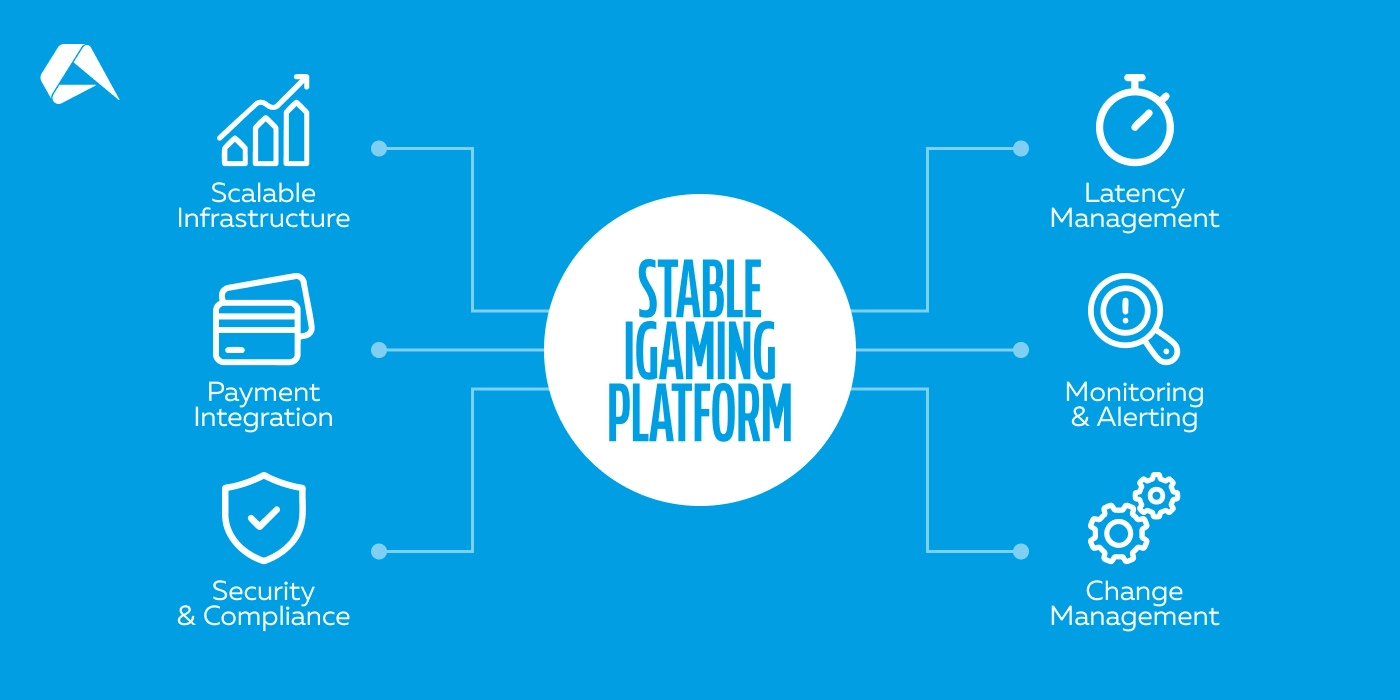
So far in this article, we’ve looked at the most visible moments when platforms lose players. If we take a step back and look at the big picture, a pattern emerges. Almost all of the moments that result in lost customers are rooted in infrastructure issues. Consequently, the strongest acquisition strategy in the world can’t keep a player who doubts whether their money, their bet, or their experience will be there the next time they log in.
Stability is about firm foundations, and systems are only as strong as the scrutiny they face. If you’re not challenging your platform with hard questions, you’re leaving your platform exposed. It all comes down to asking the right questions.
Scalable infrastructure
-
Have we run genuine stress tests that mimic derby-day traffic, not just average load?
-
Can our systems expand instantly without engineers scrambling behind the scenes?
-
What happens if a primary data centre fails during peak periods?
Payments integration
-
Do we have multiple PSPs integrated, and can funds reroute when one goes down?
-
Are reconciliation checks fast enough to catch errors before players notice them?
Data integrity systems
-
Can every transaction — deposits, bets, withdrawals, etc. — be traced in an immutable log?
-
Do we audit continuously, or only when something breaks?
-
How much visibility do regulators and players have into these records?
Latency management
-
Are we monitoring betting latency in milliseconds, and not just averages?
-
At what point do we suspend a market to preserve fairness?
-
Do players ever experience lag before our monitoring tools detect it?
-
Have we tested how latency shifts during traffic spikes?
Security and compliance layers
-
Are KYC and AML checks updated as often as regulations change?
-
Do these checks protect the business without creating issues for legitimate players?
Continuous monitoring and alerting
-
Do our systems raise alerts before a player is affected, or only once complaints arrive?
-
Is monitoring centralised across payments, trading, and tech?
Change management discipline
-
Do new releases go live only after being tested under real-world betting conditions?
-
How often has change management been the root cause of outages?
The Benefits of Getting Stability Right
When stability is achieved, operators start compounding growth. Players stay longer, spend more, and recommend platforms they trust. At a B2B level, regulators view stability as a sign of a trustworthy company. Payment partners treat you as reliable. Marketing spend stretches further, as retention replaces the need for constant replacement. As acquisition costs rise year on year, that advantage can be the difference between modest margins and sustainable growth.
Stability also creates freedom. Operators with confidence in their infrastructure can expand into new markets, trial innovative bet types, or roll out fresh features without fear that a release will backfire. A platform that can withstand stress becomes commercially agile, and such agility is where long-term winners are created.
This is not theory. It’s the operating model that top B2B iGaming software providers like Altenar deliver every day, with infrastructure engineered to handle peak loads, maintain low latency in live markets, and integrate with multiple payment providers. That reliability keeps players betting, paying, and returning.
But the edge that sports betting software providers like Altenar offer isn’t only technical. It’s the way stability is embedded into the company’s operating model, from proactive monitoring and incident response to a culture of rigorous testing before any new feature rolls out. For sportsbooks, that translates into a tangible commercial advantage with fewer lost players, a stronger brand reputation, and a platform positioned for continuous growth.
Don’t let instability cap your growth. Book a demonstration with Altenar today to see how a resilient sportsbook platform can help you strengthen acquisition, retention, and long-term profitability in competitive markets.