

Industry operators don’t need convincing that innovation sells, with AI tools increasingly used to improve efficiency, control, and ultimately, the bottom line. Crypto attracts new customers, and the next wave of tech always promises an edge. But every leap forward brings another compliance burden, and this time, regulators are keeping pace. The EU’s AI Act is already setting deadlines, FATF has closed loopholes on crypto transfers, and national authorities are tightening their own interpretations.
The reality in 2025 is that regulators are already rewriting the rules of engagement while much of the industry is still experimenting. AI models that seem harmless today could be classified as ‘high risk’ by 2026. Crypto flows you accept without issue in one market might count as a licence breach in another. And the next generation of tech is already on the regulatory radar.
So here’s the question for operators. Are you building systems that can adapt to rules as they’re written, or are you betting that regulators will look the other way? The burden of this decision rests with you, and the answer could determine whether your next innovation drives growth or invites a compliance investigation.
AI: Transparency and Accountability Under Scrutiny
In recent years, artificial intelligence has become entrenched in the gambling sector, powering everything from personalised marketing to risk management. But while operators see efficiency gains, regulators see a growing list of accountability issues. The question today is not whether AI has a place, but whether its use can withstand legal and ethical scrutiny.
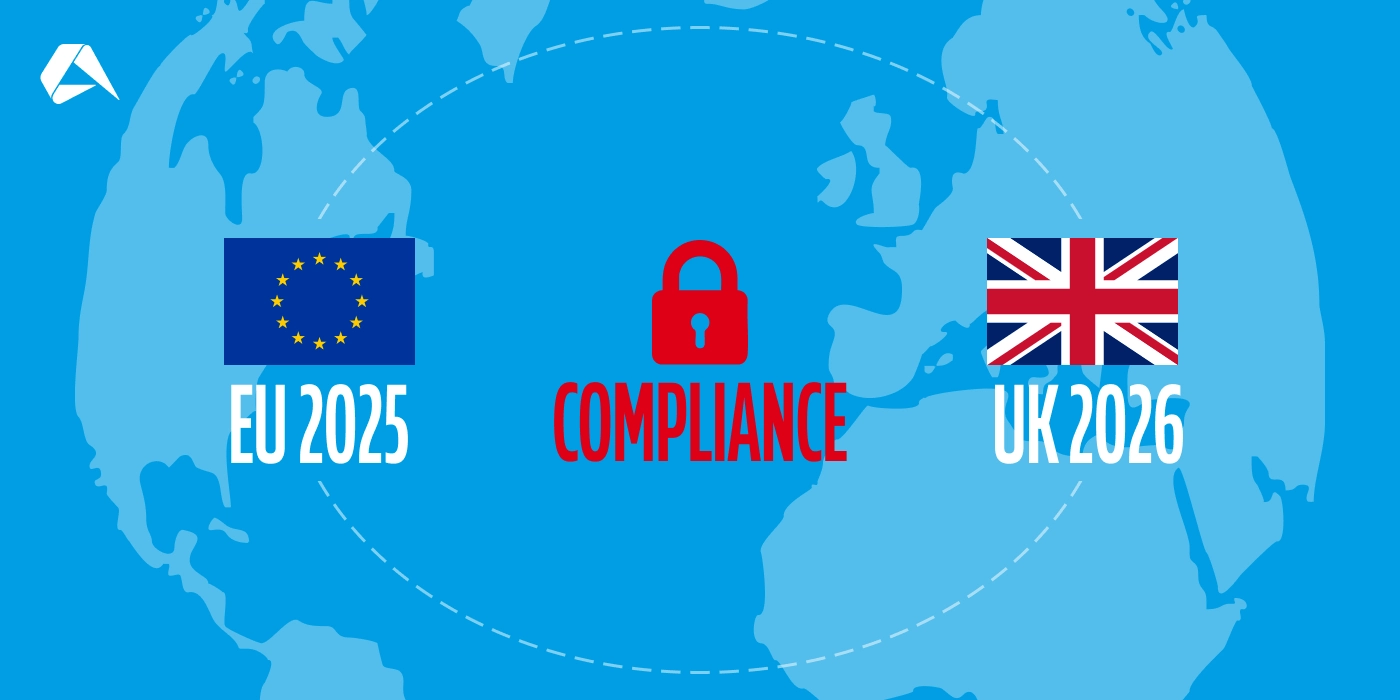
The EU AI Act, formally adopted in 2024, was a significant milestone in tech compliance. It introduces a tiered system of obligations, with gambling-related use cases, such as affordability checks, player profiling, and fraud detection, falling into categories where transparency, oversight, and explainability are expected. Certain provisions take effect in 2025, with 2026 set as the deadline for full compliance with high-risk AI rules. In practice, this means operators relying on AI models for compliance-critical decisions must be able to demonstrate how those models work, what data they use, and how outcomes can be explained to both regulators and affected customers.
The United Kingdom, on the other hand, has taken a different path, resisting a single AI statute in favour of a principles-based, regulator-led approach. The Financial Conduct Authority has indicated that firms should treat AI as an extension of existing risk frameworks, applying standards for governance, accountability, and operational resilience.
This difference between EU and UK regulatory principles is an example of the challenges operators will face moving forward.
Beyond Europe, the Council of Europe’s Framework Convention on Artificial Intelligence, opened for signature in September 2024, adds another level of complexity. It is the first binding international treaty on AI, requiring signatories to incorporate human rights, transparency, and accountability principles into their national laws and regulations. For multinational operators, it points towards a baseline standard that could influence rules well beyond the EU.
Enforcement is also evolving. The UK’s Advertising Standards Authority (ASA) has begun using AI tools to flag gambling ads for potential violations, as in the William Hill/Robbie Savage case, where an ad was flagged by automated systems and reviewed manually. The ruling was ultimately not upheld, but the case illustrates the reality that AI is now on both sides of the compliance equation.
For operators, this means building solid governance structures around every AI deployment. This includes documented testing, human oversight, model monitoring, and incident response protocols. Without these, even well-intentioned use of AI could be viewed as reckless or non-compliant by regulators.
Crypto: AML and Licensing on the Line
If AI is testing the boundaries of accountability, crypto is testing the boundaries of traceability. The promise of crypto in gambling is simple. Faster payments, global reach, and access to a new generation of digital-native customers. But regulators continue to treat it with a heavy hand, and for good reason. Crypto transactions, by their nature, can be obscure, fast moving, and hard to trace without specialised tools. For operators, this translates into one of the sharpest compliance tests they will face in the years ahead.
Money laundering and terrorist financing remain the chief concerns. The Financial Action Task Force has repeatedly flagged crypto assets as high-risk channels, warning that implementation of its ‘Travel Rule’ (a rule forcing crypto payments to carry identifying information) remains uneven across jurisdictions. The European Union has already taken steps to close this gap. Under the revised Transfer of Funds Regulation (Regulation (EU) 2023/1113), crypto asset service providers are now required to collect and transmit sender and beneficiary information on all transfers, with no threshold exemption. This came into effect on December 30 2024, with limited transition periods allowed until mid-2025. In parallel, the EU’s Markets in Crypto-Assets Regulation (MiCA) has established a binding rulebook for stablecoins and crypto service providers, with key provisions already taking effect.
Outside Europe, the picture is less consistent. In the United Kingdom, the Gambling Commission treats crypto-origin funds as inherently high risk. Operators are expected to apply enhanced due diligence, ongoing monitoring, and, in some cases, outright rejection of funds where the origin cannot be verified. Other jurisdictions, notably the US and Thailand, still prohibit or restrict the use of crypto in gambling altogether. The result is a mix of permissions and prohibitions, where what is compliant in one market could be a licence breach in another.
Operators who view crypto as an easy win risk being caught in this complexity. Compliance requires more than wallet addresses and transaction logs. It means real-time blockchain monitoring, policies for volatility disclosure, and documented risk assessments that withstand audit scrutiny. Most importantly, it requires clarity with regulators. In other words, crypto cannot be adopted quietly in the background. It must be presented as part of a compliance-first payments strategy.
Regulatory Disparity and Arbitrage
So what does all this mean for industry operators? For starters, it means compliance no longer stops at the border. A licence in one jurisdiction can carry very different expectations than a licence in another, even within the same region. This is what regulatory disparity looks like in practice. It’s overlapping with sometimes conflicting requirements that demand constant adjustments.
AI and crypto illustrate the point sharply. An algorithm used to assess affordability might be classified as a high-risk AI system in the EU, requiring formal documentation and oversight, whereas in another market, it is governed only by broader principles. Similarly, crypto payments may be permitted under strict AML guidelines in one country, tolerated but labelled high-risk in another, yet banned outright elsewhere. Subsequently, the challenge is not only keeping up with these rules individually, but ensuring that one compliance position does not undermine another.
In addition to this, arbitrage, the temptation to route operations through the most permissive regime, may look attractive, but regulators are alert to it. Global coordination on AML, through the FATF standards and the EU’s Transfer of Funds Regulation, is explicitly designed to close those loopholes. Operators trying to exploit inconsistent rules may instead find themselves exposed to scrutiny on both sides.
The overriding lesson is that national differences are not an invitation to shop for the most straightforward rules. It is a challenge to develop compliance frameworks that are flexible enough to meet the requirements of multiple regulators simultaneously.
New Wave of Innovations Shaping Tomorrow’s Rules
AI and crypto may dominate the current headlines on compliance, but they are not the end of the conversation. A new wave of technologies is already moving into regulatory oversight, each with its own implications for gambling operators:
Blockchain and smart contracts
Blockchain promises immutable records and smart contracts that can automatically execute bets and payouts without human intervention. But regulators face a dilemma. While transparency improves, privacy and accountability can be lost. Who is responsible if a contract goes wrong or is coded with bias? For operators, auditability and governance remain the sticking points.
Biometric authentication
Facial recognition, fingerprints, and voiceprints are being integrated into player verification and responsible gambling checks. They reduce problems and deter fraud, yet they also create new data-protection issues. Biometric data is highly sensitive under privacy law. Storing or mismanaging it could expose operators to fines and reputational harm. Regulators will ask not just if it works, but how it is secured.
Decentralised wallets and DeFi services
DeFi platforms and decentralised wallets give players direct custody of funds, bypassing traditional intermediaries. For compliance teams, this decentralisation complicates KYC, AML, and even taxation. Transactions may be borderless and mask true identity, raising questions that regulators are only beginning to address. Operators who engage with DeFi must prove they can trace flows without compromising the core protections required under gambling law.
Autonomous agents and bots
AI-driven bots and autonomous agents could one day place bets, manage portfolios, or even interact with players on behalf of others. That poses profound regulatory questions, such as ‘are bots permitted as players’, and who is liable for their behaviour? Without clear definitions, operators risk exposure by hosting activity regulators may later classify as unlawful or manipulative.
Minimising Risk Moving Forward
As regulators sharpen their focus on AI, crypto, and emerging technologies, the safest path is to demonstrate that every deployment is aligned with governance, transparency, and consumer protection. This is not an easy task to achieve, but there are a few core rules that operators should follow to simplify the process.
First, document everything. Whether you are trialling AI tools for sports betting or introducing new payment methods, regulators increasingly want evidence of testing, audit trails, and oversight. AI systems or algorithms to aid decision-making will not stand up under scrutiny in this area.
Second, invest in technology that makes compliance proactive rather than reactive. Reliable fraud detection software, for instance, does more than just stop obvious scams. It now needs to detect suspicious crypto flows, spot AI-driven bot behaviour, and flag unusual betting patterns in real time. Building these defences into your platform sends a clear signal to regulators that you take risk seriously.
Third, integrate compliance into your financial systems. Modern sports betting risk management software allows operators to set limits, monitor liquidity, and apply automated protections without slowing down the player experience. The point is not only to manage volatility, but also to demonstrate that you can prevent harm before it spreads.
Finally, think modular. Choosing AI software for sportsbook operations or blockchain-based tools is not only about performance. It's also about reliability. In a broader sense, it is about ensuring that each component can be updated as rules evolve. This degree of flexibility means survival when regulators change course.
How Altenar Helps Operators Stay Compliant
For Altenar, compliance is not an add-on but part of the very fabric of its sportsbook platform. Systems are designed to adapt to varying regulatory environments, providing operators with the flexibility to remain compliant as AI, cryptocurrency, and emerging technologies reshape the rules.
Every component of Altenar’s platform is built with oversight in mind. From fraud detection software that tracks suspicious betting patterns and crypto transactions, to risk management that ensures liquidity and exposure are always controlled, the tools are engineered to meet both operational and regulatory demands.
Beyond technology, Altenar maintains a dedicated compliance team that monitors regulatory updates across jurisdictions, ensuring operators are never caught off guard. The result is a sportsbook platform where innovation and compliance move in unison.
If you're looking for a partner who can help you grow while staying ahead of regulatory changes, contact Altenar today and let’s discuss the possibilities.