
Quick article overview - 3-minute read
You might spend weeks picking the perfect colors for a banner or writing the best catchy headline. But here is the reality: a beautiful message sent at 2:00 PM is useless if your player only cares about the match at 8:00 PM.
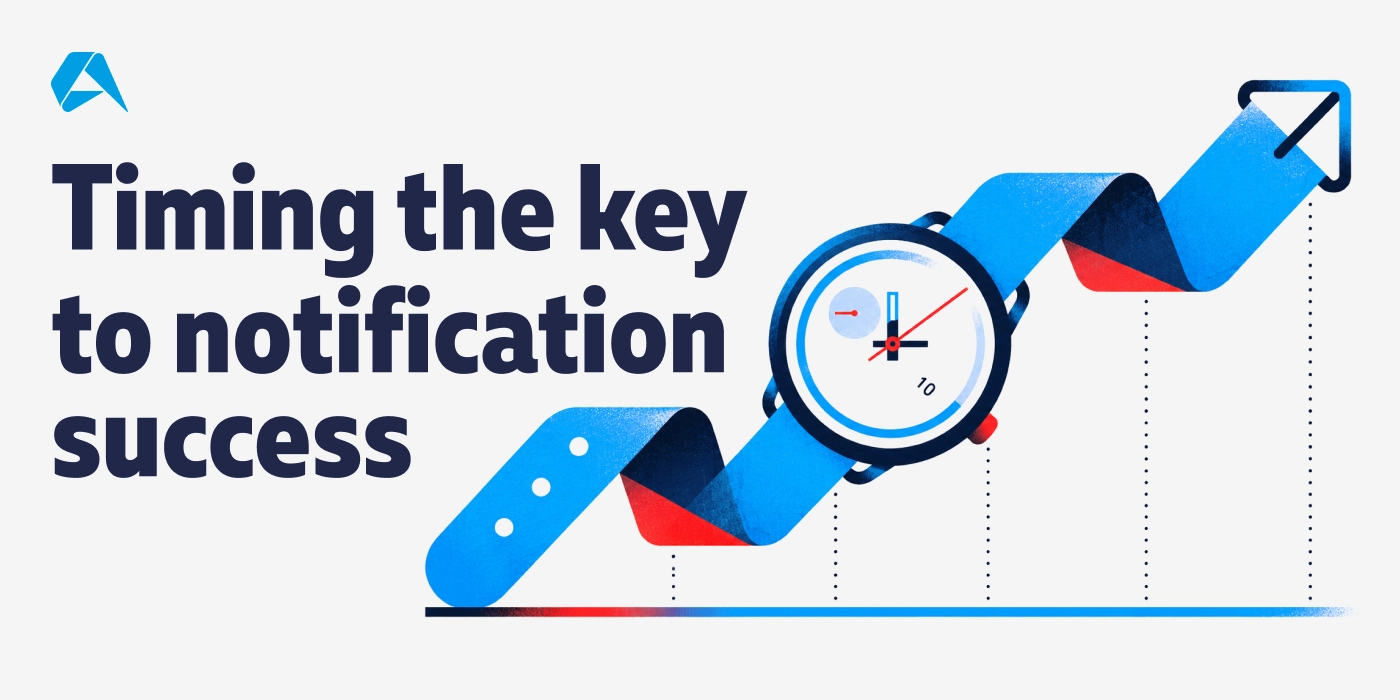
In sports betting, attention happens in quick bursts. Interest spikes when a team announces its lineup or when odds suddenly change. This interest disappears just as fast. Modern operators now realize that when you send a message matters much more than how it looks. The industry is moving away from fixed schedules and toward behavioral responsiveness. A short window of high interest during a live match is worth more than days of generic promotions.
The moments when bettors actually care
Bettors are different from casino players. They react to things happening in the real world. To keep them coming back, you must find the exact moments when they are ready to bet.
-
Pre-match spikes: A player might look at odds an hour before a game starts without much interest. However, that same player has high intent ten minutes after the team news drops.
-
Live betting windows: In-play betting makes these windows even shorter. A red card or a late goal creates a surge in activity. If your message arrives twenty minutes later, you missed your chance.
-
Personal routines: Many players have specific habits, like betting only on certain leagues or weekend games. You need to match your timing to their personal rhythms.
Speed is just as important as strategy
Finding the right moment is only half the job. You must also deliver the message before that moment ends. In a sportsbook, timing depends on your technology. If your data feeds are slow or your system processes messages in big batches, you will be too late.
Every second counts. If a notification about a match event arrives after the odds have already changed, the player cannot act on it. Your message becomes a distraction rather than a tool. This makes speed a technical requirement, not just a marketing goal. Use push notifications for instant updates and keep email for messages that are not time-sensitive.
How to switch to behavior-based timing
You do not need to delete your CRM calendar, but you should change how you use it. Start moving toward timing that reacts to the player:
-
Use event triggers: Link your messages to real events like lineup news or match start times.
-
Watch for signals: Look for signs of interest, such as a player checking the same odds multiple times.
-
Be flexible with frequency: Do not worry about sending a specific number of messages per week. Send more when the action is hot and stay quiet when nothing is happening.
-
Fix your tech delays: Make sure your system can send a message the instant it detects a trigger.
Winning the battle for instant attention
The days of the fixed campaign calendar are over. Players now expect your sportsbook to keep up with the live action. Your biggest advantage is the ability to see what a player wants and respond immediately. If you wait too long, your marketing budget goes to waste.
Sportsbook Retention Is Changing: Why Timing Matters More Than Design
For many years now, sportsbook retention strategies have centered on campaign design, featuring striking visuals, strong copy, larger offers, and more aggressive promotional delivery. Entire CRM setups have been built around the assumption that better creativity naturally leads to stronger engagement. What many operators are now recognizing is that sportsbook behavior doesn’t always settle into the kind of predictable patterns traditional campaign strategies depend on.
Betting attention moves in bursts. Typically, it could be something like a lineup announcement, a sudden odds change, a late goal, and so on. Interest rises quickly, and then disappears just as fast. The same bettor who ignores three promotions during the afternoon may become highly active for a seven-minute period during a live match. That behavior completely changes the logic behind retention.
A perfectly designed message sent at the wrong time is still irrelevant. And this is becoming increasingly important as sportsbooks place greater emphasis on live betting, personalized engagement, and real-time player activity.
Forward-thinking operators are discovering that timing often influences engagement more than campaign presentation itself. The difference between a notification that feels useful and one that feels irrelevant can come down to only a few minutes.
As a result, retention strategy is gradually edging away from static campaign scheduling and toward behavioral responsiveness. The focus is no longer just the message players receive, but whether the platform recognizes when attention, intent, and engagement are most likely to exist in the first place.
The moments when bettors are most engaged
Unlike casino activity, where play can continue for long periods without interruption, betting behavior is usually connected to something specific happening externally. For example, a match that is about to start. The release of team news. An unexpected change in the odds. A live game suddenly becomes unpredictable, and attention increases.
In many cases, the window between interest and action is surprisingly short. A player checking markets an hour before kickoff may be casually browsing. But the same player returning ten minutes later after a lineup announcement is operating with far higher intent. The difference in engagement potential between those two moments can be significant.
Live betting compresses those windows even further. Momentum changes, red cards, injuries, or late-game pressure can trigger sudden surges in activity that disappear almost as quickly as they appear. Messaging that arrives during those moments can feel timely and relevant. The same notification delivered twenty minutes later might lose most of its impact.
Behavioral patterns also extend beyond live events themselves. Many bettors develop routines around particular leagues, match times, or betting habits. Some consistently engage before evening fixtures. Others become active only during major tournaments or weekend schedules. Re-engagement timing matters here as well. Sending promotions immediately after inactivity or losses may place the message in front of players, but that does not automatically mean they are ready to respond.
The operators seeing stronger retention performance are increasingly those that understand context alongside content. Not simply what players receive, but what the player is doing when the message arrives. In sportsbook environments especially, engagement is not usually continuous. It tends to occur in short periods of heightened intent, strongly influenced by timing, emotion, and live-event behavior.
Timing only works if delivery is fast enough
Identifying the right moment is only part of the equation. The more difficult question is whether the message actually reaches the player while that moment still exists.
In sportsbook environments, timing windows are measured in minutes, sometimes seconds. Interest builds quickly, but it does not last long. If a notification is delayed, even slightly, the context that made it relevant can already be gone by the time it arrives. This is where execution matters.
In many cases, event feeds take time to update, triggers process in batches rather than instantly, and queues form during heightened activity. Delivery competes with other outbound messaging. Each step adds a few seconds, sometimes longer. Taken together, those delays can move a message outside the window where it would have made an impact.
A notification tied to a match event may still reach the player, but if the market has already moved on or the opportunity has passed, the message no longer feels connected to what is happening. It becomes informational rather than actionable.
This is why timing cannot be separated from delivery speed. Real-time messaging depends not only on recognizing the right trigger, but on reducing the time between detection and delivery to the point where the message still feels relevant. In practical terms, that turns notification timing into a system-level consideration, governed as much by infrastructure and processing logic as by the CRM strategy itself.
Delivery Speed Defines Which Channels Work
Not all delivery methods operate at the same speed. In modern sportsbooks, that difference can determine whether a message arrives within the moment of intent or after. The channel itself is not the deciding factor, but the time it takes to deliver is.
| Channel | Delivery Speed | Best Use Case |
|---|---|---|
| Push notifications | Near-instant | Live events, odds changes, in-play triggers |
| In-app messaging | Instant (session-based) | Active browsing, bet slip interaction |
| SMS | Fast, but not immediate | High-priority alerts, key event reminders |
| Delayed | Promotions, longer-term retention |
How Data and AI Are Changing Send-Time Optimization
For a long time, send-time optimization was purely a scheduling exercise. Identify a general ‘best time to send’, apply it across user segments, then adjust based on open or click rates. That approach still exists, but in practice, it has limited value in sportsbook environments where engagement does not follow a consistent daily pattern.
Rather than relying on fixed schedules, operators are increasingly modeling how individual players interact with the sportsbook over time, using behavioral data and AI-driven insights similar to those explored in Altenar’s analysis of sportsbook personalization tactics. That includes when they typically browse, how they respond to different types of events, how frequently they engage, and how their activity changes around specific sports, leagues, or match timings. From there, messaging becomes less about timing in isolation and more about recognizing when a player is most likely to act.
This is where AI-led optimization is beginning to have a noticeable impact. With today's technology, it is now possible to dynamically adjust send-time decisions based on behavioral signals rather than historical averages. A player who regularly engages during evening fixtures may receive notifications aligned to those patterns, while another who only bets during live matches may be targeted within a much more precise window. Over time, systems can also detect when engagement starts to decline, adjusting frequency or holding back messaging altogether to avoid message fatigue.
That last point is often overlooked. The ability not to send can be just as valuable as the ability to trigger a notification. As sportsbooks continue to invest in real-time data and platform responsiveness, send-time optimization is increasingly about when intent is actually present.
How to transition from Scheduled CRM to Behavioral Timing
For many operators, CRM is still built around schedules. Campaigns are planned in advance and aligned with fixtures, promotions, or weekly intervals. That structure remains useful, but it does not always reflect how sportsbook activity behaves in real time.
So a move toward behavioral timing is not necessarily about outright replacing CRM schedules, but more to do with adjusting how and when it responds. In practice, most operators move gradually, applying timing logic on top of existing campaigns rather than rebuilding from scratch.
A few practical steps can help move that process forward.
1. Move from fixed send times to event-based triggers
The first change is relatively simple. Instead of relying on scheduled send times, messaging can be tied to moments that already drive attention, such as lineup announcements, market openings, odds movements, or match start times.
These events create natural engagement windows. Aligning notifications with them increases the likelihood that messages arrive while interest is already present.
2. Layer behavioral signals on top of event triggers
Event timing alone improves relevance, but behavior adds context.
Actions such as repeated market views, bet slip activity, or brief browsing sessions often indicate rising intent. Messaging linked to these consequently tends to feel more connected because it reflects what the player is already doing, rather than interrupting them with unrelated content.
3. Adjust frequency based on responsiveness, not targets
Traditional CRM often focuses on output targets, i.e. a set number of messages per day or per week. Behavioral timing requires more flexibility. Some periods will require no communication at all. Others may justify multiple messages within a short window.
4. Introduce simple send-time optimization at the player level
Not every player engages at the same time or in the same way. Even basic adjustments, such as aligning messages with preferred betting hours or typical activity periods, can improve engagement without adding complexity. Over time, these patterns can be refined into more precise delivery windows based on individual behavior.
5. Reduce reliance on campaign calendars
Scheduled campaigns still have a role, particularly for promotions and major events. But over-reliance on fixed calendars often leads to messages arriving outside meaningful engagement windows.
The goal is not to remove structure entirely, but to allow behavioral triggers to take priority when timing matters more.
6. Treat timing as part of system performance
As messaging becomes more time-sensitive, execution becomes pivotal. Delays in event detection, trigger processing, or delivery can undermine even well-designed campaigns.
Ensuring that systems can react quickly and consistently is essential if behavioral timing is expected to perform as intended.
The Technology Behind Effective Notification Timing
Delivering notifications at the right moment depends on more than just CRM logic. It relies on how well a platform can process live data, interpret behavioral signals, and respond without delay.
Real-time event feeds, low-latency infrastructure, and tightly integrated engagement tools all help make that possible. Without that foundation, even well-designed timing strategies can struggle to perform consistently.
As sportsbooks move toward more responsive, behavior-driven engagement, the systems behind them are becoming just as important as the campaigns themselves. The ability to detect and respond to intent instantly is moving from an advantage to a growing expectation in modern sportsbook retention.
Explore how Altenar helps operators move beyond scheduled CRM with real-time engagement tools. Book a platform demonstration now to learn how timing and infrastructure influence modern player retention performance.