

Key takeaways
-
The Revenue Reality: Long-term profits come from steady player activity, not first-week behavior. Big initial spenders often quit quickly, while consistent, small-stakes players bring more value over time.
-
The Behavioral Strategy: Player lifetime value is not fixed and can be improved. Operators use predictive data to step in and boost engagement before a user stops logging in.
-
Core Drivers of Retention: Loyal customers are created through regular betting routines and platform trust built on fast withdrawals. Getting players to try features like Bet Builder keeps them around longer.
-
The CRM Approach: Sending generic promotions to everyone is ineffective in mature markets. Personalized messages that match a player's direct sports interests successfully extend the customer relationship.
-
Key Predictive Metrics: Operators track future value using indicators like active betting days and feature adoption rates. Monitoring sudden drops in deposit frequency warns that a player is losing interest.
-
Infrastructure Requirements: Shifting from observing data to actively guiding the player journey requires advanced technology. Platforms need a sportsbook setup built around real-time analytics and automated CRM tools.
Understanding Player Lifetime Value in Modern Sportsbooks
Many operators focus heavily on acquiring new customers, yet long-term profitability is primarily determined by what happens after registration. Some players remain active for years, generating consistent revenue across multiple products and campaigns. Others disappear after a handful of bets. Understanding why this happens lies at the heart of Player Lifetime Value (LTV).
It raises an important question. What behaviors transform an ordinary customer into a highly valuable long-term player? Some of the most valuable sportsbook players can be identified surprisingly early. The real opportunity, therefore, lies in recognizing the traits that predict future value and acting before engagement begins to fade.
Valuable players don’t always look valuable from the start
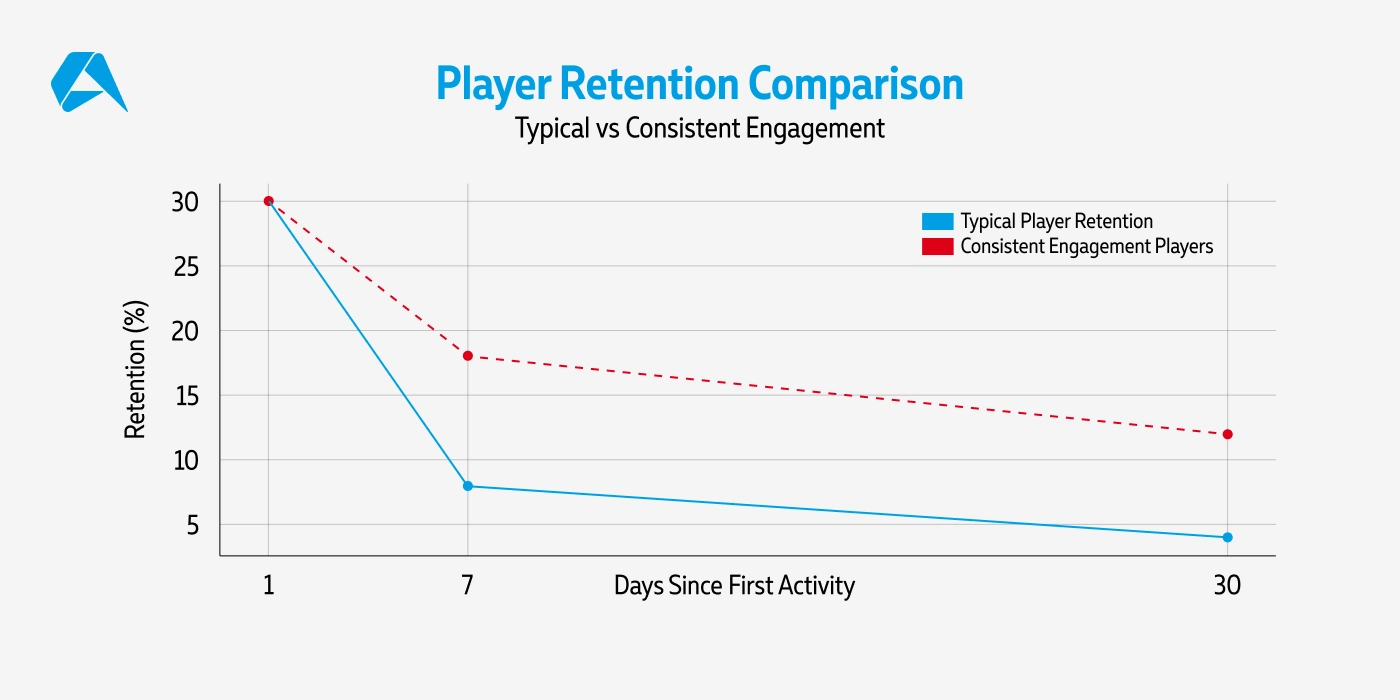
First impressions can be misleading. Experienced operators already know that the player generating the most revenue during their first week is not always the player who delivers the greatest value over the player’s lifetime.
Imagine, for instance, two customers registering on the same day. The first deposits £500, places twenty bets over a busy weekend, claims a welcome offer, and appears highly engaged. Three weeks later, they stop logging in altogether.
The second customer deposits just £50. Their activity is far less spectacular initially. They place a few bets each weekend, experiment with Bet Builder, respond to occasional promotions, and gradually become a regular customer. Two years later, they are still actively betting.
Clearly, in the above comparison, the second player is likely to be far more valuable, which highlights one of the most important realities of Player Lifetime Value. Long-term profitability is not usually determined by what happens during a player's first few days or even their first month. Instead, value tends to accumulate through repeated engagement, consistent activity, and an ongoing relationship with the sportsbook.
This helps explain why many operators are placing greater emphasis on retention rather than focusing exclusively on acquisition. Acquiring new customers will always remain important, but acquisition alone does not create profitability. Sustainable revenue comes from players who keep returning, discover new features, engage with promotions, and remain active over time.
The effect can be surprisingly powerful. Each additional month of momentum in engagement creates new opportunities for betting activity, deposits, cross-selling, and personalized marketing. What begins as a relatively modest customer relationship can gradually develop into a significant revenue contributor.
How high-LTV players are created in 2026
So what causes some players to become significantly more valuable than others? High-value players are generally not created by a single significant event at the start of a player journey. More often, their value develops gradually through a series of positive interactions that strengthen their relationship with the sportsbook.
It’s an important distinction. Operators do not directly increase LTV through a single act. Instead, they influence the conditions that encourage players to remain active and engage with a platform. The strongest customer relationships are typically built through a combination of habit, trust, relevance, and ongoing engagement.
Habit and routine
Many of the most valuable sportsbook customers are not necessarily the biggest spenders. They are the players who return consistently. Whether betting every weekend, following their favorite team, or participating in major sporting events throughout the year, regular engagement creates recurring opportunities for deposits, wagering, and retention. Over time, betting becomes part of a routine, and that consistency often provides greater value than short, high-spending sessions.
Product discovery
Players who engage with multiple sportsbook features often develop a deeper connection with the platform. A customer who progresses from pre-match betting to live betting, experiments with Bet Builder, uses cash-out functionality, or explores additional products becomes more comfortable with the product and finds more reasons to return. Every new feature adopted creates another point of engagement, increasing the likelihood that the player remains active and continues generating value over a longer period.
Trust and user experience
Trust is one of the most influential and frequently overlooked drivers of long-term player value. Fast withdrawals, reliable platform performance, competitive markets, and a straightforward registration process all contribute to confidence in the operator. Players are far more likely to remain loyal when the experience consistently meets expectations. While trust can take months to establish, it can also be lost remarkably quickly, making it an essential component of sustainable retention.
Relevant communication
More communication does not necessarily lead to better engagement. Consequently, the most successful CRM programs focus on delivering the right message at the right time. Evidence is emerging that generic promotions sent to every customer often struggle to sustain engagement, particularly in mature markets. Personalized communication, on the other hand, can help players discover relevant events, features, and offers that align with their interests. When communication feels timely and useful rather than intrusive, it can strengthen engagement and help extend the customer relationship far beyond the initial acquisition stage.
Of course, understanding these drivers is only part of the challenge. Operators also need practical ways to measure whether their efforts are translating into stronger player value over time.
The KPIs that reveal future player value
While no single metric can predict a player's future value with complete accuracy, certain KPIs can provide useful clues. Together, they help operators identify behavioral patterns associated with retention, engagement, and long-term profitability.
Retention Rate: Measures the percentage of players who remain active over a specific period. It is typically calculated by dividing the number of returning players by the total number of players acquired during that timeframe. Strong retention often indicates growing loyalty and is one of the clearest indicators of future player value.
Active Betting Days (ABD): Tracks how many days a player places at least one bet within a defined period. Rather than focusing solely on betting volume, it highlights engagement frequency. Players who return regularly often generate greater lifetime value.
Deposit Frequency: Measures how often a player funds their account over a given period. Consistent deposits can indicate ongoing engagement and confidence in the sportsbook experience. A sudden decline may also provide an early warning that interest is fading and intervention may be required.
Product Adoption Rate (PAR): This KPI measures the proportion of players using multiple sportsbook features or products, such as live betting, Bet Builder, cash-out functionality, or casino games. It is typically calculated by comparing feature users against the total player base. Broader engagement often correlates with stronger retention and longer customer lifecycles.
Average Revenue Per User (ARPU): ARPU measures the average revenue generated by each active player over a specific period. It is calculated by dividing total revenue by the number of active users. While ARPU alone does not measure lifetime value, it helps identify player segments contributing the greatest commercial return.
Churn Rate: Churn rate measures the percentage of players who stop engaging with the sportsbook during a defined period. It is calculated by dividing the number of inactive or lost customers by the total player base. Rising churn can significantly reduce lifetime value, making it one of the most important retention-focused metrics to monitor.
The KPIs discussed above focus specifically on behaviors that influence long-term player value. Operators seeking a more comprehensive overview of sportsbook performance metrics may find our article on Key KPIs for Boosting Sports Betting Revenue useful.
From measuring to influencing lifetime value
One of the biggest changes in modern sportsbook operations is the growing recognition that Player Lifetime Value is not fixed. It develops over time. Historically, operators relied heavily on reporting tools to understand what had already happened. Retention rates, deposit activity, and revenue metrics provided valuable insights, but by the time trends became apparent, the opportunity to influence them had already passed.
Today, the focus is increasingly moving toward behavioral prediction and intervention. Rather than simply identifying high-value players when they emerge, operators are looking for indicators that suggest a player is beginning to move in that direction. So, a customer who starts betting more consistently, explores new features, responds positively to personalized communication, or gradually increases engagement may be displaying the early characteristics of a highly valuable long-term customer.
Equally, declining activity, fewer deposits, or reduced interaction can indicate that engagement is beginning to weaken. Once you understand this, it is not a big leap to the next logical conclusion — that there are ongoing opportunities to influence outcomes rather than merely observe them.
Personalized recommendations, automated CRM journeys, targeted incentives, and behavioral segmentation can all help guide players toward deeper engagement and stronger retention. The objective is no longer limited to understanding what happened yesterday. Increasingly, it is about recognizing behavioral changes early enough to influence what happens next.
Building a more valuable player base
Ultimately, it is safe to say that creating high-value sportsbook customers requires more than acquisition campaigns and performance reports. Much of it depends on understanding player behavior, identifying opportunities to strengthen engagement, and responding before valuable customers drop off the radar.
Modern sportsbook platforms increasingly support this process through sophisticated technology in behavioral analytics, CRM automation, audience segmentation, personalization, and real-time engagement tools. When these components work together, operators gain greater visibility into player journeys and more opportunities to influence long-term player value and profitability.
Schedule a personalized sportsbook demonstration today to explore the tools helping operators identify future high-value players and influence engagement before opportunities are lost.