

Overview: Top Benefits of Using Cryptocurrency in the iGaming World
Cryptocurrency has firmly established itself in the online casino sector, driving fast deposits and attracting tech-savvy demographics, yet sportsbooks have been historically slower to fully adopt these digital assets,. Although regulatory scrutiny regarding anti-money laundering and price volatility creates operational hurdles, the potential benefits for sports betting are undeniable,. These advantages include instant payouts, enablement of micro-betting, lower transaction costs, and resilience against restrictive local banking systems,,.
To succeed, operators must navigate complex challenges like liquidity management and security, balancing hot and cold storage while prioritising reliable currencies such as Bitcoin and stablecoins over volatile meme token,. As digital-first player habits evolve, sportsbooks must decide whether to remain on the sidelines or embrace crypto’s ability to reach unbanked markets and ensure 24/7 settlement.
Innovations like Altenar’s sportsbook payment module now assist operators in integrating crypto alongside fiat seamlessly, helping to bridge this gap for regulated markets.
Explore the blog below to see how sportsbooks can leverage crypto for faster, smarter payments!
Why should sportsbook operators care about cryptocurrency? It’s a question raised more often now than it was a few years ago. Crypto has already carved out a place in iGaming. Players fund casino wallets with Bitcoin daily, and entire brands have staked their reputations on being “crypto-first.”
For casinos, the fit was obvious. Fast deposits, instant withdrawals, and a player base already fluent in digital wallets made adoption feel almost inevitable. Sportsbooks, however, have been slower to follow. Even casino-led operators that later expanded into betting, such as Stake.com, found themselves under heavier regulatory scrutiny once they crossed into sports.
That leaves us with the question: if crypto is reshaping casinos, is it only a matter of time before sportsbooks feel the pressure—or see the opportunity—to embrace it too?
Casinos Took the Lead, But Why Are Sportsbooks Lagging?
In hindsight, the marriage between crypto and online casinos made sense from the start. Casino play involves a constant flow of deposits and withdrawals, with players often moving funds in and out multiple times in a single session. Cryptocurrency addresses a key pain point with faster settlement, fewer delays, and lower processing costs compared to cards or bank transfers.
Just as important, it opens doors for players who lack reliable access to traditional banking services. In parts of South America and Asia, for instance, card penetration and e-wallet adoption are irregular. Crypto offers a straightforward way to deposit and withdraw, providing operators with reach into player segments that might otherwise be excluded. There was also a demographic overlap. Early crypto adopters tended to be younger, digitally fluent, and curious about new technologies—traits reflected in many online casino audiences. Marketing teams seized on this, positioning themselves as “crypto-first” and creating brands that felt fresh, disruptive, and modern.
Sportsbooks, by contrast, operate under a different set of pressures. Regulatory scrutiny around betting markets is already intense, particularly regarding AML and match-fixing safeguards. Introducing crypto into this environment raises red flags for regulators who view anonymous or semi-anonymous transactions as higher risk. Beyond compliance, sportsbooks face practical challenges, as wagers are tied to real-time odds and settlement cycles. Price swings, even minor ones, can complicate accounting and settlement—creating operational complications that casinos don’t face in the same way.
The bigger question now is whether those barriers are enough to keep sportsbooks on the sidelines. Player habits are evolving, crypto transactions are faster and cheaper than traditional payment methods, and digital-first demographics increasingly expect it as an option. Casinos have already shown that the demand exists.
What matters now is whether sportsbooks will continue to sit on the sidelines or start exploring crypto on their own terms—accepting volatility and regulatory challenges, while weighing the very real benefits that could make the move worthwhile.
The Pros and Cons of Crypto in iGaming
The upsides are hard to ignore. For iGaming operators, crypto touches almost every part of the value chain—payments, reach, margins, and player experience. Here are primary benefits for iGaming operators across all verticals:
- Faster deposits and withdrawals
- Lower transaction costs
- Access to unbanked players
- Global reach across restricted payment corridors
- Reduced chargeback risk
- Marketing edge as a crypto-friendly brand
- Appeal to younger, digital-native players
- 24/7 settlement outside banking hours
- Competitive differentiation in crowded markets
- Flexible cross-border transactions
Additional Benefits for Sportsbooks
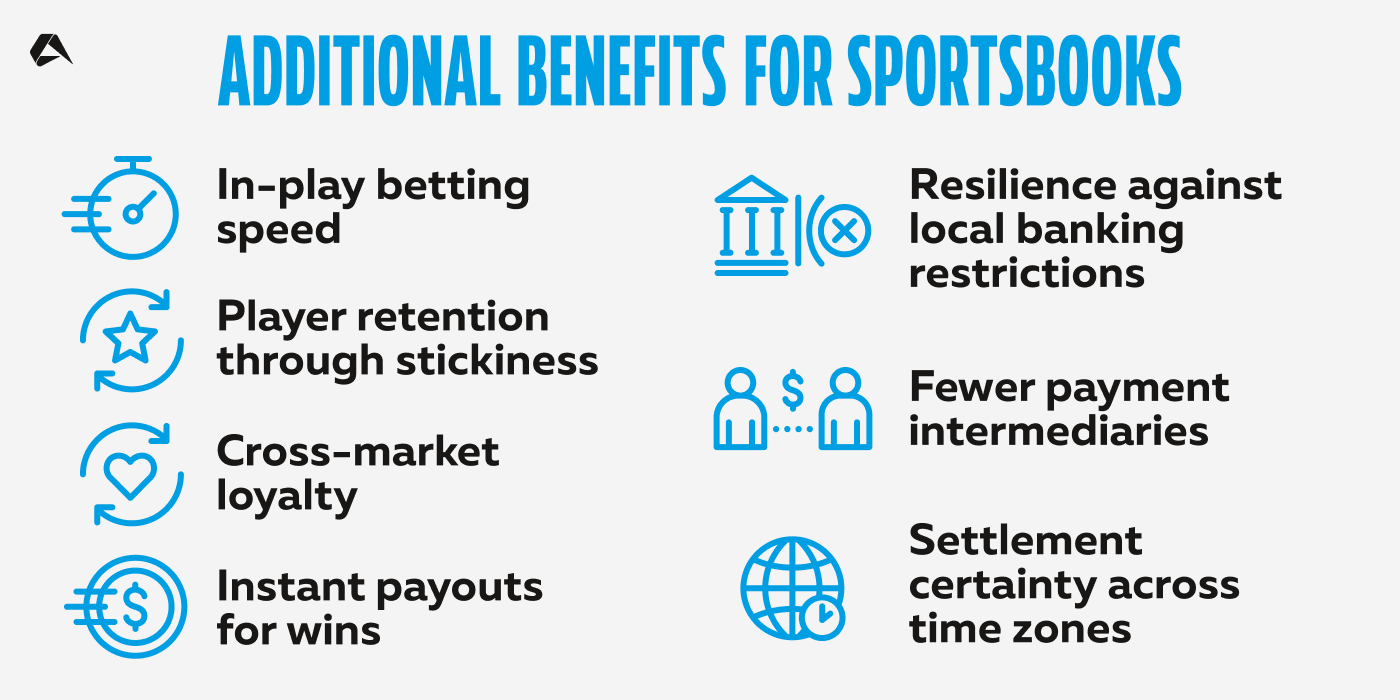
Crypto can deliver meaningful advantages to a sportsbook that differ from its role in online casinos. Betting on live events is faster, more intense, and relies heavily on rapid transactions. In this environment, crypto offers more than an alternative payment method—it can address pain points unique to sportsbooks and add value where traditional systems often fall short.
- Micro-betting enablement: Small wagers become more viable with instant, low-fee transactions.
- In-play betting speed: Crypto enables instant wallet top-ups mid-game, keeping players in action without downtime.
- Player retention through stickiness: Funds tend to circulate between wallets and wagers rather than leaving the system.
- Cross-market loyalty: Players can move between casino and sportsbook using the same wallet.
- Instant payouts for wins: Valuable in sports betting, where delays often frustrate players more than in online casino.
- Resilience against local banking restrictions: Crypto continues working when card issuers or banks block gambling transactions.
- Fewer payment intermediaries: Reduces reliance on third-party banks or PSPs that sometimes delay or reject sports betting transactions.
- Settlement certainty across time zones: No waiting for banking hours, which matters in global sports where events run 24/7.
The Drawbacks Sportsbooks Can’t Ignore
- Price volatility affecting bet settlement: Cryptocurrency’s price swings can create complications in real-time betting, where wagers are tied to shifting odds. As such, sudden movements between stake placement and payout can undermine margins and add settlement risk.
- Heightened AML and fraud monitoring burden: Anonymous wallets and complex transaction trails demand advanced monitoring systems, increasing costs and compliance exposure if gaps appear.
- Regulatory uncertainty across key markets: Rules remain fragmented worldwide. This uncertainty complicates strategy, exposes operators to legal risk, and hinders long-term investment.
- Reputational risk with regulators and media: Crypto can amplify scrutiny and negative perceptions, risking unwelcome coverage and trust erosion with stakeholders.
Liquidity and Financial Strategies for Holding Crypto
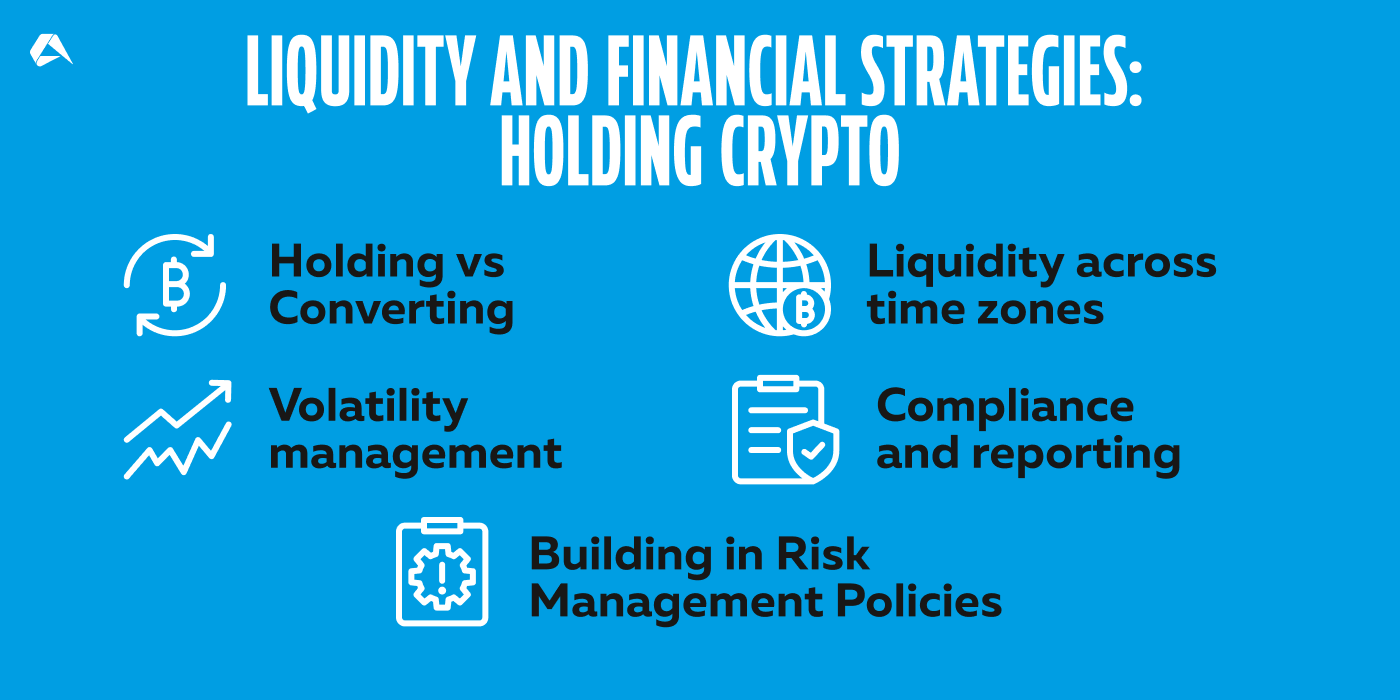
Accepting cryptocurrency is one thing, but managing it responsibly once it’s in the system is another. Unlike fiat, crypto demands liquidity and treasury strategies that account for volatility, settlement timing, and regulatory obligations. Without a plan, even the operational benefits can break down.
Holding vs. converting. One of the earliest decisions is whether to hold crypto on the balance sheet or convert it immediately into fiat. Holding can offer upside if values rise, but it also exposes sportsbooks to swings that may erode margins overnight. Many operators favor automated conversion at deposit or withdrawal, sacrificing speculative gains for predictable accounting.
Volatility management. Even with conversion strategies, volatility isn’t removed. Operators often use stablecoins like USDT or USDC as an interim buffer, which come with their own risks. Treasury teams must set acceptable exposure levels and establish hedging mechanisms.
Liquidity across time zones. Sportsbooks need constant liquidity. With 24/7 settlement, liquidity should be distributed across exchanges, hot wallets, and cold storage so operational needs are met without compromising security.
Compliance and reporting. Regulators typically require detailed reporting on source of funds, transaction trails, and conversions. Poor records can jeopardize audits and banking relationships. Crypto revenues must reconcile with fiat ledgers to satisfy regulators and financial partners.
Build risk-management policies. Diversification into crypto must include protocols for price shocks, exchange outages, and wallet security incidents—without disrupting the player experience.
Security Beyond the Wallet
Once operators handle crypto, they should think beyond wallet setup and consider asset protection across custody, security, and operations.
Hot vs. cold storage. Hot wallets provide immediate liquidity for deposits and payouts but are more exposed; cold wallets offer stronger protection but slower access. In a sportsbook environment—where in-play betting generates constant demand for fast-moving funds—the balance between speed and security is critical.
In-house vs. custody providers. Some operators build and manage wallets themselves (HSMs, layered encryption, dedicated staff). Others outsource to custody providers for secure infrastructure, insurance, and compliance support—trading autonomy and cost for peace of mind.
Access governance. Multi-signature approvals, tiered authorizations, and role-based restrictions reduce insider risk and single points of failure—controls regulators increasingly expect.
Incident readiness. A breach is financial and reputational. Detection protocols, response playbooks, and recovery procedures are as necessary as storage choices.
The Currencies That Matter (and the Ones That Don’t)
The choice of cryptocurrency isn’t just about treasury and settlement; it also depends on which tokens players already know and trust. In practice, adoption succeeds when familiarity meets practicality.
Bitcoin remains the most recognized and liquid option in iGaming. Despite volatility, its brand power makes it essential in any crypto offering. Ethereum carries similar weight with strong infrastructure and broad wallet compatibility (albeit with higher fees). Litecoin endures as a lighter, faster alternative with quick confirmations and wide exchange support.
Stablecoins such as USDT/USDC are increasingly the operational backbone for sportsbooks. Pegged to the dollar, they reduce settlement risk and enable predictable accounting—even if they lack Bitcoin’s name recognition. For operators, they’re a practical addition rather than a replacement.
Cryptocurrencies That Work in Practice for Online Betting
Best to use
- Bitcoin (BTC): Global recognition and liquidity; essential for adoption.
- Ethereum (ETH): Strong infrastructure and broad support.
- Litecoin (LTC): Faster confirmations and low fees.
- USDT/USDC: USD-pegged stability for predictable settlement; sportsbook-friendly.
Best avoided
- Obscure altcoins: Limited liquidity and player familiarity.
- Meme tokens: Reputational risk, volatility, and fraud potential.
- Illiquid tokens: Limited exchange support and operational complexity.
In 2025, the real operational challenge for sportsbooks—and iGaming platforms in general—is incorporating crypto’s benefits without disrupting existing systems or confusing players. The emphasis should be on seamless integration and tight compliance, ensuring payments remain intuitive while avoiding unnecessary complexity.
Altenar addresses this need by offering cryptocurrency support within its sportsbook payment module. Rather than a disruptive overhaul, it functions as an add-on that runs alongside established fiat options—making it easier to broaden reach while maintaining stability and control.
A recent upgrade strengthens usability further. With the new Display in Fiat Currency option, bet slips and histories appear in familiar EUR or USD values, even as wagers are placed in crypto. By bridging digital assets with traditional currency, Altenar makes crypto betting accessible to forward-thinking sportsbook operators—without compromise.
Schedule a personalized one-to-one demonstration to see how your sportsbook can integrate crypto alongside fiat—maintaining stability and compliance while accessing new growth opportunities in regulated markets.