
Every iGaming decision maker will have that moment each year when they stop scrolling through the usual market updates and think, ‘Okay… where’s the real opportunity hiding now?’
Typically, it happens around the time new tax proposals are introduced or regulators start hinting at reforms that sound more significant than they did the year before.
The interesting news and developments aren’t just happening in the usual headline markets, either. Sometimes, it’s in places that have been edging forward in the background—the ones where a few regulatory pieces finally click into place, or where the economic outlook starts to look a bit more promising than anyone expected. Those are usually the markets worth paying attention to.
What makes 2026 fun to watch is the mix. LatAm is still reinventing itself, while Asia has a couple of jurisdictions edging closer to an open, regulated market. At the same time, parts of Europe are reimagining themselves in ways that could open doors that have been stagnant for years. It’s a good blend.
So rather than chase every rumor, this list focuses on the markets where momentum actually aligns with operator opportunity. Places that offer a best-in-class mix of workable regulation (or soon-to-be), strong digital demand, and the kind of economic signals that say ‘If you’re going to make a move, this is the moment’.
Think of it less as a prediction and more as a guide to the seven markets that genuinely look worth watching, with a few honorable mentions for the ones that could break out a bit later.
DISCLAIMER
This information is not intended to be legal advice and is solely extracted from open sources. It should not be relied upon as a substitute for professional legal advice, and Altenar does not accept any liability for its use.
The Top 7 Markets
These seven markets emerged as the top choices when we evaluated the best market opportunities for operators in 2026. Not just for their size and potential, but also for the way regulation, demand, and digital habits now align.
Here are the markets where operator investment lines up most naturally with projected growth and long-term value:
1. Brazil
Brazil has finally taken the step the industry had been waiting for, which is to transform the world’s largest unregulated betting audience into a properly structured market. Serious operators were raring to go for the first wave of authorizations under the new system, but there is still time to act. The numbers alone justify the attention, but it’s the speed of implementation that has surprised most people watching from the sidelines.
Part of the excitement comes from scale, of course. Brazil’s digital audience is enormous, mobile-led, and already deeply engaged with offshore operators. The demand is already established, and the legal structure is finally catching up. Brazil is shaping up to be a market where long-term strategy could genuinely pay off. The licensing framework, regional taxation model, and technical requirements are tougher than many had hoped for, yet also structured in a way that could reward operators who build patiently rather than chase a quick win.
There’s also something to be said about timing. Brazil hasn’t entered regulation at the start of the mobile era. It’s arriving well into it. That means operators are stepping into a market where digital habits are mature, payment behavior is sophisticated enough, and the appetite for live betting is already massive.
Still, Brazil is not an easy market to enter. Licensing fees are substantial, and the tax model requires careful modeling before anyone starts dreaming of margin. Payment regulation is evolving, and local processors tend to hold more influence here than in most markets. Enforcement is expected to keep tightening and competition is already fierce. Brazil is an opportunity, a big one, but it’s by no means a casual commitment.
Market Positives
✔ One of the world’s largest digital betting audiences
✔ High mobile usage with established live betting behavior
✔ Clear regulatory structure finally in place
✔ Strong commercial upside for operators willing to invest properly
✔ Mature payment systems and high digital literacy
✔ Long-term stability expected as enforcement ramps up
Market Challenges
X High licensing costs and financial commitments
X Complex tax structure requiring detailed planning
X Strong early competition from major transitioning offshore brands
X Strict enforcement from regulators
2. Peru
Peru is one of those markets that operators have been watching for years, mostly out of hope rather than expectation. Then, the regulations finally took effect, and the market settled into something predictable, which evolved almost overnight into steady confidence. Ultimately, Peru’s decision to move from debate to implementation without losing momentum has made it a standout.
What helps is how organized the framework is. Licensing, taxation, and technical standards have all been laid out with far less ambiguity than you’d expect from a newly regulated jurisdiction. That alone puts Peru in rare company within LatAm. The market is sizable too, supported by a young population, strong mobile usage, and the kind of digital behavior that tends to translate into high-value sports betting activity.
Market readiness in Peru is visible in everyday usage patterns. Payment familiarity, mobile-first entertainment, demand for live betting, and a steady rise in disposable income among key age groups suggest a player base that doesn’t need much convincing.
Another detail that people often overlook is how investors perceive Peru's regulatory environment. It feels stable and steady. For most operators, that’s half the decision made before they even look at projected GGR. And the projections aren’t shy. Analysts expect Peru’s regulated online market to grow sharply through 2026, driven by legal clarity and demand migrating away from offshore brands.
So, Peru ticks a lot of boxes, but operators entering early will run into a few familiar hurdles along the way. Payment options vary noticeably once you move beyond Lima, and that can make early customer sign-ups a bit more challenging. Marketing rules are strict, and enforcement has been firmer than some expected. Taxation is workable but not light, and local competition will grow quickly as domestic brands gain confidence. None of these are deal-breakers, of course, though they do mean Peru rewards those who take compliance and localization seriously from day one.
Market Positives
✔ A fully regulated, transparent legal framework
✔ Intense mobile penetration and digital adoption
✔ High sports betting demand with room for online expansion
✔ Clear licensing structure with predictable obligations
✔ Attractive long-term revenue potential
✔ Stable investor-friendly regulatory environment
Market Challenges
X Strict marketing rules and early enforcement pressure
X Payment method variations outside major urban centers
X Taxation that requires careful margin planning
X Rising domestic competition
X High localization expectations across product and UX
3. Italy
Italy isn’t an emerging market in the usual sense, but the 2026 licensing cycle, accompanied by key reforms, has put it back on the radar. The new framework has changed the market more than anyone expected, and the impact is already being felt among brands preparing for the next nine years. The higher license costs turned heads, of course, but it’s the broader reset in terms of compliance, operational expectations, and the push for a more integrated digital system that has caused some operators to reconsider their position.
Italy’s attraction has always been its size and consistency. Player engagement remains high, online sports betting is deeply embedded in consumer behavior, and the country’s online casino segment continues to grow despite tight oversight. Those fundamentals haven’t changed. What has changed is the structure surrounding them.
In every sense, it’s a recalibration. Costs are higher, the bar for platform quality is more demanding, and the country is openly favoring operators with serious investment and proper long-term capabilities. For some brands, that’s the real opportunity. A tighter field, a longer license, and a regulatory environment that now rewards commitment.
Another detail worth mentioning is how much the market has matured since the last cycle. Digital banking and regulated wallets have made player payments far more straightforward, mobile adoption is stronger, and the regulatory environment is far more aligned with modern operational standards. For ambitious operators, that’s enough to justify the investment, even at the new licensing price. It’s a stable market with high-value players, and the long-term opportunities make it more appealing than in previous years.
Despite this, Italy isn’t an easy jurisdiction to enter. The license cost alone forces operators to think in long timeframes, and the compliance requirements are substantial. Advertising rules remain some of the toughest in Europe. All the while, market competition remains strong, and existing brands hold significant loyalty.
Market Positives
✔ Large and mature online betting audience
✔ High engagement across sports betting and casino
✔ Strong long-term value due to nine-year license structure
✔ Predictable regulatory environment, despite strict rules
✔ Well-established mobile behavior and user preferences
Market Challenges
X High license fees requiring long-term planning
X Strict advertising and promotional restrictions
X Strong competition from established domestic brands
X Heavy compliance expectations and operational oversight
4. Philippines
The Philippines has been a steady presence in Asian iGaming for years, but the latest round of reforms has given it new relevance. Operators who once saw it simply as a base of operations are now treating it as a genuine growth market in its own right, helped along by PAGCOR’s move toward a more modernized framework.
Part of its appeal is how naturally the Philippines fits the profile of a high-value digital market. Mobile usage is dominant, connectivity is improving year by year, and local players already behave like seasoned online customers. The interest in sports betting is strong, but the appetite for esports, live content, and quick-play e-games tends to outpace expectations for newcomers.
What really marks this new phase is the break from the POGO era. The Philippines is moving from an offshore-first setup to a proper domestic framework with more straightforward rules and firmer supervision. It’s a complete system overhaul, and operators feel that difference almost immediately. The structure is more transparent, and the expectations are more explicit. It’s not perfect, but far more workable than many other jurisdictions in the region.
Another factor that is often overlooked is the rise in local spending power. The growing use of digital wallets, improved payment methods, and strong adoption of mobile banking have made it easier for players to engage. Add in a young population with a strong gaming culture, and the Philippines ends up being a market where betting activity is sustained rather than seasonal.
That said, the Philippines comes with its own set of practical realities. Local competition is intense, and new entrants often underestimate how quickly domestic brands adapt. Compliance is stricter than it once was, and the reporting workload can catch operators off guard. And while PAGCOR’s reforms are moving the market forward, the policy direction can still change quickly. None of this stops the Philippines from being attractive, though, and it’s still a market worth serious attention for good reason.
Market Positives
✔ Strong digital adoption and mobile-first behavior
✔ High engagement for sports betting, e-games, and live content
✔ Improving regulatory structure
✔ Growing digital payment system and mobile banking usage
✔ Large, youthful population with strong online entertainment habits
✔ A familiar operational base for many operators
Market Challenges
X Intense competition from established domestic operators
X Reporting and compliance workload increasing under new reforms
X Policy changes can occur faster than expected
X High localization expectations for content, language and UX
5. Finland
The Veikkaus monopoly has long dominated gambling in Finland, but that era is now drawing to a close. The planned move to a fully licensed system ushers in more than a legislative change. It’s a complete reset of how online betting and gaming will operate in the country. For operators watching Europe closely, this kind of structural transition creates a significant opportunity when it finally arrives.
What makes Finland particularly interesting is the quality of the market rather than sheer size. Player spend per capita ranks among the highest in Europe, and trust in regulated systems is deeply ingrained in consumer behavior. Digital identity infrastructure is strong, payment flows are well established, and mobile usage is universal. In practical terms, this removes much of the early resistance for new license holders. Players are accustomed to regulated gaming, protection measures, and centralized verification.
There is also a significant crossover between retail and online gambling in Finland’s gambling culture. The state monopoly has long relied on physical outlets and national lottery-style distribution. As the market opens, that customer base will naturally migrate online. Operators entering early won’t be educating brand new users, they’ll be engaging with players already conditioned to regulated environments.
From a strategy perspective, growth in Finland is expected to be measured rather than explosive. Customer value is high, churn is historically low, and regulatory trust tends to support long-term retention. It is the kind of market where stability carries almost as much weight as expansion.
That stability, however, comes with caveats. Finland's population (around 5.6 million people) caps absolute revenue potential, and marketing rules are expected to be tight under the new framework. Competition will be intense from day one as established international brands move quickly to secure licenses. Product flexibility in terms of how freely an operator can expand and experiment with their sportsbook or casino offering may also be more restricted than in other liberal jurisdictions, especially in the early years. Finland offers quality, not excess, and operators need to plan accordingly.
Market Positives
✔ One of Europe’s highest gambling spend per capita
✔ Deep trust in regulated systems and digital identity
✔ Very strong payment and verification infrastructure
✔ Clear retail-to-online migration potential
✔ High player value and long-term retention prospects
Market Challenges
X Limited population size restricts absolute scale
X Tight advertising and promotional controls expected
X Heavy competition as the market opens
X Product scope may be conservative in early phases
6. Thailand
Thailand has flirted with regulation for so long that most operators learned not to get too excited. Then the parliamentary committee published its findings, which proved to be more than just another political soundbite. It was a detailed recommendation paired with a clear economic case, and it pushed Thailand into a different category almost overnight.
That said, the fundamentals have always been there. Thailand has a young, digitally confident population, some of the highest mobile usage rates in southeast Asia, and an online audience that already behaves like a regulated market’s customer base. Football leads the way, of course, but basketball, combat sports, and esports have carved out their own strong followings. The demand isn’t theoretical, either. It has been visible for years in offshore traffic and consumer behavior. Regulation would simply formalize what’s already happening every day.
If Thailand moves ahead with legislation in 2026, it could easily become one of the region’s most commercially interesting markets. The player base is engaged, payment habits are mature, and the appetite for live betting, particularly in European and domestic football, is visible everywhere. Operators wouldn’t be starting from scratch. They’d be stepping into a market where both the audience and the technology are already prepared.
Another detail worth noting is the government’s recent tone. The committee’s report focused on revenue capture, consumer protection, and reducing offshore leakage—the very same drivers that often lead to real regulatory movement in emerging markets. It doesn’t guarantee success, but it’s one of the clearest signs that Thailand has given in years.
Even so, nothing is certain until legislation is passed. Political momentum can stall, and conservative pushback is always a factor. Even if regulation progresses, the early rules may rely heavily on advertising controls, social responsibility measures, and strict market monitoring. And payment policies could take time to settle, especially across provincial regions. Thailand has enormous potential, but operators will need patience and preparation in equal measure.
Market Positives
✔ Large digital audience with strong mobile behavior
✔ Interest across football, basketball, esports, and combat sports
✔ Government signals aligning with potential regulation
✔ High adoption of digital wallets and online payments
✔ Player habits already mirror those of regulated markets
✔ Strong long-term revenue potential if legislation moves forward
Market Challenges
X Legislative progress still dependent on consistent political backing
X Advertising and social-responsibility restrictions are likely
X Compliance expectations may be high during early rollout
X Cultural and political resistance from certain segments
7. Poland
Poland rarely appears at the top of any list, yet it consistently shows up for those who follow market fundamentals rather than headlines. It’s one of those jurisdictions that has grown steadily year after year without attracting undue attention, and that consistency is starting to pay off. Sports betting remains the country’s dominant vertical, and the online audience has expanded faster than many expected. Operators who track performance in regulated European markets tend to describe Poland as quietly strong, which is usually a sign that something larger may be on the horizon.
What keeps the country interesting is the direction of political and industry debate. The conversation around online casino reform has been gaining traction, and while Poland hasn’t made any firm commitments, the fact that it’s even being discussed marks a change from previous years. The state-run monopoly on casino action has held firm for a long time, but rising offshore activity and growing pressure from domestic stakeholders are influencing opinions. These things don’t signal immediate change, of course, but they do create the conditions for improvement that operators notice.
The country’s advantages are not speculative, either. The online betting audience is large, sports interest is culturally embedded, payment behavior is modern and highly digital, and mobile usage trends continue to rise. The economy has held up well, and consumer spending on entertainment has remained stable, even during more challenging years.
An additional element of interest is the competitive environment. It’s active, but not overcrowded, and the market rewards operators who take localization seriously, particularly in areas such as language, UX, and football-centric behavior.
Still, Poland is evolving. The sports betting-only model limits product variety, and any movement in online casino will depend heavily on political will. Advertising rules can change quickly, and taxation, while workable, can weigh on margins if not managed carefully. None of this removes Poland’s appeal, but it does mean operators need to approach it with realistic expectations.
Market Positives
✔ Large and stable online sports betting audience
✔ Strong mobile and digital payment adoption
✔ Predictable regulatory environment with clear reporting structures
✔ Active but not oversaturated competitive field
✔ Potential long-term upside if online casino reform progresses
✔ Reliable customer behavior and strong conversion trends
Market Challenges
X Sports-only model currently restricts product expansion
X Online casino reform remains uncertain
X Advertising rules can tighten with little notice
X Margins influenced by the existing tax structure
X High localization expectations for product, UX, and language
DISCLAIMER
This information is not intended to be legal advice and is solely extracted from open sources. It should not be relied upon as a substitute for professional legal advice, and Altenar does not accept any liability for its use.
Other Markets That Could Break Out After 2026
Not every promising jurisdiction fits neatly into a 2026 timeline. A few sit just outside—close enough to attract early operator attention, but not quite ready for full commercial planning. These are the markets where the right conditions are starting to line up, even if the legislative pieces still need time to fall into place.
South Africa is one of the most obvious examples. The online betting audience is already substantial, mobile behavior is strong, and payment systems continue to improve year after year. The long-running conversation about fully regulated online casino entertainment has not yet reached a conclusion, but momentum is building. Plenty of operators are closely tracking South Africa because once clarity arrives, the market will move quickly.
Chile falls into a similar category. The country has been edging toward regulation, and while the legislative pace has slowed recently, the foundations for a workable framework are already visible. It’s a market with strong sports interest and a digitally active audience—one that could become highly competitive once the rules are set.
Japan, however, is a different story altogether. The potential is huge, but the country tends to move in long policy cycles, and betting reform doesn’t follow the same momentum as casino resort development. Still, interest in regulated iGaming continues to resurface, especially as younger consumers move their entertainment spending online.
There are also a few broader jurisdictions that deserve attention. Nigeria, with its enormous mobile-led betting culture, and the United States, where states like California and Minnesota could shape the regional picture if they move toward legalization. Both carry significant upside, though neither should be treated as a certainty.
How to Choose the Right Market for Your Operation
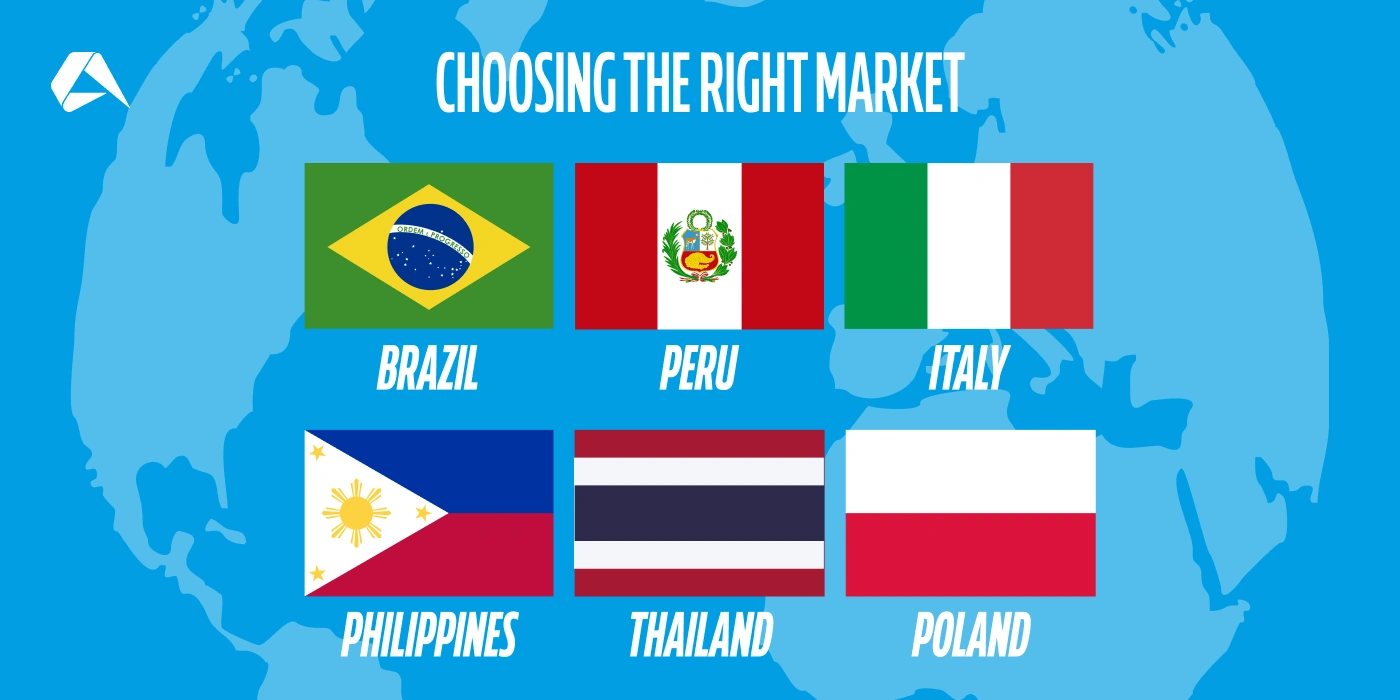
Sooner or later, most operators find that expansion works best when the market matches who they are—not just where the opportunity happens to be. Some brands are built for scale. Others thrive in stable, well-regulated environments where long-term planning pays off. Others still prefer emerging markets, where early movement and momentum give them an edge. The trick is understanding how your profile aligns with the shape of each jurisdiction.
A good starting point is to look inward before looking outward. What products drive your business? How much capital are you prepared to commit up front? How much regulatory uncertainty can your organization tolerate? Once those questions are answered honestly, the path to expansion becomes clearer.
Brazil, for instance, looks different to a company built around a high-volume sportsbook than it does to a casino-led operator. Peru and the Philippines are particularly attractive to operators aiming for a faster route into a regulated market. Italy tends to be better suited to operators with patience, strong compliance infrastructure, and a willingness to invest heavily for long-term gain.
Finland sits slightly apart from that group. It’s smaller in scale, but unusually strong in trust, player value, and regulatory confidence. Thailand, meanwhile, speaks to brands that are comfortable planning ahead of legislation, without needing the rules to be set in stone before moving forward. On this basis, most operators end up evaluating the same set of considerations:
-
Speed vs preparation: How soon do you need to be live, and what will it take to get there?
-
Cost vs long-term value: Are you aiming for immediate traction, or does a longer-term market commitment better suit your needs?
-
Risk vs certainty: Is your organization comfortable operating where legislation is still evolving?
-
Product fit: Does the market align with the strengths of your offering (sportsbook, casino, live content, or e-games)?
Market Fit by Operator Type
The table below matches different operator profiles to the markets where they’re most likely to find a natural fit. It isn’t a formula, but more of a quick way to see the best potential markets for your expansion strategy:
| Operator Type | Best-Fit Markets | Why These Markets Fit |
|---|---|---|
| High volume Sportsbook | Brazil Poland Philippines | Massive sports-led audiences. Strong mobile behaviour. High engagement in live betting. Brazil offers scale, Poland delivers consistency, and the Philippines provides fast access. |
| Casino-led Operator | Italy Philippines Peru Finland | Italy offers a stable, high-value casino audience. The Philippines is inclined towards live quick-play content. Peru provides predictable early traction. |
| Hybrid Sportsbook + Casino | Peru Italy Brazil Finland | Peru offers stability and a short setup time. Italy provides long-term value and strong cross-vertical engagement. Brazil offers scale for both products. |
| Focus on Live Content / E-games | Philippines Thailand Brazil | The Philippines and Thailand have digital-first, mobile-heavy audiences. Brazil’s live betting culture is expected to generate a considerable volume. |
| Stable, Low Volatility Markets | Italy Peru Poland Finland | All three offer regulatory clarity, predictable market behaviour, and well-defined operational expectations. |
| Emerging or Pre-reg Markets | Thailand S. Africa Chile | These favour businesses that plan ahead of legislation and possess operational agility. The potential upside is substantial once frameworks appear. |
If your operation is planning new market entries, it’s worth seeing how Altenar’s flexible, expansion-ready platform can support the journey in 2026. Book a demonstration and explore sportsbook and casino software built for ambitious operators aiming for genuine growth.
DISCLAIMER
This information is not intended to be legal advice and is solely extracted from open sources. It should not be relied upon as a substitute for professional legal advice, and Altenar does not accept any liability for its use.