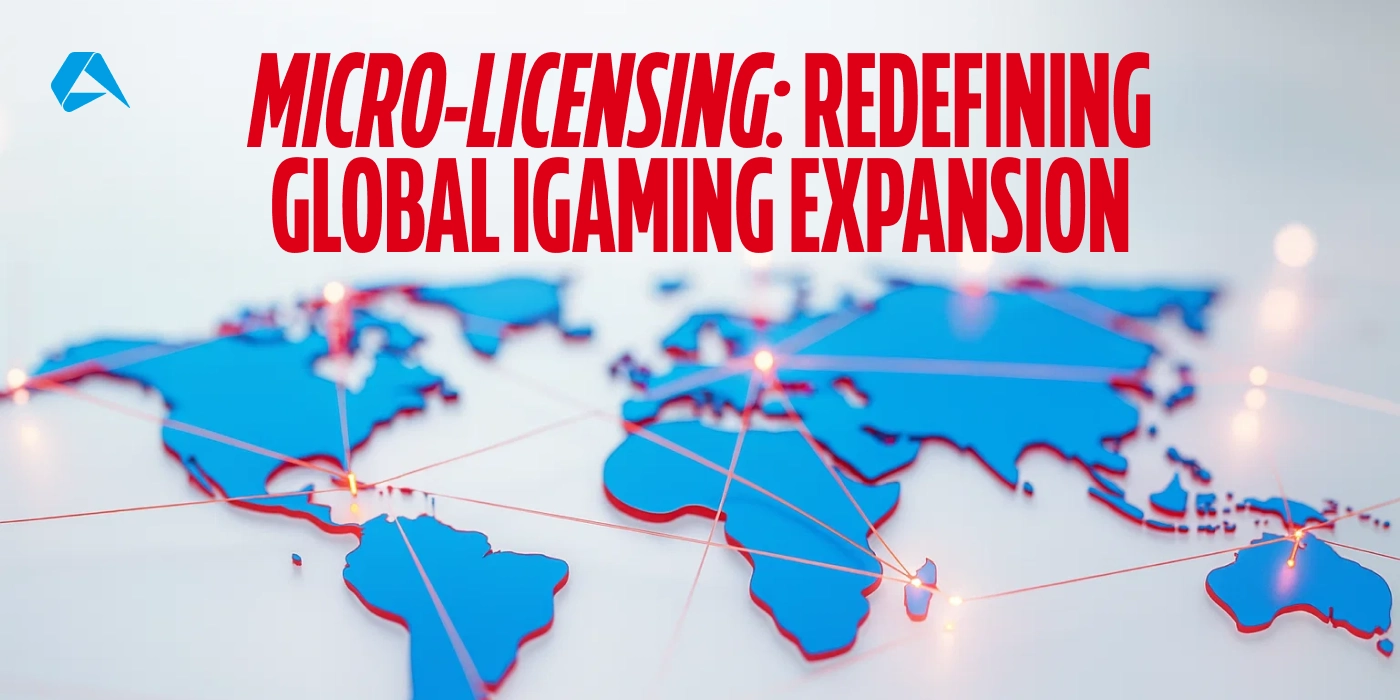

There’s a new word traveling through iGaming circles this year, and that’s micro-licensing. It’s one of those phrases that sounds straightforward, yet the closer you look, the harder it is to pin down.
Many use it to describe small, low-cost permits that help new operators get started. Others view it as something more complex, but nonetheless, it provides an opportunity for smaller brands to enter new markets without the demands of a full online gambling license.
That idea of micro-licensing is beginning to gain traction. A handful of jurisdictions are now writing it into law, turning what used to be informal sublicensing into structured, regulatory models. These licenses are lighter, cheaper, and quicker to obtain, but they’re still official. For startups, regional bookmakers, and ambitious tech suppliers, it’s a means of access, credibility, and the first real chance to build legally without needing Tier-1 scale on day one.
So, what exactly is micro-licensing, and how does it differ from sublicensing?
Micro-Licensing vs Sub-Licensing
The two terms, micro-licensing and sublicensing, are often used interchangeably, but, in fact, they describe very different concepts. Sublicensing has been a long-standing practice in iGaming. A company holds a full license, and other brands operate beneath it, borrowing or renting, as it were, its legal cover. It’s a practical arrangement, but it leaves smaller operators tied to someone else’s compliance and reputation.
Micro-licensing, on the other hand, has a different legal footing and balance. Instead of trading under a master license, operators receive their own scaled-down permit directly from the regulator. This makes it lighter, cheaper, and usually quicker to obtain, but the license and the responsibility belong to the operator.
A straightforward way to understand it is through standard rental arrangements for a home. A sub-license is like renting a spare room in someone else’s house. You can live there, but you follow their rules. A micro-license would be the equivalent of renting a small apartment in the same building with your own key, your own bills, and your name on the lease. The space may be smaller, but the independence is the difference.
For industry regulators, this distinction is more than terminology. It changes who they supervise and how accountability works. For operators, it can mean the difference between running a brand that’s legally borrowed and one that’s genuinely their own.
Jurisdictions That Offer Micro-Licensing
A few popular licensing jurisdictions have already begun implementing micro-licensing. These are regulator-issued frameworks offering true, low-cost, independent licenses, designed to make entry into the legal market realistic for smaller operators. While each jurisdiction takes a slightly different route, the core principle remains the same. That’s to say, lower barriers, more transparent accountability, and a path to legitimacy that doesn’t demand Tier-1 licensing from launch.
Curaçao – LOK (2024/25)
Few jurisdictions illustrate the idea of micro-licensing better than Curaçao. Once known for its loosely supervised master/sub-license model, the island has completely restructured its regulatory system under the Landsverordening op de Kansspelen (LOK). Oversight now sits with the newly formed Curaçao Gaming Authority (CGA), which issues Online Gambling Licenses (B2C) and Supplier Licenses (B2B) directly under the Curaçao Gaming Authority (CGA) with no intermediaries.
The new approach gives small and mid-sized operators a direct route to legality, which is no longer tied to another company’s license. Compliance is handled through standardized reporting systems, while onboarding is conducted through a digital portal that makes licensing both transparent and trackable.
For many, Curaçao’s reform marks the first credible example of micro-licensing done right, which is to say light in cost, serious in oversight, and modern by design.
Defining factors:
-
Direct B2C and B2B online gambling licenses issued by the CGA
-
No master or sub-license structure with full regulatory oversight
-
Digital application and compliance monitoring system
-
Scaled fees and obligations to suit operator size
-
Recognized focus on international accessibility
Isle of Man – OGRA Sub-License (Functionally Micro)
The Isle of Man has long been known for its steady, rules-based approach to gaming regulation, but within its framework lies one of the most practical micro-options available - the Sub-License under the Online Gambling Regulation Act (OGRA). Issued directly by the Isle of Man Gambling Supervision Commission (GSC), it allows smaller operators to run their own brands while connecting to the infrastructure of a full OGRA license holder.
The structure offers independence with support, providing a halfway point for companies ready to operate legally but not yet ready for the full financial and compliance demands. Every sub-licensee is approved and supervised by the GSC, giving them direct regulatory recognition rather than a private master licensing/hosting arrangement.
Defining factors:
-
License type: Sub-License under the Online Gambling Regulation Act (OGRA)
-
Issued and supervised directly by the Isle of Man GSC
-
Must integrate technically with a full OGRA license holder
-
Lower fees and simplified compliance compared with a full OGRA license
-
Provides legal independence, scalability, and regulator recognition for smaller brands
Kahnawàke (Canada) – Client Provider Authorisation (CPA)
Situated within the Mohawk Territory of Kahnawàke in Quebec, this jurisdiction has been offering one of the most accessible and consistent licensing frameworks for over two decades. The Client Provider Authorisation (CPA), issued directly by the Kahnawàke Gaming Commission (KGC), grants online gaming operators the right to operate from within the territory using approved servers and infrastructure.
While Kahnawàke’s framework predates the current concept of micro-licensing, it shares the same philosophy of lower cost, direct oversight, and a practical route for smaller or growing operators to gain legitimacy. The KGC oversees everything from operational integrity to server compliance through the Mohawk Internet Technologies (MIT) data centre, maintaining a stable, credible licensing model that has attracted global brands since the early 2000s.
Defining factors:
-
Licence type: Client Provider Authorisation (CPA)
-
Issued directly by the Kahnawàke Gaming Commission
-
Operators must host services within approved local data centres (MIT)
-
Lower cost and faster approval than Tier-1 markets
-
Longstanding international recognition and operational stability
Anjouan (Comoros) – Direct B2C/B2B Licensing
Anjouan, one of the islands that form the Union of the Comoros, has become an increasingly prominent name in iGaming licensing discussions. Its regulatory body, the Anjouan Gaming Authority, issues direct B2C and B2B online gaming licenses, positioning itself as a modern, low-cost alternative for new operators entering international markets.
While not as established as jurisdictions like Curaçao or the Isle of Man, Anjouan’s framework follows a similar logic, which involves a streamlined digital process with transparent sports betting legal requirements and a clear route to independent operations. The emphasis is on accessibility. Small to mid-sized operators can secure regulatory coverage without the heavy capital commitments of Tier-1 licensing options, often within a matter of weeks.
It’s a practical entry point for new startups testing new markets or brands that want a regulatory foothold before expanding under more comprehensive licensing jurisdictions.
Defining factors:
-
License types: B2C Online Gaming License and B2B iGaming Service Provider License
-
Issued directly by the Anjouan Gaming Authority
-
Fast, digital application process and relatively low fees
-
Recognized framework with a published license register
-
Compliance standards suited to early-stage operators
-
Designed to support international-facing operations without intermediaries
Micro-Licensing Jurisdictions Summary (2025)
| Jurisdiction | Regulator | Licence Type | Core Feature |
|---|---|---|---|
| Curaçao | Curaçao Gaming Authority | B2C / B2B LOK Licence | First state-recognised micro-licence framework |
| Isle of Man | GSC | OGRA Sub-Licence | Regulator-issued, low-cost, shared infrastructure |
| Kahnawàke | KGC | Client Provider Authorisation | Direct, low-cost operator authorisation |
| Anjouan | Anjouan Gaming Authority | B2C / B2B Licence | Simplified, direct online licence for startups |
Benefits of Micro-Licensing in iGaming
Ultimately, micro-licensing frameworks are modernizing how smaller operators approach regulation. By scaling requirements to match the size and scope of a business, these models open the door to legal participation for companies that would otherwise sit outside regulated markets.
Here’s where the real advantages lie:
Lower Cost of Entry
Micro-licensing removes the six-figure price tags that typically deter new operators. Application fees, compliance costs, and ongoing obligations are reduced, allowing startups to test markets and establish credibility without committing the capital usually required for a Tier-1 license.
Faster Market Access
Digital application systems and simplified vetting processes enable operators to often complete the sports betting license process in weeks rather than months. This agility helps small brands move quickly, capture seasonal demand, and fine-tune operations before competitors even complete their preliminary checks.
Legal Independence
Unlike white-label or sublicensing setups, micro-licensing grants each operator its own direct relationship with the regulator. The result is genuine autonomy with legal recognition and individual accountability. In essence, it gives operators the ability to control and influence their brand without depending on a third-party license holder.
Shared Compliance Infrastructure
Micro-license jurisdictions typically provide centralized KYC, AML, and reporting systems. These shared services reduce complexity while keeping operators aligned with regulatory standards, giving small teams the compliance foundation they’d struggle to build and maintain on their own.
Pathway to Full Licensing
Micro-licenses can serve as a launchpad rather than the final objective. Operators that demonstrate stable performance and good governance can later upgrade to Tier-1 jurisdictions with a verifiable track record, providing a stepping stone that benefits both regulators and businesses.
Disadvantages and Limitations of Micro-Licensing
For all its accessibility, micro-licensing isn’t without trade-offs. The same features that make it appealing to smaller operators can also create challenges:
Here are the trade-offs:
Limited Market Recognition
Many payment providers, advertisers, and third-party suppliers still prioritize operators licensed in Tier-1 jurisdictions. Even when compliance is sound, micro-licensed operators can struggle to be taken seriously by industry partners who prefer the reassurance of better-known regulators.
Lesser Player Trust
Players familiar with major regulators may hesitate when they see an unfamiliar licensing seal. Perception plays a significant role in retention, and licensees in lesser-known jurisdictions must work harder to demonstrate fairness and credibility.
Restricted Operational Scope
Some micro-licenses limit activities such as live dealer, peer-to-peer betting, or exchange trading. Others cap turnover or impose local hosting rules, meaning operators may outgrow their license faster than expected once momentum builds.
Limited Access to Payment Channels
Tier-1 payment gateways and banks often resist onboarding clients from lesser-known jurisdictions. As a result, operators must rely on smaller acquirers or crypto-friendly alternatives, which can increase costs or create barriers for players.
No Automatic Market Portability
Holding a micro-license doesn’t grant access to other regulated territories. Operators still need local approval in each market, which means growth beyond the issuing jurisdiction can be more complicated than expected.
Micro-Licensing and The Big Picture
Where then is micro-licensing going? Is it becoming more than a regulatory stepping stone? Could this licensing model be the future of global oversight in the next decade? The idea that a regulator can issue smaller, self-contained licenses through shared digital systems is influencing policy far beyond the jurisdictions that designed them.
Curaçao’s new digital licensing portal, for instance, is doing more than tidying up legacy systems (regulatory and technical). In every sense, it’s a blueprint for scalable regulation, showing a way to apply uniform reporting and compliance standards across hundreds of operators without increasing administrative cost. If these trends continue, it seems plausible that micro-licensing could become the testing ground for regulatory alignment, leading to a network of jurisdictions that recognize each other’s technical and ethical standards.
If micro-licensing were to become the industry standard for iGaming licensing, the balance of power would shift between larger operators and smaller brands. Clearly, large brands won’t disappear, but they’ll no longer be the only ones with access to regulated markets. Smaller brands with innovative marketing, technology, and strong player trust will have more opportunities to grow, and regulators will act more like service providers than gatekeepers. The result could be a more open, competitive, and transparent industry, as opportunities are more evenly shared.
The Path from Micro-License to Tier-1 License
Regardless of where micro-licensing goes next, this model is unlikely to flatten the tiered system of regulation in the foreseeable future. What it is doing today is redefining how operators climb the ladder. Micro-licenses provide smaller brands with the opportunity to demonstrate operational maturity and establish a foundation of evidence that can expedite the path to a Tier-1 license.
The following steps outline how most operators evolve from an entry-level license to full-scale regulatory recognition.
Step 1: Build a Proven Operating Record
Use the micro-license period to demonstrate consistent compliance. Maintain meticulous transaction logs, AML/KYC reports, and player protection data. Regulators value reliability, so focus on building a transparent and traceable record that demonstrates good governance in practice.
Step 2: Formalize Governance and Internal Controls
As revenue grows, move from founder-led decision-making to structured compliance oversight. Appoint a Money Laundering Reporting Officer (MLRO), establish written policies for AML, data security, and marketing, and conduct periodic self-audits. These controls form the core of Tier-1 readiness.
Step 3: Upgrade Technology and Hosting Standards
Tier-1 regulators typically require certified random number generators, audited game servers, and secure data hosting within approved jurisdictions. Transition to a compliant infrastructure early to ensure technical certification can be achieved.
Step 4: Secure Professional Partnerships
Engage accredited testing labs, independent auditors, and legal advisors familiar with the target jurisdiction. Their reports carry weight when applying for a higher-tier license and often reveal weaknesses before regulators do.
Step 5: Strengthen Player-Protection and Responsible-Gaming Tools
Expand beyond basic self-exclusion and deposit limits. Implement real-time monitoring, behavioral analytics, and player protection tools. Tier-1 regulators increasingly assess social-responsibility systems as closely as financial integrity.
Step 6: Demonstrate Financial Stability
Provide audited accounts, a transparent ownership structure, and evidence of sufficient capital reserves. Many applications fail not due to non-compliance, but rather from weak financial transparency.
Step 7: Apply for Tier-1 or Dual Licensing
Once the operational, technical, and financial foundations are in place, prepare a detailed application supported by a documented compliance history from the micro-license period. Some operators retain their micro-license for secondary markets while expanding under a new Tier-1 license.
Step 8: Maintain Cross-Jurisdiction Compliance
After approval, maintain parallel reporting standards across all jurisdictions. Regulators are increasingly sharing information, so consistency is key to maintaining long-term credibility and renewal.
Book a tailored demonstration today and discover how Altenar’s compliance-ready iGaming platform simplifies multi-jurisdiction operations, adapts to evolving regulation, and gives your sportsbook the stability to scale with confidence.
DISCLAIMER
This information is not intended to be legal advice and is solely extracted from open sources. It should not be relied upon as a substitute for professional legal advice, and Altenar does not accept any liability for its use.