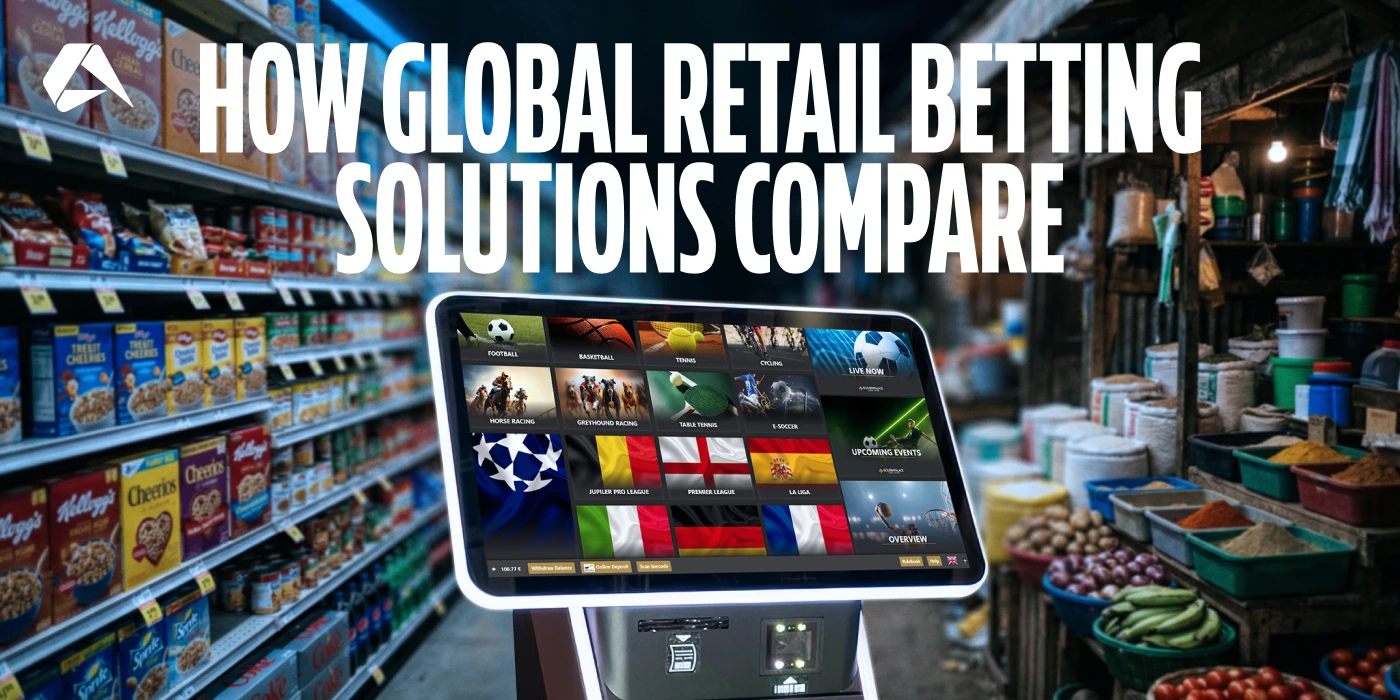

Ai Overview: From SSBT terminals to agent networks: how Altenar adapts retail betting to regional markets
Expanding a retail sportsbook in 2026 is not just about picking a location. You must change your technology based on where you operate. While bettors in mature markets want high-tech kiosks, players in emerging markets often prefer talking to a human agent. You can bridge this gap by using a single technology stack that supports both self-service terminals and cashier systems.
Your retail strategy depends on the region
You cannot use the same retail plan everywhere. The way people bet changes when you cross a border. In many places, local laws and player habits determine which hardware you must use. Success depends on matching your setup to local trust in technology and how people handle cash.
Two paths within a unified stack
Modern retail software offers two ways to deploy your sportsbook based on regional needs:
-
Self-service betting terminals (SSBT): Use these in licensed shops in mature markets. They focus on hardware and let players place bets on their own using touchscreens.
-
Cashier and agent systems: Use these in emerging markets like Africa and Latin America. Staff use laptops or tablets to place bets for players, focusing on money management and agent networks.
Both models connect to the same core system. This keeps your risk control and reporting consistent, no matter what hardware you use in the shop.
Hybrid setups for maximum flexibility
You do not need to limit your venue to one model. Many operators now use hybrid setups to balance operational flow.
-
Support player choice: Offer both assisted and self-service journeys in the same location.
-
Manage peak traffic: Use kiosks to reduce counter lines during busy sporting events.
-
Optimize shop layouts: Adjust your floor plan based on how your specific customers prefer to bet.
-
Increase resilience: Reduce your dependency on a single interaction model.
Mature markets: The terminal-driven approach
Across Europe and the US, efficiency is the priority. Players expect the speed of a digital interface. In these environments, terminals are high-performing revenue assets that must perform consistently.
-
Monitor devices 24/7: Get real-time alerts to ensure your hardware never stays offline.
-
Control content centrally: Use a CMS to update promotions or trading limits across your entire network.
-
Lower maintenance: Update software over the air without sending staff to the physical site.
Emerging markets: The power of agent networks
In regions like LatAm and Africa, growth depends on distributed networks. Here, the focus shifts to financial accountability and hierarchy management.
-
Manage business hierarchies: Control multiple levels from owners and partners down to local agents.
-
Track wallets in real time: Maintain live visibility over all player and agent balances to manage liquidity.
-
Process bets faster: Use "Fast Codes" and bet reservations to handle high volumes at the counter.
The power of the unified stack
Running retail and online on separate systems creates extra work and messy data. A unified framework means your finance team uses one set of reconciled data for every report. You get a clear view of how your shops, agents, and devices are performing all in one place. This reduces technical complexity and lets you move into new territories with total confidence.
In 2026, expanding a retail sportsbook internationally is not simply a matter of installing terminals or opening betting shops. The retail betting operating model can change significantly depending on where you operate.
In mature markets, retail sports betting is moving increasingly toward self-service sports betting terminals in licensed venues, with strong emphasis on hardware integration, device monitoring, and regulated shop environments. In many emerging markets, particularly in Latin America and Africa, retail is more commonly cashier-led, powered by agent networks using laptops or tablets, where wallet management, commissions, and cash handling are central to operations.
Altenar supports both models through its SSBT terminal solution and its cashier/agent system, each fully integrated into a shared sportsbook and PAM stack.
The Two Retail Paths Within Altenar’s Tech Stack
Altenar’s retail offering is not a single fixed product. It consists of two distinct deployment approaches designed to reflect how retail betting operates in different regions.
The first is the Self-Service Betting Terminal (SSBT) solution, built for gambling kiosk-led environments where players place bets independently through dedicated hardware installed in licensed venues. This model prioritizes terminal betting management, hardware integration, and device-level control across shops.
The second is the Cashier and Agent system, designed for counter-led retail networks. Here, staff place bets on behalf of players using sportsbook software on laptops or tablets, supported by structured agent hierarchies, wallet management, and financial tracking tools.
Both solutions are fully integrated into Altenar’s core sportsbook and PAM stack, meaning risk control, reporting, and account infrastructure remain consistent across all deployments.
Ultimately, the choice between the two should be driven by the nature of the market and regulatory environment, and not by operator preference alone.
Key differences between Altenar’s retail solutions
| Aspect | SSBT Terminal Betting Solution | Cashier / Agent Solution |
|---|---|---|
| Primary Setup | Self-service betting kiosks in licensed venues | Counter-led outlets using laptops or tablets |
| Player Interaction | Independent betting | Staff-assisted betting |
| Hardware Requirement | Dedicated terminal betting hardware | Everyday hardware (PC, laptop, tablet) |
| Operational Focus | Device management, hardware integration, and performance monitoring | Wallet operations, agent network management, and financial tracking |
| Typical Markets | Mature, terminal-driven environments | Emerging, network-driven markets |
| Integration | Integrated with sportsbook + PAM | Integrated with sportsbook + PAM + Native Application |
Hybrid retail setups
In practice, these two models are not mutually exclusive. In several regulated markets, operators deploy a hybrid retail setup that combines self-service terminals with cashier-supported operations within the same venue or network. This approach allows operators to balance operational flow, accessibility, and control, while adapting to varying player preferences and regulatory expectations.
-
Serve different player preferences within the same location
-
Smoother transition between assisted and self-service journeys
-
Ability to optimize shop layout based on peak traffic patterns
-
Reduced dependency on a single retail interaction model
-
Suitable for markets with mixed regulatory/infrastructure conditions
Europe & US: terminal-driven retail, built around self-service
Across Europe and in regulated US states, retail betting environments are increasingly incorporating self-service sports betting terminals as a central part of shop operations, promoting greater operational efficiency within retail betting outlets. While cashier counters remain important, player expectations have evolved. Many customers now prefer the speed and independence of browsing markets, building bet slips, and printing tickets directly from a sports betting kiosk. In larger betting shops, casinos, and other licensed venues, terminals are often deployed alongside staffed counters as a complementary channel rather than a replacement.
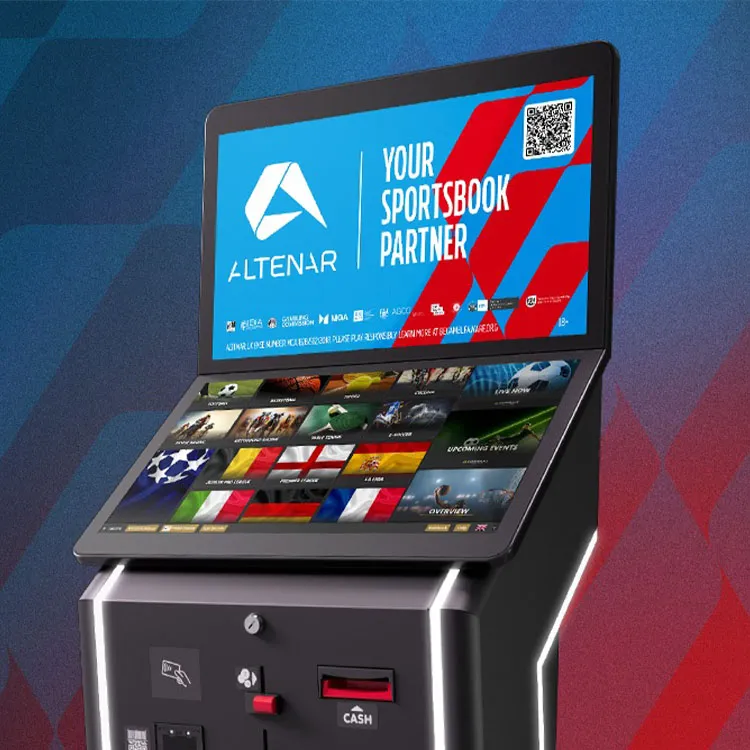
In these environments, sports betting terminals are not merely customer access points but revenue-generating assets that must perform consistently during high-traffic periods. Operators need real-time visibility across every device, the ability to adjust trading limits or promotional content without sending staff on-site, and the confidence that payment peripherals and printers will operate without performance issues. Even short periods of downtime can affect turnover in high-footfall venues.
Altenar’s SSBT solution is built around that operational reality, giving operators centralized control over terminal configurations, monitoring tools that flag issues early, and the flexibility to manage multiple locations through a unified back-office environment.
Altenar SSBTs (Terminals)
Altenar’s self-service betting terminals give operators direct oversight of both the software interface and the physical hardware, allowing each terminal to be aligned with local requirements and commercial strategy.
SSBT Configuration and control
-
Native Microsoft Windows terminal application with touchscreen interface.
-
Hardware peripherals, including bill and coin acceptors, printers, barcode scanners (1D/2D), and NFC modules.
-
Trading limits at the device or shop level.
-
Terminal operating hours.
-
CMS-driven promotional and marketing content by region, shop, or individual terminal.
-
24/7 device monitoring with real-time alert notifications.
-
Over-the-air (OTA) software updates.
-
Multilanguage interface options.
Betting terminal feature table
| Feature | Description | Operator Benefit |
|---|---|---|
| Native Terminal Application | Microsoft Windows-based application with a high-definition touchscreen | Consistent, stable retail sportsbook experience across all devices |
| Configurable Hardware Peripherals | Supports bill and coin acceptors, printers, barcode scanners (1D/2D), NFC modules | Flexible deployment tailored to venue and regulatory requirements |
| Device-Level Trading Controls | Adjustable trading limits per terminal or shop | Improved risk management and localised control |
| Terminal Operating Hours | Configure active betting windows by device or location | Compliance alignment and cost control |
| CMS-Driven Content Management | Control home screens, sportsbook views, banners, and promotions by region, shop, or terminal | Centralised brand consistency with local flexibility |
| 24/7 Device Monitoring | Real-time monitoring with automated alerts | Reduced downtime and faster issue resolution |
| Over-the-Air (OTA) Updates | Remote software updates across the terminal network | Lower maintenance costs and minimal operational disruption |
| Multi-Language Interface | Configurable language options per device | Improved accessibility across diverse player bases |
| Secure Payment Integration | Integrated cash and card processing modules | Reliable transaction handling in high-footfall environments |
| Centralised Back-Office Integration | Fully integrated with Altenar sportsbook and PAM | Unified reporting, risk oversight, and operational transparency |
LatAm & Africa: cashier-led retail and agent networks
In many emerging markets across Latin America and Africa, retail betting is built around agent networks and cashier-led outlets as a fundamental necessity. Rather than investing in dedicated stand-alone terminal hardware, operators typically scale through distributed shops where staff manage transactions on standard hardware such as laptops or tablets. The commercial focus in this arrangement moves away from device infrastructure and toward network expansion and transaction control.
In these markets, the retail challenge is operational oversight. Operators must manage agent hierarchies, monitor deposits and withdrawals, track wallet balances in real time, and maintain financial accountability across multiple locations. Commission structures, reporting, and ticket formatting, including regulatory deductions where required, become central to sustainable growth. Altenar’s Cashier and Agent system is built specifically around this network-driven retail environment.
Altenar Cashier & Agent System
Altenar’s cashier solution provides operators with the tools required to manage counter-based betting and agent networks through a unified sportsbook and PAM infrastructure.
Cashier & agent configuration and control
-
Multi-level business hierarchy configuration (Owner, Partner, Super Agent, Agent, Cashier, User).
-
Real-time wallet tracking across agent and player accounts.
-
Deposit and withdrawal processing at the shop level.
-
Permission-based access control for accountability.
-
Integrated financial and sportsbook reporting.
-
Fast Codes functionality for efficient bet placement.
-
Bet reservation and short-code ticket processing.
-
Customizable ticket formatting, including regulatory deduction display where applicable.
Cashier & agent feature table
| Feature | Description | Operator Benefit |
|---|---|---|
| Business Hierarchy Configuration | Multi-level role-based structure (Owner, Agent, Cashier, User) | Structured network control and clear accountability |
| Real-Time Wallet Tracking | Live visibility of player and agent balances | Improved liquidity management and financial transparency |
| Deposit & Withdrawal Processing | Shop-level financial transactions integrated into PAM | Controlled cash flow and centralised oversight |
| Permission- Based Access | Configurable access levels across network roles | Reduced operational risk and enhanced compliance control |
| Integrated Reporting | Combined sportsbook and financial reporting tools | Clear reconciliation and performance tracking |
| Fast Codes Functionality | Quick bet placement via event and market identifiers | Faster service during peak traffic |
| Bet Reservation | Players prepare bet slips before confirmation | Merges online convenience with retail execution |
| Ticket Customisation | Flexible print layout and regulatory deduction display | Local compliance alignment and branding consistency |
| Centralised Back-Office Integration | Fully integrated with Altenar sportsbook and PAM | Unified network management across all retail locations |
Note: Altenar’s cashier solution provides operators with the tools required to manage counter-based betting and agent networks through a unified sportsbook and PAM infrastructure. Some features, such as Fast Codes, bet reservation, and ticket customization, are powered by the core sportsbook and are also available within SSBT deployments.
Ticketing, slip design, and market-specific prints
In retail betting, the printed ticket remains a central customer-facing compliance document. Beyond confirming a wager, it must comply with local regulatory requirements, reflect tax deductions, and provide clear transaction details that protect both the operator and the player.
Altenar allows operators to customize ticket layouts to align with branding standards and jurisdictional obligations, including configurable language settings and mandatory informational fields.
Barcode and short-code functionality support efficient bet processing, particularly in high-traffic environments. Players can prepare selections in advance and finalize them at a terminal or counter, while staff can scan codes to accelerate service and reduce input errors. This approach helps staff process bets more quickly during high traffic and ensures that every transaction is properly recorded.
Supporting hybrid & omnichannel expansion
For operators expanding across continents, it is unlikely that a single model will be the best fit in all jurisdictions. A business entering Western Europe may deploy terminal-led venues in one jurisdiction while building agent networks in parts of Latin America or Africa. In the United States, regulatory conditions may favor retail sportsbooks, while neighboring markets demand a cashier-driven option. Consequently, treating retail as a uniform rollout strategy will undoubtedly create inefficiencies.
This is where infrastructure matters. Altenar’s sports betting terminal and cashier models operate within the same core sportsbook and PAM ecosystem, allowing operators to deploy different retail formats without requiring changes to the core platform architecture. Player accounts, wallet logic, risk management tools, and reporting structures remain centralized, even when the front-end retail experience differs by region.
That unified architecture reduces duplication, simplifies compliance oversight, and gives management a consolidated view of performance across shops, agents, and devices. So, instead of running parallel systems across different territories, operators can manage retail growth through a single reporting framework and a single set of control tools.
Brand consistency also benefits. Whether a bet is placed through a self-service betting kiosk in a European venue or through a cashier-managed outlet in an emerging market, the underlying sportsbook experience remains aligned. Promotional logic, content management, and trading controls can be coordinated centrally while still allowing for local adaptation.
Retail and online on one technology stack
Historically, retail and online sportsbooks have operated on separate systems, leading to duplicated reporting structures, disconnected wallet management, and inconsistent risk oversight.
Altenar approaches this differently and far more efficiently. Both its SSBT terminal solution and cashier/agent system operate within the same core sportsbook and Player Account Management (PAM) framework that powers online betting. That means a single wallet architecture, unified player account logic, centralized risk controls, and consolidated reporting across channels.
The operational advantages are significant. Finance teams work from one set of reconciled data rather than merging separate retail and digital reports. Compliance oversight benefits from a single audit trail. Promotions, trading rules, and content management can be coordinated centrally instead of managed across different environments. From a technology perspective, infrastructure complexity is reduced because retail is not a separate platform, but an extension of the same system.
For operators pursuing long-term growth, this alignment reduces integration overhead, simplifies regulatory management, and supports a more cohesive brand experience across physical and digital channels.
Choosing the right model for your retail rollout
Choosing a retail format is ultimately a strategic decision about market alignment, not product preference. Footfall patterns, consumer trust in self-service, cash usage levels, regulatory controls, and enforcement standards all influence whether a terminal-led or cashier-led structure will perform more effectively.
Capital allocation constraints must also be considered. Dedicated hardware deployments require a different level of investment than agent-network expansion. Operational oversight is yet another consideration. In some markets, device monitoring and venue control are central. In others, the challenge lies in managing distributed agents, commission flows, and wallet transparency at scale.
To determine the right fit, operators should ask:
-
Does the market favor self-service, counter-based, or hybrid options?
-
What are the regulatory expectations around retail hardware?
-
Is cash flow centralized or agent-driven?
-
What percentage of betting activity remains cash-based?
-
Is there demonstrated trust in self-service devices?
-
Is there sufficient digital literacy to support betting kiosks?
-
How will fraud, settlements, and accountability be managed?
-
Is the goal rapid geographic expansion through agents, or controlled venue-based growth?
-
Can the chosen retail model evolve as the market matures?
-
How tightly must retail integrate with existing online operations?
If you’re evaluating terminal betting or agent-led retail expansion, let’s arrange a consultation today to assess which model best supports your expansion plans.